
Practice Is Arduous: Why the Path of True Cultivation Does Not Promise Pleasure?
**Summary:** In a world seeking pleasure, Buddhism teaches a different path—not for momentary joy, but for liberation from ignorance and self-attachment. Practice is arduous, yet it is the only way leading to true peace.
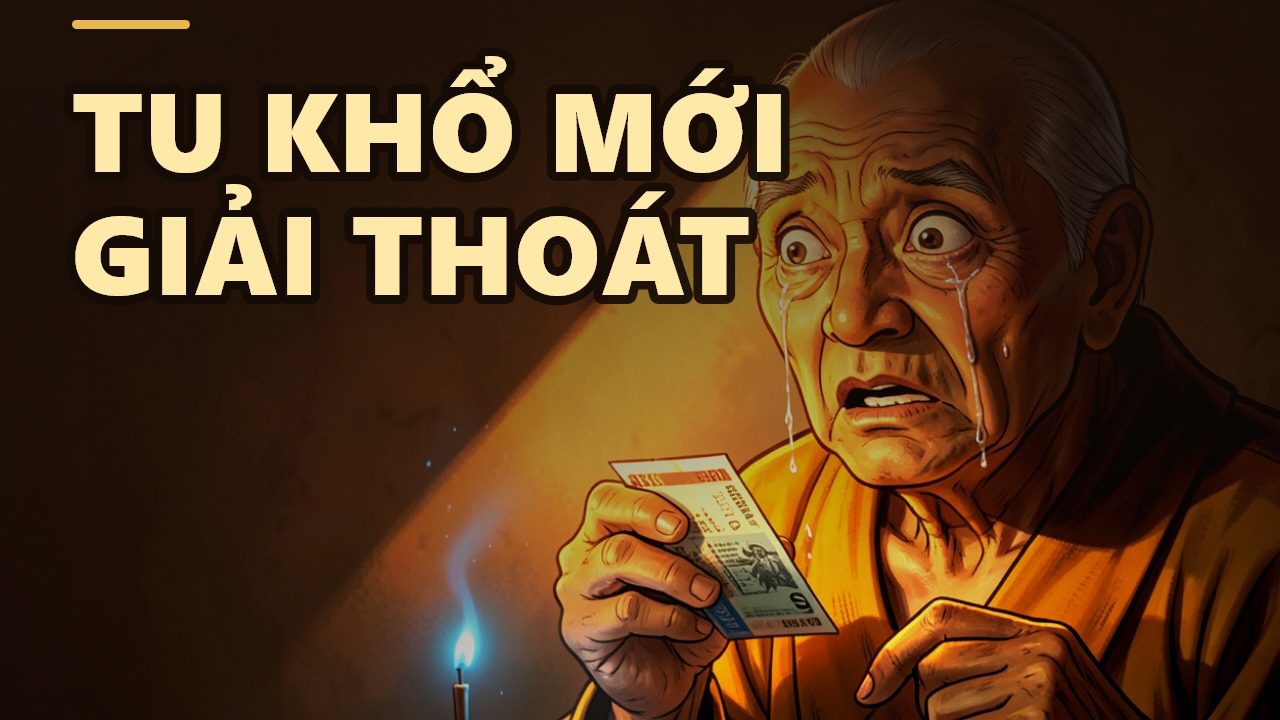
Have you ever heard someone promise, "Follow my practice, and you will find happiness"? You may have heard it many times. But is it true? In a teaching by Master Thích Chân Quang, a profound reminder is given: "What about too much happiness? You die immediately." The story of the man who won the lottery and died from the shock of joy stays with us. Worldly pleasure can destroy us, but the happiness of a practitioner is entirely different.
**Can pleasure kill you?** Master Chân Quang points out there are two kinds of pleasure. One is the intense sensation from sensual indulgence: alcohol, drugs, or other sensory delights. This feeling is powerful but limited. When we try to reach the peak of pleasure, we can break the limits of our body and brain, leading to death. Science confirms this: humans can only withstand a certain level of pleasure; beyond it lies exhaustion and death.
The happiness of a practitioner is different. It is not an agitated feeling, but a state of mind characterized by non-self, purity, and clarity. The Master teaches: "The pleasure of practice is different. It is a feeling of non-self, clarity, peace, and purity found within meditative concentration. When our mind is still, pure, open, and permeated with profound wisdom, that is the happiness of the path."
The greater this happiness, the more peaceful our mind becomes, never causing harm to body or spirit. It is infinite happiness that can nourish us across many lifetimes.
**Practice is not seeking suffering, nor seeking pleasure** Many misunderstand practice as requiring severe asceticism and bodily torment. But the Master affirms: "Practice does not mean asceticism and tormenting the body." Some boast of eating only one bowl of rice a day or wearing one set of clothes a year, but this is no different from a starving person or someone who is unkempt. Is that true cultivation?
Practice is also not about seeking pleasure. If anyone promises to lead to a place of infinite delight, we should be cautious. Practitioners do not seek temporary happiness but seek liberation from ignorance and self-attachment. The Master makes it clear: "You do not wish to go to a place of pleasure, but only hope to be on the right path of true practice. Even through ten thousand springs and autumns, with one heart, you hope to escape the prison of ignorance."
This is the aspiration of a practitioner. When ignorance ceases and self-attachment dissolves, we attain infinite peace—but this is not the primary goal, but a secondary result of liberation.
**Seeds of the soul: Are you a bean or a Bodhi tree?** One of the Master's most profound examples is about seeds. Both are seeds, but a mung bean seed yields a plant that lives only a few months, while a Bodhi tree seed can grow into a great tree enduring for centuries. Our initial aspiration is the same.
If we come to the temple only to have someone chant sutras when we die, we are like a mung bean seed. But if we vow to practice through countless lifetimes to save all beings, we will become a Bodhi tree offering shade to countless people. The Master says: "Its nature is like the seed, and so is our soul. Our initial aspiration for practice is the same. It is a kind of seed."
Let us look within: what kind of seed is our soul planting? Each day, are we nurturing a great aspiration or merely circling in small worries?
**Do not believe in promises of quick attainment** Master Chân Quang shares that many people, even highly educated intellectuals, are lured by promises of "quick attainment." But on the path of practice, nothing is hasty. "Quick attainment" is often a trap of false paths.
He advises: "Whoever promises you any pleasure, do not believe them. Whoever promises you quick practice, do not believe them." Because the fruits of Buddhahood and the Bodhisattva are not something planted in a few days or years. To achieve extraordinary results, we must plant extraordinary causes over countless lifetimes.
The wise do not demand to see results in this lifetime. They gladly accept the long and arduous path, because they see thirty lifetimes ahead, even many more. As the Master teaches: "Practice is exhausting and long. Exhausting means? It requires much effort. Long means? The time is very far. The hardship of something that requires great effort and stretches over too long a time can dishearten us. Therefore, here we must not lose heart; we must have unwavering aspiration."
**Persevering on the arduous path** So how can we not lose heart when the path is so long? The Master teaches that we must have a resolute aspiration, like a burden we constantly place upon our shoulders. Even if weary, we may pause briefly, but never set it down and turn back. The further we go, the more we realize the hardship is the price of a great endeavor.
Practitioners do not promise pleasure. Practitioners only promise liberation. Today, the Master opens our minds: let us open our hearts out to thirty lifetimes from now. Then, let us look back at our attainments. We will surely see something extraordinary.
If you once thought practice was a place of rest or retirement to enjoy, listen again to the Master’s words to change your view. Practice is a difficult path, but it is difficult precisely because it is worthwhile. Walk with an aspiration firm as bedrock, not abandoning it for pleasure, not retreating because of hardship. Such is a worthy child of the Buddha.
AI-assisted translation from the Vietnamese original.
Read in Vietnamese →