
Cultivation Means Going Against the Current of Life: Why Do Practitioners Choose the Hardest Path?
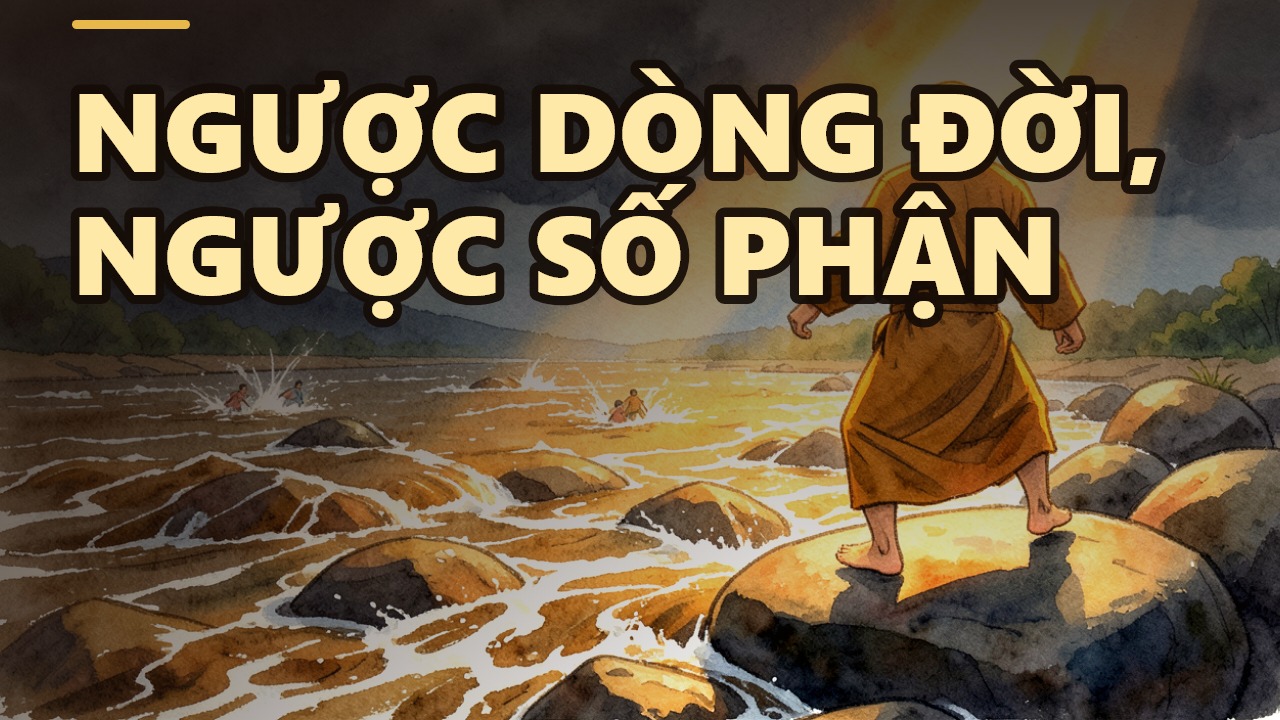
This dharma talk by Venerable Thich Chan Quang helps us understand why practitioners choose a path different from worldly life, and how they swim against the current of greed, hatred and delusion.
Imagine a river during a flood sweeping everything away. Everyone drifts with the water because it is comfortable. But practitioners choose to go upstream—a difficult journey that leads to the shore of peace. Why do they do this? Venerable Thich Chan Quang says:
Cultivation means going against the current of life. We hear this phrase often, but few have fully understood its meaning.
## The Invisible Current Sweeps Us Away
The teacher explains that the current of life is not a visible river, but an invisible power within each person’s mind/heart. It is instinct, greed, hatred and delusion—the natural urges that compel everyone to eat, dress, and chase desires. He states:
That current of life is not a visible stream like water or a hurricane. It is invisible yet stronger than storms or flash floods. It resides in our souls and in every cell of our bodies.
Everyone is easily swept along: when others eat, we eat; when others dye their hair, we dye ours. But where does this flow lead? To conflict, struggle, suffering (dukkha), and samsara (cycle of rebirth).
## Practitioners Resist Step by Step
Practitioners are not free from desire or attachment. Everyone has them. However, unlike ordinary people who indulge freely, practitioners know how to keep precepts, restrain themselves, and fight against their own impulses. The teacher affirms:
A practitioner knows they have desire and attachment, so they work to eliminate them. They keep precepts, exercise restraint, engage in inner battle, and resist following those urges. This is the greatness of a practitioner.
This discipline shows in small actions: eating moderately, maintaining distance to prevent unwholesome thoughts, and practicing patience when anger arises. Instead of giving in completely, they stop right at the beginning.
## Holding a Bowl of Rice with Gratitude
Practitioners eat to live, and live to cultivate. The teacher teaches that every bowl of rice is a debt owed to life, to the Buddha, and to donors. Therefore, they eat with humility and responsibility:
Eat to live, live to cultivate. A practitioner eats one portion and repays a thousand, while ordinary people eat one and take without giving back.
Ordinary people see the bowl of rice as theirs, an opportunity for enjoyment. Practitioners remind themselves that they owe a debt to life, so they must strive to create merit to repay it.
## Suffering Now, Blessings Later
Going against the current is truly hard. It is like an addict trying to quit smoking—very painful. But if one continues drifting with the comfortable current, they will eventually fall into sorrow. Practitioners foresee this, so they choose the difficult path now to gain eternal peace. The teacher compares the river to life: flowing downstream is easy, but the end of the river is a deep, burning pit.
## Choosing Your Own Path
When we understand the Dharma, we can no longer simply follow the current. The teacher shares that some meet a loved one and wish to marry "according to conditions," but this is not true acceptance of conditions—it is sinking into the current of life. A practitioner must sometimes "flee" from those they love to go against the current.
Every day, every moment, we stand between choices: follow the comfortable flow or swim upstream toward enlightenment. The struggle and difficulty are signs of a maturing soul. Start with small things: practice mindfulness in eating, restrain anger, and maintain distance from what triggers afflictions (kleshas). As the teacher taught, going against the current is the path of the practitioner—and each of us can step onto this journey.
AI-assisted translation from the Vietnamese original.
Read in Vietnamese →