
Cultivating by Counting Offenses and Merit: The Secret of the True Practitioner
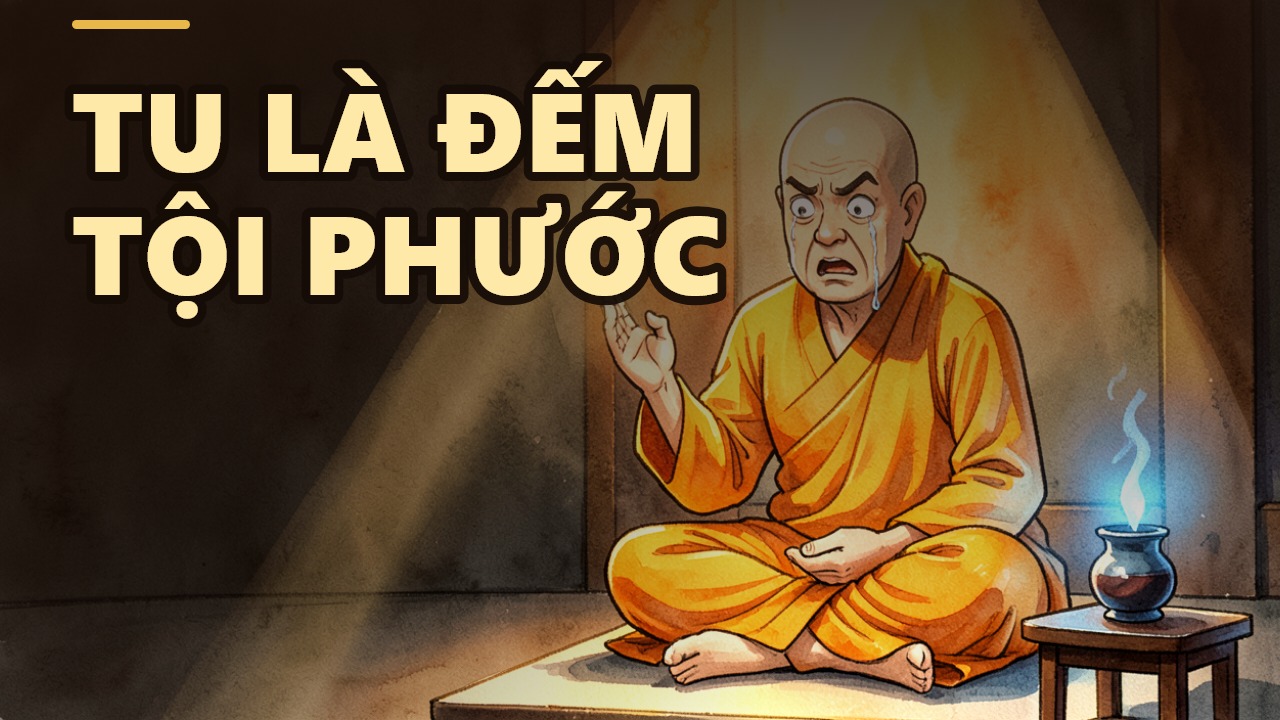
Venerable Thich Chan Quang shares a profound insight: cultivation is simply counting offenses and merit in every action. Through this practice, we learn each day to live worthy of the bowl of rice we eat, bringing peace to everyone around us.
Have you ever asked yourself what it truly means to cultivate? Is it sitting in meditation, chanting sutras, or eating vegetarian food? Or is it something distant from modern life? In a recent dharma talk, Venerable Thich Chan Quang explained it with remarkable simplicity. He said that cultivation is nothing more than counting offenses and merit. It sounds easy, but when applied to daily life, we realize its depth and complexity.
### Cultivation Means Counting Offenses and Merit
Venerable Chan Quang begins by stating that cultivation is just about counting offenses and merit. When we do something that creates an offense, or something that generates merit, we sit and acknowledge it. That awareness is the essence of practice.
Counting offenses and merit is not a complex calculation. It is a clear consciousness of our actions, speech, and thoughts in everyday life. A true practitioner is always mindful, knowing clearly what to do and what to avoid.
### Causing Worry is an Offense; Bringing Peace is Merit
How do we count these things? The teacher offers a concise definition. If we cause others to worry, that is an offense. If we bring others peace of mind, that is merit.
This principle covers countless situations in life. For example, when a stranger arrives at the temple, if we ask suspiciously, "Who are you? What is your intention?" we cause them anxiety. This is an offense. Conversely, if we invite them warmly, saying, "Where have you come from? Please come in for some water and rice before you go up to practice," we bring them comfort. This is merit.
The teacher also gives examples regarding young people. If a young man messages a beautiful girl saying, "I love you," does he bring her peace or worry? Does he create merit or offense? A seemingly romantic gesture can become an offense. On the other hand, if a beautiful woman walks through a park without speaking, yet her presence causes many people to lose their composure, she has unintentionally caused worry. This too is an offense, even without intent.
### Seemingly Harmless Actions Can Become Offenses
We often believe that only malicious intentions create offenses. However, actions done with good intentions can still disturb others. The teacher illustrates this with his own path. Becoming a monk is generally considered meritorious. Yet, some people feel anger or dissatisfaction because of it. Similarly, while family members may support one person’s ordination, they might oppose another’s choice to leave home.
In life, there are things we do without intending harm that still cause others distress. Unknowingly, we accumulate offenses. Therefore, offenses and merit are not one-dimensional. The same action might bring peace to one person while causing anxiety to another. This is why cultivation is difficult. We must constantly reflect, understand, and empathize with others’ perspectives to count accurately.
### Are We Worthy of Our Daily Meal?
One of the deepest lessons from this teaching concerns the consumption of blessings from merit. The teacher reminds us that every bite of food and sip of water is accounted for by cause and effect (karmic law). It represents a cost. If we eat without contributing anything beneficial, we are depleting the merit we have accumulated.
He recounts the story of Master Baizhang. Even after attaining enlightenment and growing old, he continued to till the soil and grow vegetables himself. When his disciples hid his tools, he refused to eat until they returned them. He famously said, "A day without work is a day without food." This example teaches us never to allow a single day to pass without performing some act of merit.
This applies to the elderly and those retired as well. The teacher encourages using one’s reputation and spirit to guide younger generations, teach morality, and perform small acts like picking up nails or stones from the road to prevent accidents. Thus, every bowl of rice eaten becomes meaningful—a "bowl of rice with meditation"—rather than merely consuming past merit.
### Material Help Brings Material Blessings; Spiritual Help Brings Spiritual Blessings
The teacher clarifies a fundamental principle: helping others materially brings material blessings from merit. Helping others spiritually brings spiritual blessings from merit. When we feed the hungry, we ensure we will not face hunger in future lives. When we tutor a struggling student, we gain the blessing of wisdom and learning across many lifetimes. When we comfort the grieving, we receive spiritual peace.
However, comforting someone does not mean making insensitive remarks like, "Many people die, so don't be sad." Instead, we should offer genuine empathy. Saying, "I see your deep sadness, and I share your grief and care for him," provides true solace. This sincere sharing brings real peace.
Ultimately, cultivation is not about escaping the world. It is about living fully in each moment, counting offenses and merit, and creating joy for ourselves and others. Begin today. Each morning, ask yourself how you will make yourself worthy of the meal ahead. Each evening, reflect on whether you brought peace or worry to anyone. This is the true path of practice, leading toward enlightenment and liberation.
AI-assisted translation from the Vietnamese original.
Read in Vietnamese →