
What Is Practice For? A Profound Answer from Thầy Thích Chân Quang
Discover the true purpose of practice: not only liberation, but also the liberation of all beings. This article offers a deep and accessible answer about the path of one who practices.
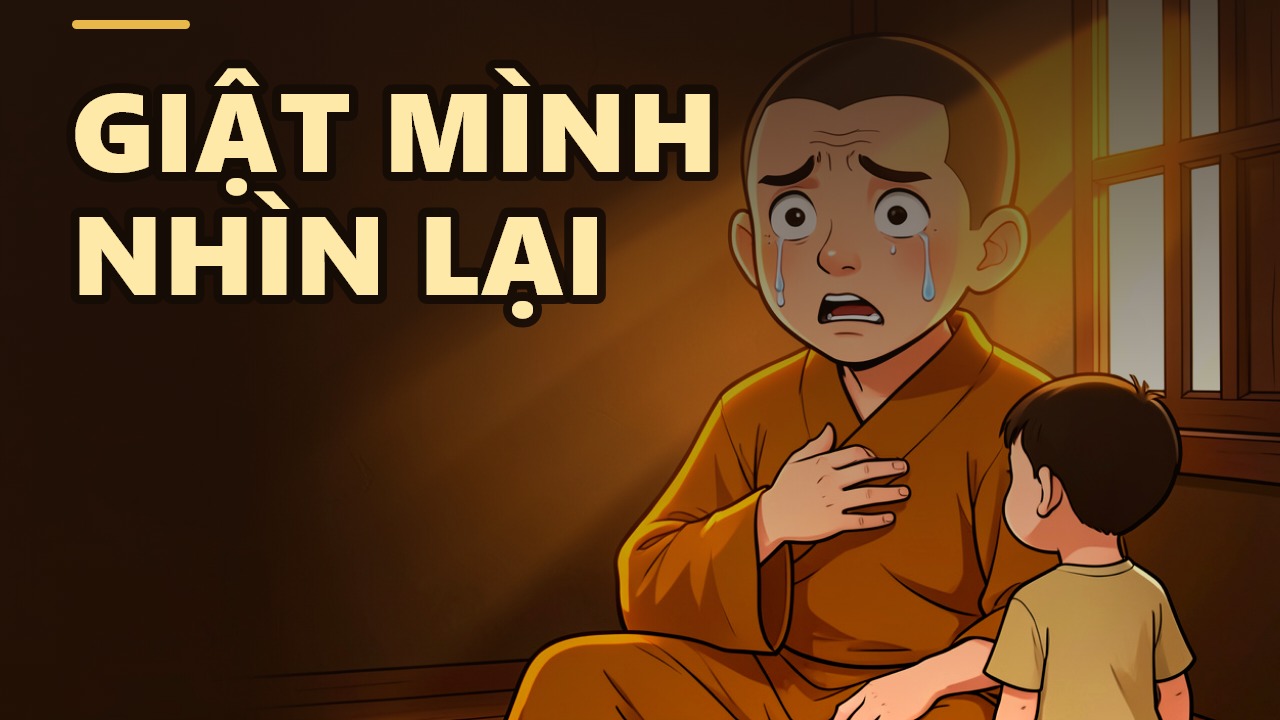
Have you ever asked yourself: "What am I practicing for?" Many of us would surely answer: "To attain liberation and enlightenment." But do we truly understand the deep meaning of that answer? Sometimes, sitting and listening to the temple bells, I recall a story about a young monastic. He was virtuous, but one day his older brother sent his own child to the temple, asking him to care for the boy. He suddenly realized how anxious and partial his heart had become for his nephew. He was startled: what he had thought was virtue, was family affection, was in fact an obstacle on the path of practice. From that moment, he began to understand that practice is not simply an answer.
The Highest Purpose: Enlightenment and Liberation
When asked what practice is for, the standard answer we usually hear is: "to attain liberation and enlightenment." That is the foundation, but if we stop there, it is not yet complete. Because once we are enlightened and liberated, there remains an even greater purpose: to liberate all sentient beings. However, truly absorbing the word "liberation" is not simple at all. Thầy Thích Chân Quang emphasized:
"Only when we clearly see that this life is suffering (dukkha) do we have the goal of liberation."
Ordinary people do not see this suffering nature. They regard family love as virtue, but for one who has left home to practice, it is an obstacle. Only a lofty wisdom can perceive this reversal. Like the story of that young monastic, he had to suddenly awaken and recognize that his flesh-and-blood affection was in fact partiality and narrowness. That is the first step toward liberation.
Practicing to Have Right View — An Inch Off at the Start, Miles Off at the End
The second supporting purpose is to attain correct right view. Thầy taught: "Without right view in practice, we go astray — an inch off at the start, hundreds of miles off at the end." Many people practice yet nurture pride and conceit, seeing themselves as better than others. That is wrong view creeping in. Therefore, a student of the Dharma must always be humble, respect others, and make no distinction between monastics and laypeople.
"An inch off means hundreds of miles off, not just one mile."
Right view does not arise on its own; it must be learned from the scriptures, from teachers, and from fellow practitioners. Most importantly, we must pray to meet wise teachers and good spiritual friends, and stay far from wrong view. Learn step by step, be careful with every thought, so that the practice life is not wasted.
Building a Moral Heart — A Foundation Everyone Can See
A very practical purpose that society can actually see is building a pure, moral heart. When we have right view, we begin to battle the fetters such as greed, hatred and delusion, pride, and jealousy. Each day, we must apply proper intention — wise attention — in every action.
Thầy Thích Chân Quang gave a concrete example: when receiving an envelope of making offerings, the mind should give rise to the intention: "This is the sweat and tears of devotees. May I practice diligently to repay this kindness." Or when someone kneels and bows to us, do not consider ourselves great, but think:
"First, I am not worthy. Second, may I offer this person's bow up to the Buddha rather than receive it myself."
Thanks to such intentions, our heart gradually becomes pure and virtuous. Then those who see us from outside will feel respect and grow in faith in the Three Jewels. That is how we build blessings from merit for ourselves and for the whole community.
Living with Good Spiritual Friends and Forming Wholesome Connections
Everyone needs a good environment for practice. Living in the Sangha with sincere practitioners is a great happiness. At the same time, to liberate sentient beings, we must actively go toward them, not passively sit and wait.
"For sentient beings, be the uninvited guest."
In the Avatamsaka Sutra, the Buddha taught that we must be the uninvited guest. We must find ways to form wholesome connections with sentient beings, so that later we can guide and transform them. Living alone in solitude is strength of character, but if we merely rest in solitude without engaging with sentient beings, wholesome connections will have no chance to form.
The Journey of Return: From Supporting Purposes to the Main Purpose
Purposes such as leaving home to practice, attaining right view, building virtue, and forming wholesome connections — all are steps on the ladder leading to the ultimate purpose: liberation and enlightenment. No one can skip ahead; everyone must walk step by step. But as long as we hold firm to our ideal and are careful in every thought and action, the path of practice will become ever clearer.
Practice is not an escape from life, but a return to ourselves. Re-examine the purpose of your practice today. Whoever you are, wherever you are, let every small action and every thought turn toward liberation and the benefit of all. That is the greatest happiness you can find on the path of practice.
AI-assisted translation from the Vietnamese original.
Read in Vietnamese →