
Practicing the True Dharma: Blessings from Merit Multiplied Millions of Times
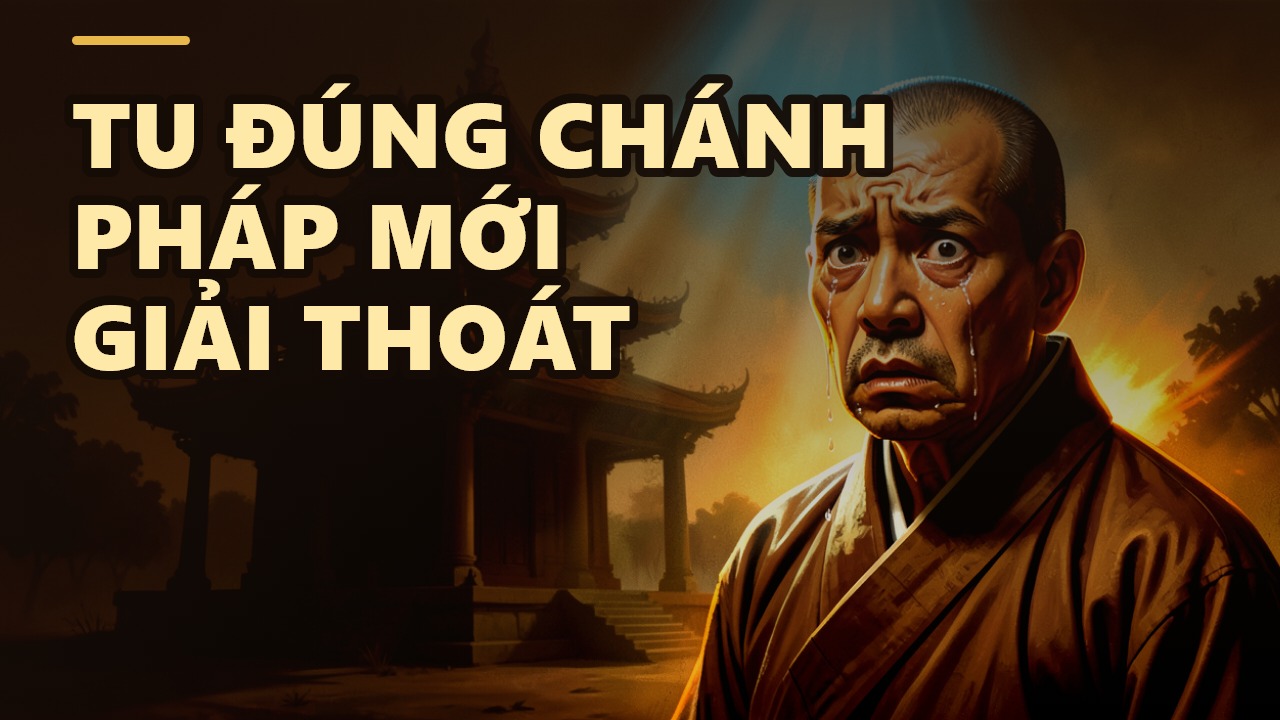
A dharma talk by Venerable Thích Chân Quang exploring the meaning of the True Dharma as beginning with Right View, and the importance of practicing exactly according to the Buddha's teachings in the modern age.
Building a temple is a great virtuous deed. But if the temple is completed only to house a Buddha statue, without the True Dharma, will the merit of making offerings be worthily repaid? At the groundbreaking ceremony of Thiên Chánh Temple, Venerable Thích Chân Quang posed a question full of concern: "Once the temple is built, what comes next?" And the answer lies in the very title of today's talk: The True Dharma Begins with Right View.
## What Is the True Dharma? True to the Buddha and True to the Universe
Thầy Chân Quang defines the True Dharma with two meanings:
The True Dharma has two meanings. The first is that we align with the Buddha's teachings (Dharma), with the Buddha's words, with the truth of heaven and earth, of the universe. The second meaning of the True Dharma is that it closely resembles the time of the Buddha himself, not the age of Dharma decline.
What matters is that the True Dharma does not depend on any religion. The karmic law of cause and effect, compassion, and fairness in the universe are universal principles that anyone with wisdom can see. Thầy says:
Whoever plants a seed harvests its fruit—that is the karmic law of cause and effect. Does this have to belong to Buddhism? It does not. Any person with a conscience, with morality, with wisdom must acknowledge that this universe must have fairness.
The True Dharma is the righteousness of heaven and earth, the path of peace and happiness for anyone who finds it.
## The Dangerous Rut: "Our Patriarchs Must Surely Be Right"
We often assume our path of practice is safe because it has been handed down from patriarch to patriarch, from teacher to teacher. But Thầy Chân Quang warns us:
Our suffering is that our patriarchs were not necessarily right.
This is a warning that wounds many people's pride, yet it is a reality we must face squarely. The Buddha entered nirvana more than two thousand five hundred years ago, and the age of Dharma decline has arrived. Our patriarchs lived hundreds of years after the Buddha, and may well have lived within this age of decline. So how do we know our practice is correct? Look at the results of our own practice.
## Two Benefits and Two Harms of Practicing Rightly or Wrongly
Thầy points this out clearly:
When we practice in accordance with the True Dharma, we gain two benefits. First, our own merit grows, and we find happiness, peace, spiritual progress, and step by step attain the noble fruit of enlightenment. The second benefit is that we contribute to the Buddha's teachings (Dharma) enduring for a long time.
When we practice the True Dharma rightly, we receive two benefits: our own merit grows, bringing peace, spiritual progress, and noble attainment; and we help sustain and develop the Buddha's teachings (Dharma).
Conversely, when we practice wrongly: we gain no benefit ourselves, our mind/heart becomes restless and disturbed, our morality declines, and we cause the Dharma itself to wither.
Thầy describes it concretely:
Before practicing, I still had some luck. But after thirty years of practice, everything I touched went wrong, everything I did collapsed and failed. Clearly there was effort, but the blessings from merit were gone.
This is an earnest warning: if we want blessings from merit, we must begin practicing from Right View.
## The Sangha as Teacher of All Beings: Must Surpass Others and Walk with the Times
We often say "the Sangha is the teacher of all beings," but to be a teacher, one must have true capability. Thầy Chân Quang shares:
You must surpass others before you can be their teacher. And surpass them in what? First in morality... And third, at the very least, a teacher's knowledge of the modern age should not fall behind even a child's.
Thầy tells the story of a young person on the verge of suicide after being abandoned by a lover, who was saved only after receiving counseling from Thầy over the phone. By using modern technology and understanding the psychology of youth, Thầy helped that person recognize the value of someone who humbly picks up litter at the temple. Thầy also mentions refreshing the way sutras are chanted to harmonize with modern music, drawing young people to the Dharma.
This is precisely the spirit of the True Dharma: true to the principles of the path, while at the same time walking alongside—and ahead of—the times.
## A Lifetime Seeking Truth, Not Chasing Shadows of Form
Some people spend their whole lives chasing fame, profit, and sensual pleasure, only to end in suffering (dukkha). Those who practice the True Dharma instead seek truth and seek the principles of the path. And how does their story end?
For someone who has understood the principles of the path, if there is a happiness that does not serve the path, they renounce that happiness... That is the true secret of the Dharma.
Renouncing happiness may seem paradoxical, yet it is precisely the destination of one who yearns for enlightenment. When you plant the seeds of Right View, you will seek what is true rather than the illusions of this life.
Let us build the True Dharma together for countless generations to come, beginning with right practice within our own mind/heart.
AI-assisted translation from the Vietnamese original.
Read in Vietnamese →