
Compassion and Liberation: The Wings of a True Practitioner
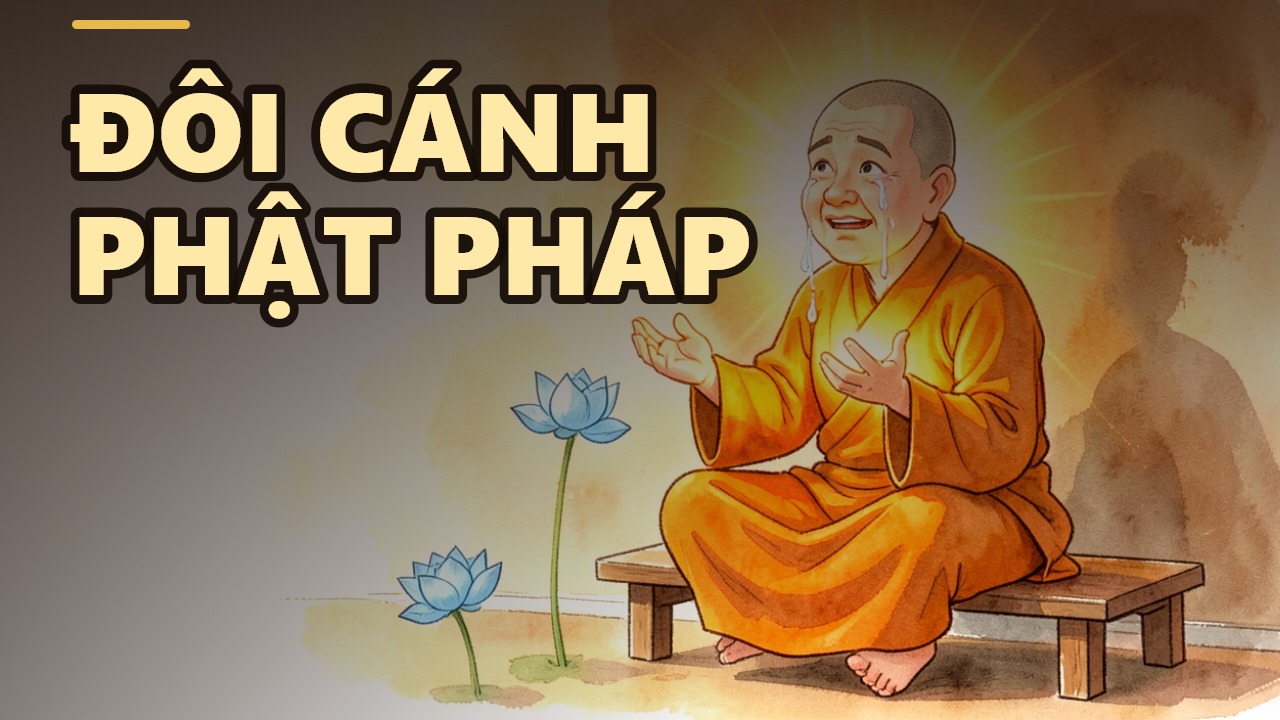
A dharma talk by Venerable Thích Chân Quang on the harmony between compassion and the liberated mind/heart — two things that seem opposed, yet together form the wings that lift us high on the path of the Dharma.
At the start of the new year, everyone wishes for good things for themselves and their families. But have you ever asked yourself: what is the most noble prayer of all? In his New Year teaching, Venerable Thích Chân Quang opened a profound perspective on praying for the world, and on a greater lesson: the union of compassion and the liberated mind/heart.
The Spiritual Power of Prayer
Many people believe that prayer is mere superstition. But the Venerable affirmed that sincere prayers always carry spiritual resonance. Even when we pray for wealth or good fortune, if there is sincerity, that resonance will come. But something deeper happens when we pray for peace in the world and tranquility for our country. One person praying may change nothing, yet when millions pray together, that spiritual energy will protect the nation.
"One person may not change anything, but when countless people pray together, it truly changes the world."
This is not merely advice about prayer — it is an awakening of compassion directed toward the community. When we pray for others, we are expanding our own hearts.
Compassion and Liberation: What Seem Like Opposites
The Venerable taught that Buddhism is not extreme. In Buddhism, there are things that appear opposite yet complement one another. Compassion is loving and helping all sentient beings, engaging fully with life. Liberation is letting go, remaining untangled from the world. These two concepts seem contradictory, but in truth they are like the two wings of a bird — missing one wing, it cannot fly.
"What is Buddhism? It is like a gem with many facets, and every facet is beautiful."
A true practitioner must be both compassionate and liberated. One cannot simply sit in meditation and forget the world, nor do only charitable work while forgetting the liberated mind/heart.
Gentle Yet Not Timid — The Mark of a True Practitioner
We often assume that gentleness comes with timidity. But the Venerable taught that one who practices correctly must be gentle yet courageous. Gentleness means not reacting to insults; courage means being ready to face danger in order to help others. When we attain peace in the mind/heart, we can be patient without fear, and when necessary, we act with bravery.
The Venerable told of a gentle practitioner who endured whatever anyone said, yet upon seeing someone about to fall into a river, immediately jumped in to save them. That is the perfect union of compassion and liberation.
Love Without Attachment — The Key to Liberation
The Venerable distilled a short but profound teaching:
"Love human beings without becoming entangled in attachment to them."
When we love someone, we easily become attached and possessive. But with true compassion, we love and help everyone unconditionally, seeking nothing in return, allowing the mind/heart to remain unbound. This requires a solid inner spiritual strength — to live in the world without being disturbed by it.
With Only One Wing, There Is No Flight
The Venerable warned against two mistaken extremes: one is to devote oneself only to retreat, shunning the world until compassion is lost; the other is to devote oneself only to charity, never taking time to quiet the mind/heart until the spirit of liberation is lost. Both are like a bird with only one wing, unable to fly high.
A true practitioner must have both inner serenity and compassionate action. This is the path of the bodhisattva — always turned toward sentient beings, yet never abandoning the liberated mind/heart.
Each New Year, when we visit the temple, let us offer prayers for peace in the world and tranquility for our country. But more than that, let us practice living with compassion and liberation in everyday life: loving everyone without becoming entangled. Only then do we truly have the wings to soar high on the path of the Dharma.
AI-assisted translation from the Vietnamese original.
Read in Vietnamese →