
What Is Compassion? A Lesson from a Disrobed Monk
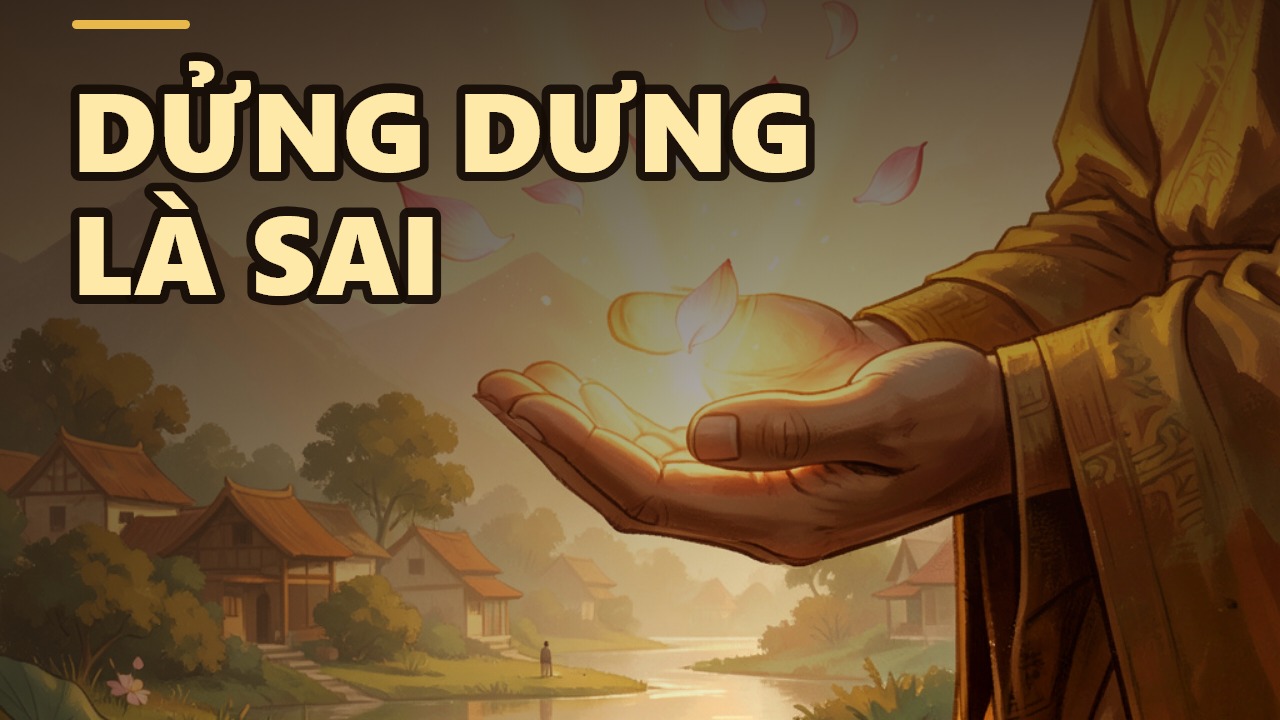
One time, as I listened to a teacher's story, I realized that in Buddhism, some lessons are not found in golden words, but in how we face the faults of others. I once saw a teacher leave monastic life, and for many, that was a failure. But Venerable Thích Chân Quang taught that "to see others suffering and remain indifferent is contrary to the Buddha's teachings." So, what truly is the right attitude? Let us step into the world of giving and patience through the teacher's words.
**The Perfection of Precepts: Correcting the Mind, Not Just Actions**
The teaching begins with an important distinction: keeping precepts is about avoiding faults, but the *paramita* is a completeness without gaps. For instance, a person keeping precepts may not steal out of fear of sin, but their mind still harbors desire. Meanwhile, a being of *paramita* sees a fine object, acknowledges the need and liking, but their mind releases it the moment the thought of greed arises. The teacher said:
"When you can correct the fault within the mind, that is when you are gradually approaching the Dharma of *paramita*."
This applies to all precepts: not killing, not engaging in sexual misconduct, not lying... We not only prevent external bad actions but also remove their root in the mind. This is the profound level of giving and patience: giving safety, giving joy, and exercising patience before internal disturbances.
**When Others Err: Patience and Compassion**
Venerable Thích Chân Quang tells a very real story. There was a monk who disrobed, and upon hearing this, some other monks began to attack and criticize him. But the Venerable felt pained and reminded us that we should not speak with a harsh tone. He emphasized:
"We should not speak with a harsh tone but must know to feel pained."
Compassion is not just about giving money or charity. The teacher explains that someone may give generously yet lack compassion, because their action is merely intellectual. True compassion is natural sympathy that rises when seeing others suffer. When we see someone stumble, we do not rush to condemn but seek to lift them up. That is the true patience and giving.
**Anger and Malice: Levels to Recognize**
In this teaching, the Venerable points out dangerous mental states that each person must recognize:
- **Malice** – a readiness to cause suffering, to destroy homes and families; this is the heaviest karma. - **Ferocity** – a cruel attitude, not necessarily malicious but violent. - **Resentment** – nurturing hatred, seeking revenge. - **Hot Anger** – losing one's temper, reacting strongly in the moment.
The teacher said:
"The malicious mind creates the heaviest karma. Slightly lighter is the ferocious mind... Then there is anger, the hot feeling. We cannot maintain calm when encountering something."
To transform these minds, we must cultivate compassion. When compassion arises, we no longer wish to harm anyone but constantly hope for everyone's peace and happiness. Thus, patience becomes complete.
**Truthful Speech and Harmony**
Regarding verbal karma, the teacher teaches that speaking the truth is not always good. We should only speak the truth when it benefits the listener. If the truth only breeds more resentment and shatters trust, then silence is better. He quotes:
"We only speak the truth when it is beneficial for the listener, for everyone." and "There are things we should not tell the truth about, so we should remain silent, not speak about everything."
This is a form of giving: giving peace to others, avoiding division. To do this, we must cherish harmony and not use words to sow hatred.
**The Root of Suffering and the Practice of Compassion**
Teacher Chân Quang expands the teaching by tracing the origin of suffering. From ignorance arises self-clinging; from self-clinging arises selfishness; and from selfishness arise craving and desire. He said:
"Ignorance is not about understanding correctly and then it's gone. It is a heavy, confused mass. Due to this ignorant stupidity, not seeing clearly, we form self-clinging, clinging to a self."
Although ignorance and self-clinging are very difficult to overcome, we can start from the most evident layer: the selfish mind. By giving and helping others, we gradually nurture a selfless heart. And with patience, we are not swept away by anger.
Finally, I invite you to ask yourself: Today, what can I give? A word of encouragement, a forgiveness, a look of tolerance? Let us begin with the smallest things. This is how we walk the path of *paramita*.
AI-assisted translation from the Vietnamese original.
Read in Vietnamese →