
Direct and Indirect: Which Path to Choose for Life and Practice?
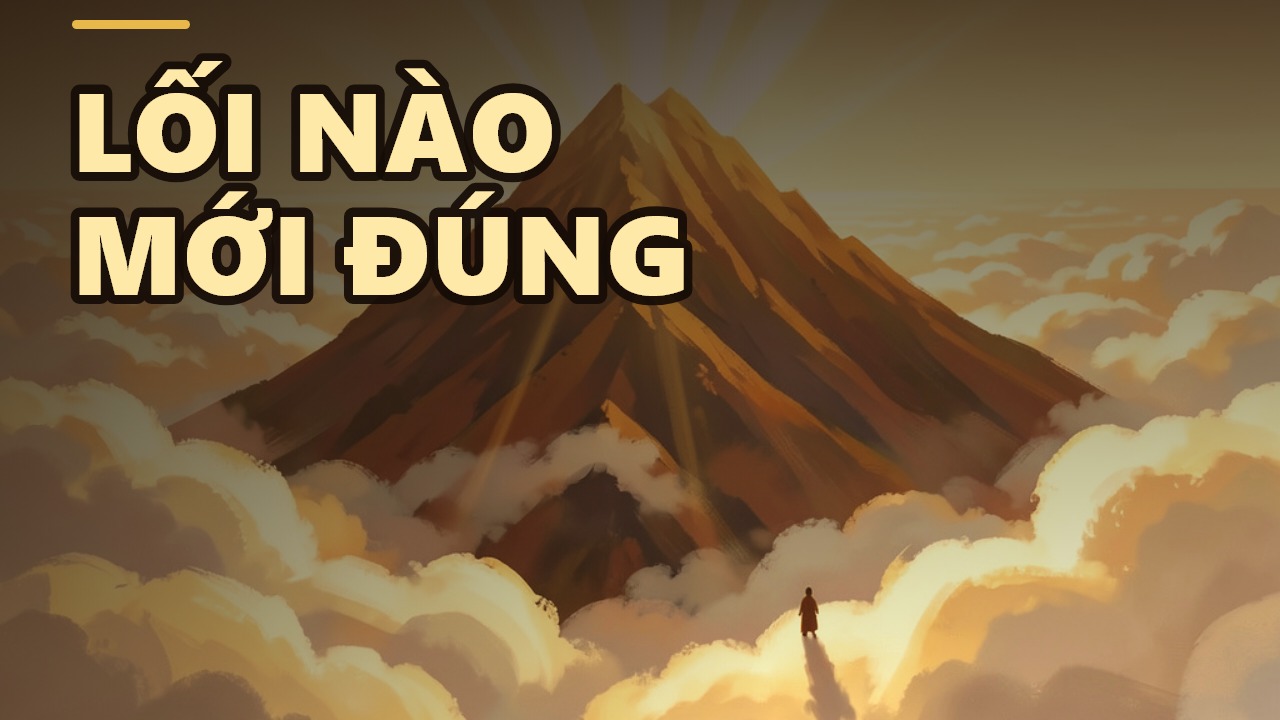
A clearer understanding of direct and indirect approaches in life and practice, when to speak plainly, when to take a roundabout way, and why good people need both wisdom and compassion.
There was a person who, when meeting Emperor Tang Minh Hoang during a time of turmoil, told him about his suffering. The king asked, "Why did you not come to the court to present this to me?" The person replied, "Your Majesty is deep within the imperial palace. How can a commoner ever hope to see the dragon's face?"
This story makes us think about the distance between a king and his people—a distance of indirectness. In life, what comes straight to the point is clear, but what requires a detour can sometimes be more effective. Today, let us listen to Thầy Thích Chân Quang share about these two ways of living.
**Direct and Indirect—Two Sides of One Matter**
Thầy Chân Quang explains it very simply: direct means immediate contact, indirect means contact through an intermediary. Each way has its strengths and weaknesses. When information travels directly, it is usually more complete and quicker. He emphasizes:
"In terms of information, anything that is direct is usually more complete, faster in this information age. In the age of information, whoever captures information slowly will be at a disadvantage."
For example, if we want to give someone feedback, speaking to them directly makes our words clearer to their ears. But sometimes, being blunt can trigger a fierce reaction. Therefore, there are times for directness and times when we must be indirect.
**When Speaking Bluntly, We Easily Fall into the Fault of Rashness**
In life, there are people with straightforward personalities who see a wrong and call it a wrong. However, Thầy Chân Quang points out that the fault of good people is "always assuming that being good is enough."
"The fault of all good people in this world is assuming that being good is enough. That is a great mistake."
A good person who is not yet wise, who does not yet have wisdom, will find their words lack weight. Thầy tells the story of an employee wanting to give feedback to a tyrannical boss. Speaking directly could get them fired; flattering to survive would be morally wrong. The way forward is the indirect path: building virtue, creating trust, winning everyone's affection, and when one has enough weight, their words can then change the situation.
**Practice Also Requires the Indirect Path**
Many people think that practice means immediately sitting in meditation without thinking. But Thầy Chân Quang affirms that the straight path into the mind is reserved only for those of superior spiritual capacity. For most of us, we need to take a slower path, step by step—creating merit, regulating the body, and regulating the breath. He says:
"Going slowly, going around, going indirectly through many different stages—that is actually better."
Look at marathon runners; they do not run fast but run slowly and steadily. Practice is the same—without haste. Thầy teaches us to walk together on a very slow, roundabout path, but one that will surely reach the destination.
**Helping Others Understand the Dharma: Awakening Respect**
When wishing to guide someone who does not yet believe in cause and effect, offering books or tapes may not work, nor will speaking directly. Thầy teaches: befriend them first, win their affection, then share stories about the Buddha and the saints to inspire reverence in their hearts.
"If we want to increase someone's wholesome roots—their spiritual foundation for practice—we must awaken a feeling of respect for the saints in their hearts. This is an extremely essential point."
We ourselves must also always venerate the Buddha, pay respect to the Buddha, so that our own spiritual foundation grows higher. Guiding others is an entire process of patience, filled with compassion and wisdom.
**A Valuable Lesson: Goodness and Wisdom Must Go Together**
Thầy Chân Quang warns that in this world, many people are good but lack wisdom. They only rely on their own goodness to speak directly, to act, and they fail. A virtuous person must not only be good but also intelligent, knowing when to speak, when to be silent, and when to take a roundabout way.
"A good person must be wise, must have wisdom, must know when to speak and when not to yet speak."
That is why many officials retired to live in seclusion: because they were not wise enough to deal with wicked people. But we as Buddhists must not give up. Let us learn to take the indirect path, prepare thoroughly to do good effectively.
Whether direct or indirect, neither is inherently better than the other. It depends on conditions, on the person, and on the timing. But the most precious thing is that we be good people, possessing both wisdom and compassion. When meeting someone of high spiritual capacity, speak directly. When meeting someone not yet ready, take a roundabout way, patient like one planting a tree. May each of us soon find our own path—a path that is both true to the Dharma and effective in life. Nam mô Bổn sư Thích Ca Mâu Ni Phật!
AI-assisted translation from the Vietnamese original.
Read in Vietnamese →