
Intelligence Is Not Innate – Lessons from Venerable Thich Chan Quang
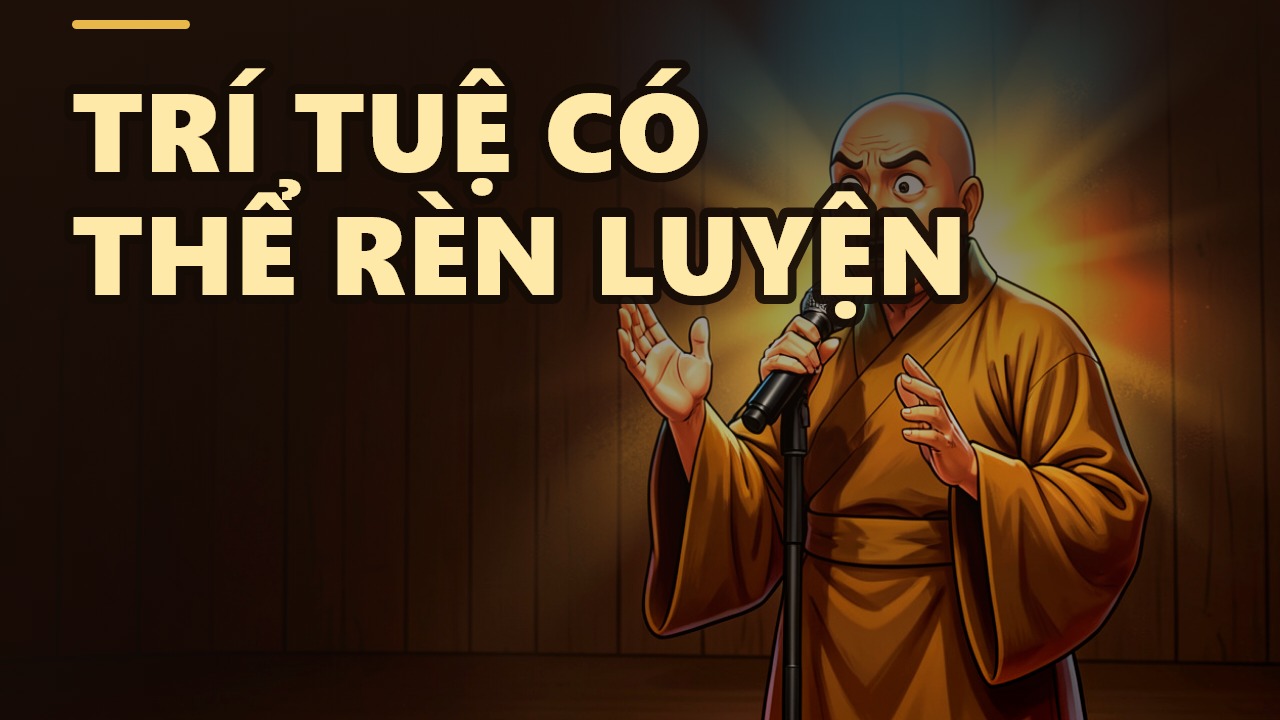
Have you ever wondered why some people understand a lesson after hearing it just once, while others must listen again and again? Why can one person grasp the whole story with a single glance, while another remains confused despite having plenty of data before them? In his dharma talk titled "How to Cultivate Intelligence," Venerable Thich Chan Quang offers an intriguing perspective. He teaches that intelligence is not a fixed, innate trait but rather a treasure that can be cultivated through cause and effect (karmic law) and through the sincerity of one’s heart.
## 1. The Misunderstanding of Intelligence as a Weapon for Domination
We often praise intelligence because it helps humans master the world. However, from a Buddhist perspective, this very intelligence can also become the cause of destruction. Venerable Thich Chan Quang points out that although humans are physically weaker than many animals, we prevail due to our unique creative abilities. Yet, when creativity lacks ethics, we become the most dangerous species on the planet.
As we gain more control over the world, we also increase our capacity for destruction, driven by our own intelligence. Therefore, the crucial question is not "how intelligent are we?" but "what do we use our intelligence for?" If it serves only ambition and power, intelligence becomes a double-edged sword.
## 2. What Is Intelligence? Four Signs You Possess It
In his teaching, Venerable Thich Chan Quang defines intelligence through four specific manifestations: quick understanding, long-term memory, creativity, and thorough reasoning. These are not gifts bestowed by heaven, but skills that can be trained.
Quick understanding means grasping a problem immediately upon hearing it. As the teacher notes, only about thirty percent of students understand a lesson right away. Long-term memory acts as the database of thought. For instance, the venerable Ananda could remember everything he heard for a lifetime after hearing it just once.
Creativity involves generating something new that no one has thought of before. Even a child who knows where to place their slippers so they are not stepped on shows signs of genius. Reasoning allows one to draw accurate conclusions from limited data. A truly intelligent person can look at a teacher and instantly recognize their abundance of blessings from merit.
To understand fully after hearing something just once is rare in this world. But what about someone who understands the entire lesson after hearing only half of it? Such a person is exceptionally brilliant.
## 3. Right or Wrong Use: The Path from Intelligence to Wisdom
Intelligence is like water: if channeled correctly, it irrigates and nourishes; if misdirected, it sweeps everything away. Venerable Thich Chan Quang emphasizes the law of cause and effect (karmic law) regarding the use of intelligence. Using it for evil causes it to diminish, while using it for good allows it to grow steadily.
If we use our intelligence to scheme about trivial or harmful matters, we will lose that intelligence, becoming dull or even deranged. Conversely, if we use our intelligence rightly, it will increase endlessly until it transforms into the wisdom of an enlightened being.
A truly intelligent person recognizes goodness. By clearly seeing the consequences of wrong actions, they naturally abandon evil. This is why gentleness and wisdom often go hand in hand.
## 4. There Is No Pill for Intelligence – Only Practice from the Heart
The teacher recounts a fictional film where people search desperately for a pill to boost their intelligence. In reality, however, intelligence does not reside in any medicine. Venerable Thich Chan Quang affirms that true intelligence lies in cause and effect (karmic law) and in the sincerity of one’s heart. So how do we practice? He suggests concrete steps: each day, strive to live virtuously, practice observation, put yourself in others’ shoes, and nurture compassion. After about three years, reflect on whether you have become more intelligent.
Try practicing this way, and after approximately three years, evaluate whether your intelligence has grown.
## 5. From Intelligence to Enlightened Wisdom
The most wonderful insight Venerable Thich Chan Quang offers is a vision of human destiny. We stand between two paths: ascending to become a sage or descending into animal existence. Intelligence is the pivot point for this choice. When nurtured by ethics and compassion, intelligence transforms into wisdom—the profound insight of an enlightened being.
We hover in the middle, possessing this intelligence. If we misuse it, we lose it instantly and fall down to the level of beasts. But if we use it correctly, we become more intelligent and transcendent, eventually attaining wisdom.
Begin today. Do not wait for a magical pill. Nurture your soul with wholesome thoughts, observe the world with curiosity, and practice compassion. With just three years of effort, you will realize you have taken a great step on the journey to becoming truly intelligent in the highest sense—possessing the wisdom to understand yourself, others, and life itself.
AI-assisted translation from the Vietnamese original.
Read in Vietnamese →