
Memory: A Ticket from the Past to Step into the Future
Memory is not merely a data repository but also the ability of rapid retrieval, serving as the foundation for all mental activities and the path of practice.
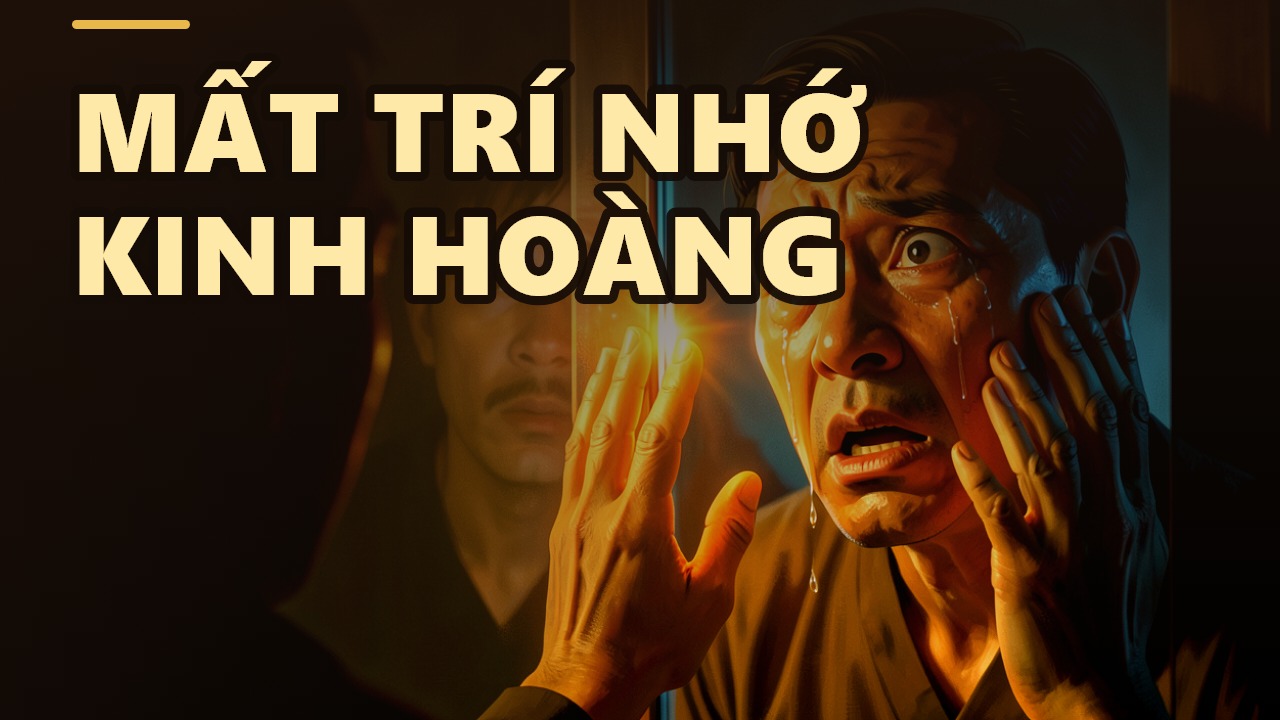
Imagine waking up one morning, looking in the mirror, and not recognizing the person staring back at you. You do not remember who you are, what your children’s names are, or why you are in this house. The entire world suddenly becomes strange and unfamiliar. This is the horror experienced by those who have lost their memory—people who are alive yet feel as though they never existed. The truth is that every mental activity, from self-recognition to communication, working, and even spiritual practice, is woven together by one thing: memory.
Memory serves as the foundation of all consciousness. In his dharma talk on the Structure of the Five Aggregates (3) – Memory, Venerable Thich Chan Quang pointed out that memory is like the memory of a computer. Without memory, a computer cannot function. The human mind works in the same way. He stated, "We will never have any activity of consciousness if we do not have memory." We often assume we do not need to remember anything, but in reality, we are constructing our lives entirely through memory. We remember who we are, who others are, what promises were made yesterday, how to breathe during meditation, and the price of goods for trade. Without memory, everything would descend into chaos, and humans would be unable to accomplish anything. It is precisely because we have memory that we possess a present moment and can make plans for the future.
Memory consists of two components: storage and retrieval. It is not just a container; it is also the ability to access data quickly. The teacher explained clearly, "Memory has two parts. One is the data we store... The second is the ability to retrieve it immediately." Some people absorb much information but fail to recognize acquaintances when they meet them again. Others recall things quickly but have an empty storage capacity, forgetting what they learned moments later. Both conditions are considered poor memory. Strong memory requires both good storage and good retrieval. Therefore, one must practice, repeat memories, and cultivate the habit of retention.
Why do some events remain unforgettable while others vanish instantly? The teacher revealed that anything accompanied by emotion is remembered for a long time. He said, "Whatever is wrapped in feeling, we remember very deeply." Hatred, unrequited love, or an insult are etched into our memory. Conversely, superficial or emotionless experiences are easily forgotten. Thus, those rich in emotional connection to life often possess more vivid memories.
In spiritual practice, memory is crucial for staying on the right path. The teacher shared a story: when falsely accused, one feels pride and anger. Why? Because we forget the Dharma, specifically the virtue of patience. He noted, "Because we forget. What do we forget? We forget the principle. Which principle? The principle of patience." If we do not remember cause and effect (karmic law), upon seeing someone with disabilities, we might only think about their lack of care rather than generating compassion. Without memory, we live by instinct and react arbitrarily. Therefore, practitioners must memorize the Buddha's teachings, imprinting them on the mind so that whenever challenges arise, these words resonate within us. This is how memory protects our spiritual heart.
The relationship between memory and merit reveals the law of cause and effect. When asked why some people have excellent memories while others are forgetful, the teacher answered profoundly: it depends on karma and merit. He stated, "A person with blessings will also have good memory. A person with fewer blessings will have poor memory." This teaches us that memory is not just a natural ability but a result of karmic consequences. To improve memory, we must sow good causes: studying with reverence, keeping precepts, practicing diligently, and accumulating merit. When memory is clear and bright, we can see the Dharma more distinctly and practice more effectively.
Memory is an invaluable gift. Cherish it, train it, and especially use it to retain the Buddha's teachings. Do not let your memory bank fill only with trivial matters, causing you to forget gratitude and patience when faced with trials. Let memory become a support to step into the future, allowing us to rebuild our lives once more, extending even into the next existence.
AI-assisted translation from the Vietnamese original.
Read in Vietnamese →