
On the Shoulders of a Layperson: The Three Sacred Responsibilities of a Buddhist Householder
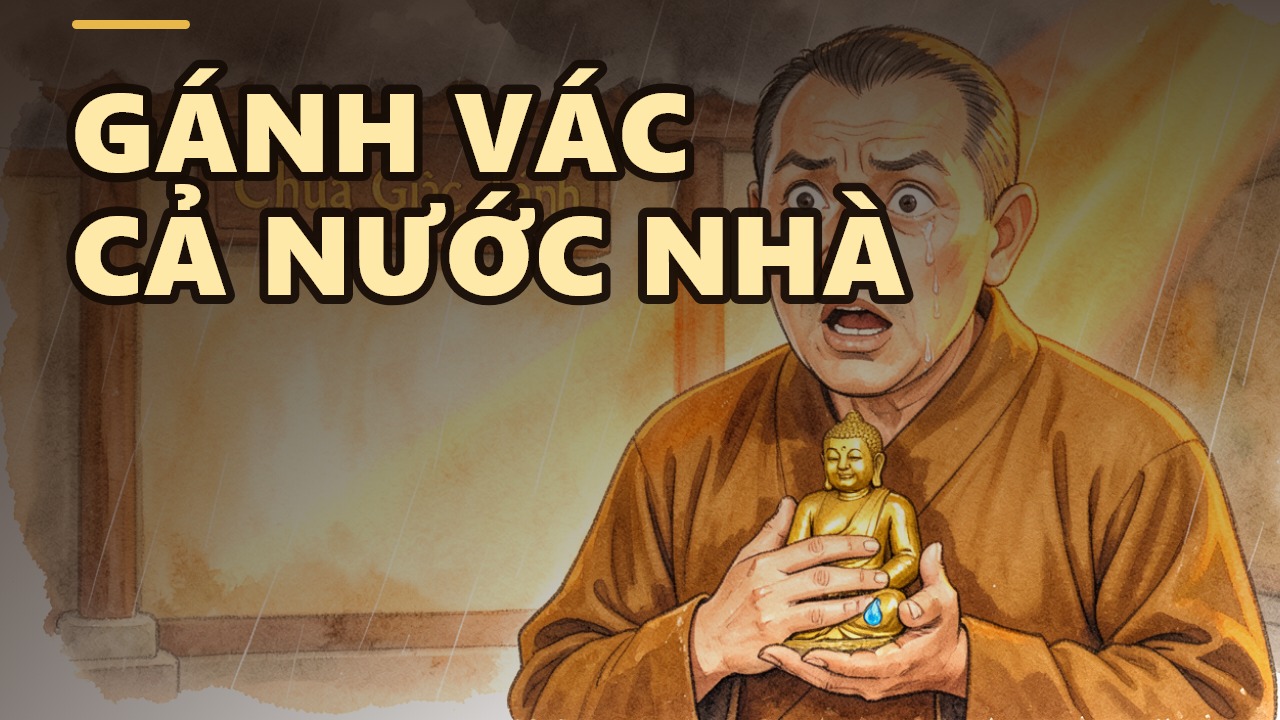
This dharma talk by the Venerable Thích Chân Quang opens a profound view into the vows of a layperson: three responsibilities toward family, society, and the Three Jewels. From these simple teachings, Buddhists come to see that the path of practice is found not only in the temple, but right in the midst of daily life.
The Temple Must Be a Second Home
Have you ever heard the story of an abbot who poured his whole heart into building a temple for Buddhist practitioners? Someone asked him, "Master, are you keeping this temple for yourself?" But he only smiled. The temple does not belong to any one person; it is a place for Buddhists to return to and practice. On a stormy afternoon, shortly after being appointed abbot of Giác Tánh Temple, he shared something very simple: "A temple must first have good food. When people come to the temple and don't have to worry about hunger, they can stay longer."
"As the saying goes, one must eat before one can practice the Way."
Do not think this is a trivial matter. When you step into a temple, the first thing that touches your heart is a sense of ease. Being well fed, having clean restrooms, having a comfortable place to sit — all of this creates the feeling that "the temple is home." The master told of a Buddhist who left because they could not bear the dirty restroom, and he reflected deeply on how to keep these simple spaces always fresh and clean. More than that, a comfortable chair can make someone want to stay forever. If the temple is a place where you feel love, patience, and no conflict, then you will prefer coming to the temple even more than staying home.
The First Responsibility: Family Is the Foundation
But once you have come to love the temple, the duty of the teachers is to teach you three precious things. The first: responsibility toward your family. A layperson living at home lives within a family, and family happiness begins with love, trust, and self-restraint. The master compared it this way: to keep a family strong, each person must be nearly a stream-enterer, a saint of the first fruition, because it is very hard to live in harmony while greed, hatred and delusion still remain.
"One must exercise great restraint, and live with great virtue."
What does this mean? It means that when you marry, you must not secretly keep private money, must not sneak off to drink, must not deceive your spouse. You must learn to yield, to preserve trust, and to guard your integrity for a lifetime. And when you have children, you must rise above the instinct of indulgent love in order to raise them well. Parents loving their children is instinct, but love without restraint easily spoils a child. As the master taught: "Once we love, we accept. Once we love someone, we no longer see their faults."
If there is discord in the family, bring the Buddha's teachings (Dharma) into the home. Bringing in the Dharma does not mean installing a Buddha statue; it means bringing compassion, faith in cause and effect (karmic law), and genuine practice into daily life. When each person restrains themselves a little, acknowledges their own faults a little, and forgives a little more, the family will naturally blossom with happiness.
The Second Responsibility: Society — The Nation on Your Shoulders
Stepping out the door, you step into society. The master reminds us that every person carries an entire nation on their shoulders. Do not think that we only do our small part. Every action, even picking up a single piece of trash, contributes to beautifying our homeland. He told of a road littered with garbage and fallen leaves, and blamed our lack of awareness.
"On the shoulders of each and every one of us rests our entire nation."
A Buddhist must care not only for the family, but for society as well. Paying taxes is a duty; engaging in charity is an act of the heart. As the master said, the monks do not pay income tax, yet they still do charitable work and raise funds to build homes for the poor, because "that is the ethics of Buddhism, the conscience of a human being." We are the same. Standing beneath the flag, we understand that protecting our country and keeping our environment clean is the sacred responsibility of every citizen.
The Third Responsibility: Toward the Three Jewels
The third thing is that a layperson must hold the Three Jewels in their heart. This is an opportunity to sow great blessings from merit. But it is not only about offering gold and silver through making offerings; it is also about keeping the mind pure and practicing according to the true Dharma. When you come to the temple, you are taught how to live responsibly, how to create merit, and how to nurture the seed of enlightenment. When you devote yourself to the Three Jewels, your blessings from merit grow each day and help bring peace and joy to your life.
"Just bring the Dharma in, and the family will blossom with happiness."
These three responsibilities are by no means easy. Upon hearing them, some might wish to flee to a temple for an easier life. But the master smiles: it is precisely by standing within the family that we understand deeply and can teach others better. Laypeople are those who carry the whole world on their shoulders. They have already created karma in the past, but they strive to fulfill their duties so they can live happily and virtuously.
Closing Words: Begin Today
Do not wait for the perfect conditions (dependent origination) to begin practicing. Each morning when you wake, you can start with a smile for your loved ones, a word of encouragement for your spouse, a recitation of the Buddha's name before leaving the house, and the mindfulness to pick up litter in public places. This is the vow of a layperson. Begin with your own family, with your own heart, and with the path you walk. Then blessings from merit will flow like water, bringing coolness to every road you travel.
AI-assisted translation from the Vietnamese original.
Read in Vietnamese →