
Tran Nhan Tong: The King Who Abandoned the Throne and Won Through Virtue
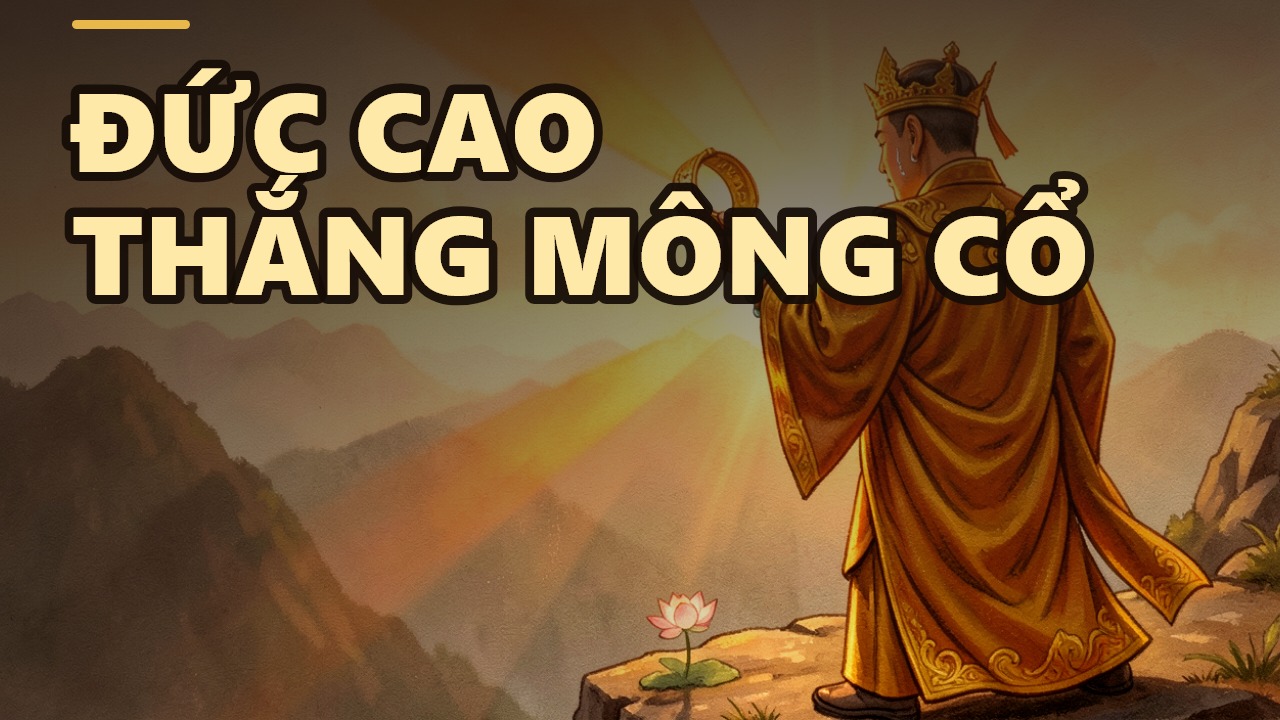
More than seven hundred years ago, there was a king who twice fled the royal palace to climb Yen Tu Mountain in search of the path of practice. He was Tran Nhan Tong, who later became known as the Buddha King and founded the Truc Lam Zen school. This monarch left behind not only a flourishing dynasty but also a profound lesson on the power of virtue and spirituality.
The Spiritual Flow from the Buddha to the Tran Dynasty
On the anniversary of the Buddha’s enlightenment, Venerable Thich Chan Quang invited listeners to remember the invisible flow of wisdom. From India through China to Vietnam, this stream of Dharma acts like a spiritual spring, nourishing the hearts of those willing to open themselves. As the teacher said, "This stream of Dharma, this spiritual current of the Buddha, flows endlessly into life. Wherever it touches a heart, that heart blooms with the flower of enlightenment."
This flow reached the Tran royal family, from King Tran Thai Tong and King Tran Thanh Tong to King Tran Nhan Tong. Three generations of kings attained realization, and Tran Nhan Tong stood at the peak, abandoning his throne to live fully on the path of practice.
Twice Renouncing the Throne: The Virtue of a Saint
When he was still a crown prince, Tran Nhan Tong escaped to Yen Tu Mountain. Later, after ascending the throne and defeating the Mongol army, he once again renounced worldly life to become a monk. Historical records note that he took monastic vows twice—once as a prince and once as a king. This reveals a soul indifferent to fame and profit. Teacher Chan Quang remarked, "A crown prince, waiting only for the day to ascend the throne, yet he fled the city to pursue spiritual practice. Who would not love and respect such a person?"
It was precisely because of this virtue that people from all walks of life turned toward the king. What greater strength exists than the support of the people when a ruler is free from greed for power or desire for status?
High Virtue: The Source of Victory Against the Mongols
The resistance against the Yuan-Mongol invasion remains one of the most glorious chapters in national history. Military scholars worldwide have analyzed tactics and terrain extensively. However, according to Venerable Thich Chan Quang, they overlooked the most crucial factor: the virtue of the king and the unity of the entire nation created the victory. Truong Han Sieu, who visited the Bach Dang battlefield, wrote, "Where does the advantage of difficult terrain come from? It comes from high virtue."
Teacher Chan Quang explained, "It is virtue that creates victory. If you possess sufficient virtue, go forth to confront others. But if you lack virtue, stay home; do not fight, for you will surely lose." This lesson applies not only to warfare but to every aspect of life: interpersonal relationships, business, and building a family.
Yen Tu: A Destination for Those Determined to Practice
Yen Tu Mountain transformed from a secluded cave site into a major center of meditation learning across the country. An old saying goes, "Those determined to practice cannot rest easy until they have climbed Yen Tu." Teacher Chan Quang shared that hearing this phrase once made him skeptical, but visiting the mountain brought deep understanding. He said, "Go there to recall seven hundred years ago, when forests were dense and paths were non-existent. Use this time to examine your own practice: Have you truly resolved? Are you diligent?"
One need not physically travel to Yen Tu. Each of us can find a pure space within our own mind/heart. The virtue of the Buddha King Tran Nhan Tong reminds us that the path of practice lies not in distant places, but in daily letting go, loving-kindness, and diligence.
Nurture virtue like Tran Nhan Tong, learning to forget oneself for the greater good. Open your heart so that the Buddha’s spiritual stream may cool your soul. Whenever you face difficulties, remember that resilience and compassion are the strongest armor, helping you weather every storm of life.
AI-assisted translation from the Vietnamese original.
Read in Vietnamese →