
Pure Practice of the Three Karmas: Purifying Speech Is Easiest, So Why Is Purifying the Mind Most Important?
A dharma talk by Venerable Thích Chân Quang helps us understand the three karmas of body, speech and mind: purifying speech is easiest, while purifying the mind is hardest because no one can watch over it. If you wish for purity, begin each day with your own mind/heart.
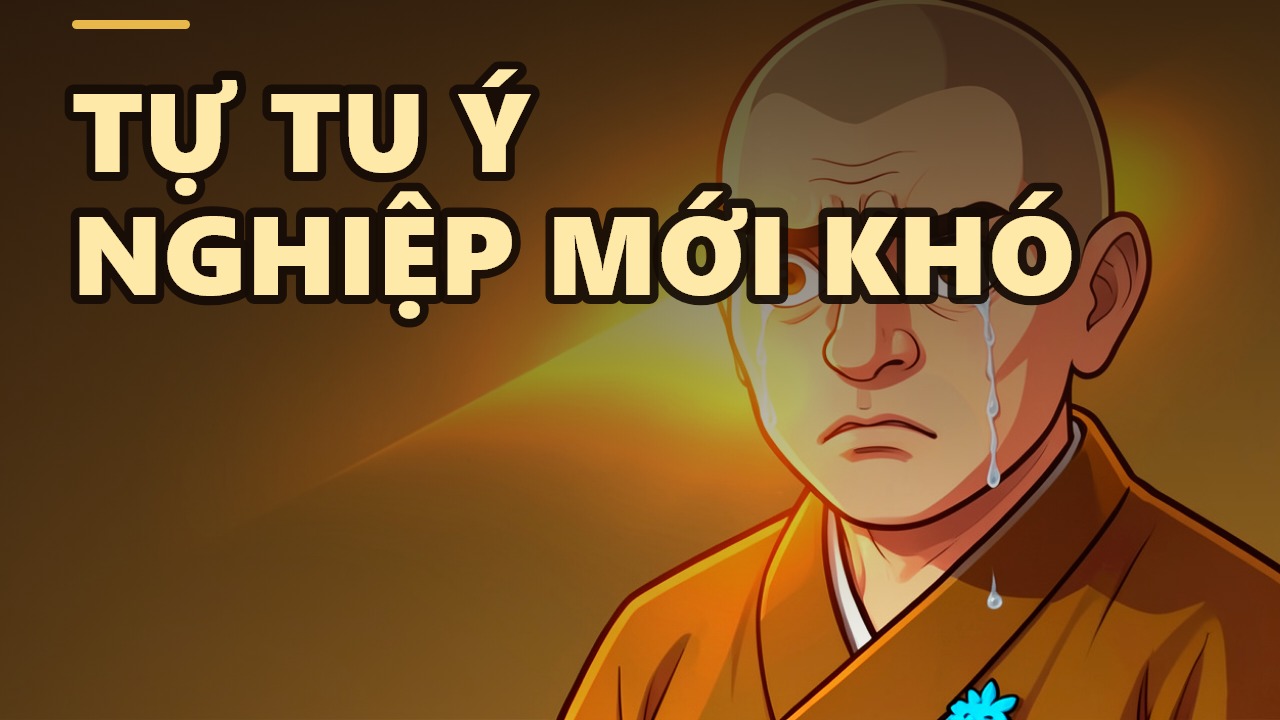
Have you ever wondered why some people recite sutras their whole lives yet their hearts remain unsettled? While others speak only a single sentence, a single word, and heaven and earth seem to listen. The Buddha taught that we have three karmas: body, speech and mind. These three karmas are three gateways that lead us either to liberation or to downfall. But which path is easy, and which is hard? Let us listen together to the teachings of Venerable Thích Chân Quang.
The Three Karmas – Three Gateways of All Beings
When we think of practice, we usually think of reciting sutras, chanting the Buddha's name, and doing good deeds. But Venerable Thích Chân Quang reminds us: "The three karmas are body, speech and mind. When we practice, we make these three karmas pure, true, and correct. That is called the pure practice of the three karmas." If we can master these three karmas, we can master our entire life.
Purifying Speech: The Easiest, Yet Also the Easiest Way to Create Wrongdoing
Many people think that practice must begin with difficult things. But Venerable Chân Quang points out: "Speech is the easiest to purify. For example, we simply imitate the words of the sacred teachings, the words the Buddha spoke, the words the patriarchs spoke, and we repeat them — that is called reciting sutras." One need only kneel before the Buddha, open one's mouth and recite, and that is purifying the karma of speech. Yet the mouth is also what most easily creates negative karma: "It costs not a single drop of sweat. One careless word can send you straight to hell."
The mouth easily creates merit, yet just as easily creates wrongdoing. Purifying speech brings the greatest health.
But do not think that reciting sutras alone is enough. The Venerable tells the story of Master Pháp Đạt, who recited the Lotus Sutra and a flock of goats came to kneel and listen. When we recite, the goats run away after listening, because our mind and body are not yet pure. "Only when one's entire life is pure and holy does the recitation of the sutras become merit."
Purifying the Mind: The Hardest, Because No One Can Watch Over It
Of the three karmas, the karma of mind is the hardest. Why? Because "no one knows what our head is thinking, and when no one knows, no one is watching over us, so we easily run wild." Human beings like to escape control in order to be free to do as they please. The Venerable shares an example: "If no one watches over you and you watch over yourself with true seriousness, that is a sage. But all beings share this trait: when no one is watching, they immediately run wild, become undisciplined, and indulge in pleasure."
The karma of mind is the hardest, because when no one watches over us, we must guard ourselves.
The Venerable tells of sneaking off to watch a play as a young man, thinking no one knew — only to end up on television. "Heaven tolerates no deceit; nothing can hide from the eyes of the sky." That is a lesson about lack of discipline, about how we always want to escape control to be free — yet true freedom lies within the precepts, within a disciplined way of life.
The Karma of Body: The Most Demanding, Yet the Foundation
By contrast, the karma of body is the most demanding. It is our livelihood, our actions, our interactions. "When we meet someone and speak, karma is already being formed. One sentence right or one sentence wrong, and karma is formed at once." Doing good deeds requires sweat and sacrifice. Yet it is precisely a pure karma of body that gives power to our words. The Venerable tells of a great master who needed only to say, "Now, no one may disturb this child," and the child stopped crying at night — for "the command of such a master no one dares break."
Meditation – The Essence of a Practitioner
Finally, no matter which school one practices in, a practitioner must take the karma of mind as the root. And meditation is the most important means of purifying the karma of mind. Venerable Chân Quang recounts the master's teaching: "If a practitioner does not know how to practice meditation, they cannot yet be called a practitioner. Just as the essence of the sea is salt, the essence of a practitioner must be meditation."
Wherever the practice is correct, the realization is the same, in any school whatsoever.
So on the journey of purely practicing the three karmas, attend to all three: refine your speech, be diligent in your actions — but above all, purify your mind. For only when the mind is calm and under control do the three karmas become pure, and only then does our life become truly peaceful and liberated.
Begin today: one honest word, one act of compassion, and one moment returning to the breath. Wishing you diligence in practice.
AI-assisted translation from the Vietnamese original.
Read in Vietnamese →