
Clever or Wise? The Decisive Factor in Human Destiny
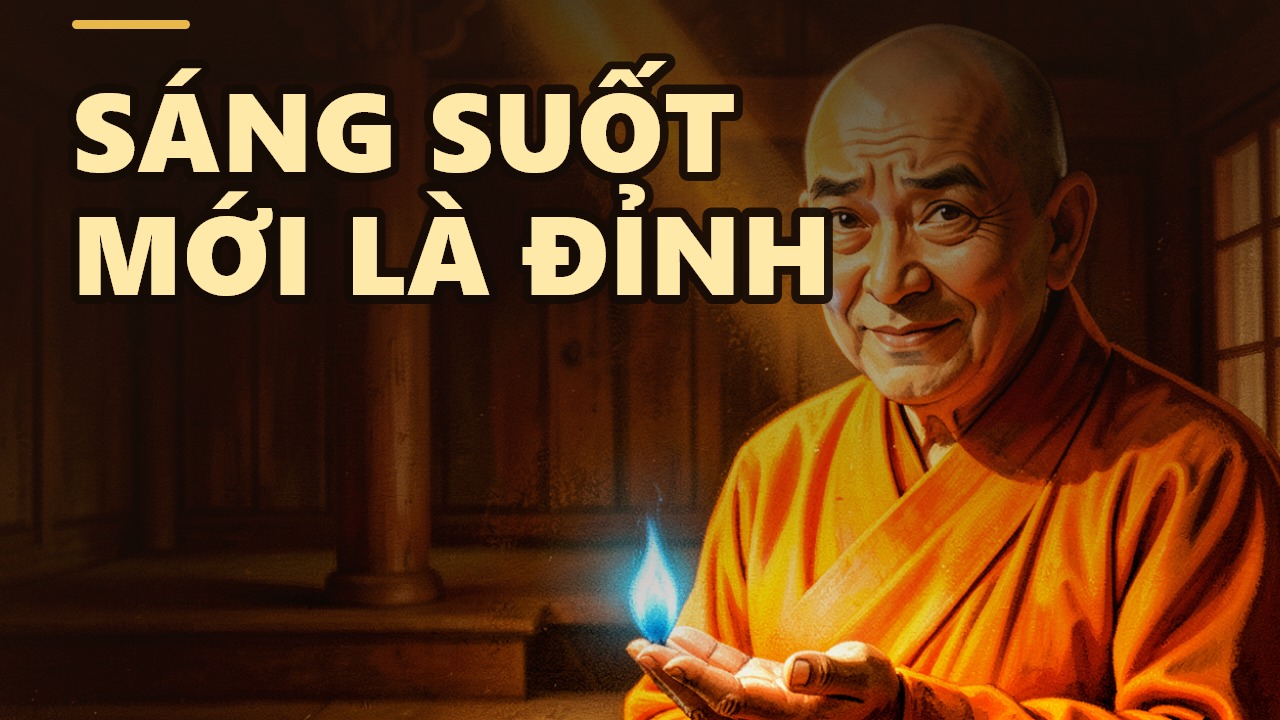
Many people who excelled in school, with outstanding grades, often fail repeatedly once they step into the wider world. Others who were average students, even labeled as "dim," go on to achieve success, build wealth, and become highly resourceful. Why does this paradox exist? Is there perhaps a vast difference between "cleverness" and "wisdom"?
The Difference Between Cleverness and Wisdom
We often assume that cleverness and wisdom are synonymous. However, as Venerable Thích Chân Quang points out in his dharma talk, wisdom encompasses cleverness. Cleverness is but a raw gemstone, while wisdom is that same gem meticulously polished to a brilliant shine.
The Vietnamese word for clever, "thông minh," translates to "bright and thorough." Yet, the term for "sagacious" or "wise" carries an even higher meaning—it is precisely wisdom. Therefore, to praise someone as "very clever" is to compliment them on a basic level. To call them "sagacious," however, is to honor a comprehensive depth of wisdom.
What is Cleverness?
Venerable Chân Quang explains that the first quality of cleverness is quick understanding. One grasps a point almost instantly, without needing further elaboration. One who understands the teacher’s lesson before the explanation is even finished is clever. But why do some understand so quickly? Part of it is innate ability, but a greater part comes from deep focus and a respectful attitude toward the teacher.
He shares an example: when an attendant says someone wishes to see the master, a clever person will observe the attendant’s expression to deduce the visitor’s purpose. This is the ability to synthesize various clues for rapid reasoning. Cleverness is like a sharp but sometimes surface-level camera.
What is Wisdom?
Wisdom is not just quick comprehension; it is profound understanding. It penetrates to the essence of things, perceives the karmic law of cause and effect, and discerns what to do and what to abandon. Wisdom is accompanied by ethical conduct, compassion, and mindful awareness. We respect a wise person not merely for their intellect, but because they can see the full picture and "read the depths of one's heart."
He further explains our reverence for saints: it is because their wisdom surpasses our own. Someone may be morally good but lacking in wisdom, and we may feel sympathy but not deep reverence. However, when a person possesses true wisdom—knowing all things and seeing into our hearts—that is when we feel genuine respect and admiration.
The True Hierarchy in This World
In life, people often establish hierarchies based on many standards: beauty, wealth, health. But Venerable Chân Quang points out that the true mark of status is wisdom. An elephant, despite its great size, is ridden by humans because humans are more clever. A fortune-teller is respected because they know things we do not. This is an obvious hierarchy that cannot be erased. The important thing is not to let these differences lead to contempt or resentment.
Why Do Top Students Not Always Succeed?
He recounts that some people excel in school but fail in business, while others who were not exceptional students become very successful entrepreneurs. Why? Because wisdom is not merely bookish cleverness. Wisdom is an understanding of life, practical sense, and flexible adaptability. A person with only cleverness but lacking wisdom becomes trapped in theory. A person with wisdom, even if they were a poor student, can seize opportunities and solve problems through real-world experience and inner clarity.
Does Learning Lead to Wisdom?
Many believe that reading extensively and earning high degrees automatically increases wisdom. But the Master reminds us that this is the common assumption. However, from the perspective of karmic law, we must look from a different angle. Education makes us clever, but wisdom requires practice, contemplation, and inner transformation. Wisdom arises from a pure and tranquil mind, from living in accordance with ethical principles, and from seeing the true nature of life clearly.
A Lesson for Ourselves
We should not become complacent simply because we are clever. We must strive to cultivate wisdom. Cleverness helps us solve difficult problems; wisdom helps us live a truly happy life. Wisdom is the root of transformation and liberation. Let us live in mindful awareness, practice letting go of craving, respect all beings, and continuously learn from life itself. That is the path to true sagacity—the authentic light of the soul.
AI-assisted translation from the Vietnamese original.
Read in Vietnamese →