
Meditation Is Not Just Sitting Still: A Journey of Educating the Heart According to Buddhism
Meditation is not merely sitting still; it is living a holy life. Moral education and teaching the law of cause and effect (karmic law) are the very foundation for building a better world.
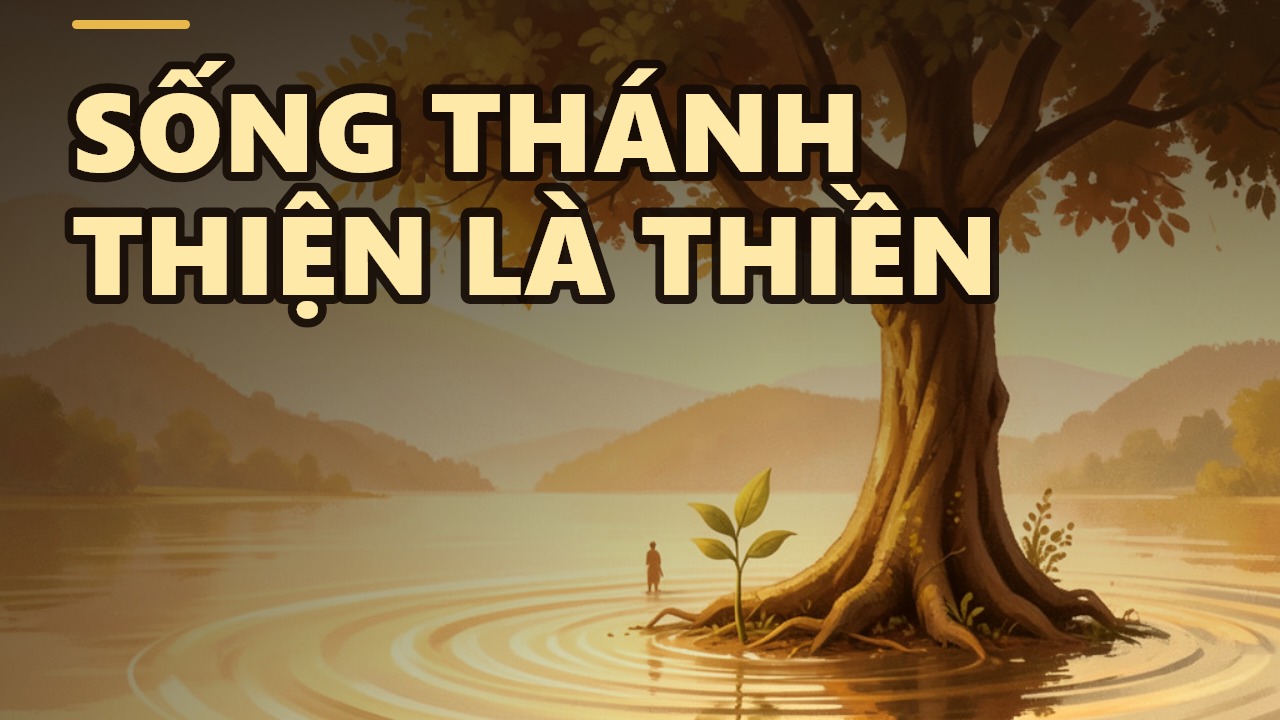
A Buddhist from abroad once wrote in, asking that the Teacher only lecture on meditation and stop talking "all over the place" about worldly matters. But Master Thích Chân Quang answered with a story, ever so gently: meditation is not just sitting still—it is also a holy way of living. From there, the Teacher opened up a profound perspective on education, something that seems like a "worldly matter," yet is in fact the foundation of all spiritual practice.
Meditation Is Wider Than You Think: A Holy Life
According to the Teacher, meditation has two meanings. In its narrow sense, it is gathering the mind in stillness; in its broad sense, it is a holy life—living for others, loving everyone. The Teacher emphasized:
"It is precisely the merit accumulated in daily life that forms the meditative stillness within our mind/heart. The greater the merit, the deeper the stillness within."
Therefore, to cultivate deep meditative concentration, we need to accumulate merit by living rightly in each of our roles. This is why moral education is so vitally important.
Standing Right in Every Role: The Path of Accumulating Merit
We cannot simply say "life is impermanence (anicca)" and then treat everything carelessly. A Buddhist needs right view in every situation. As parents, we must teach our children about cause and effect (karmic law), take them to the temple, help them learn to chant the sutras, while also being appropriately strict. As friends, as teachers, every role demands a correct way of seeing. The Teacher said:
"We live in this world... whenever we place ourselves in any situation, if we see it rightly and handle it rightly in every case, it all becomes merit."
Each time we act rightly, we accumulate wisdom and merit, and in this way the stillness of our mind/heart gradually grows steady and firm.
Restoring the Beauty of Asia: From the Bowing of the Head to Reverence
The Teacher does not wish to disparage Western culture, but he acknowledges that Asia holds precious values. One of these is reverence toward teachers and elders. He recalls the image of students of old, folding their hands and bowing their heads to greet their teachers, and he warns:
"A child, deep in their heart, needs to hold reverence for the one who teaches them. If a child... has no reverence for their teachers in their heart, then something fundamental breaks within them, morally speaking."
In a society where students have carried guns into schools, we can see the value of the bowed head, of courtesy and respect. That is the soil in which character and talent can blossom.
Every Small Gesture Is a Brick in the Wall of Resilience
Morality does not arise from grand deeds. It is built from small acts: receiving objects with both hands, bowing to greet the elderly, pausing when passing a funeral procession. The Teacher compares these to bricks that build a fortress of resilience for the soul:
"The very act of respecting an elder and bowing our head in greeting is a brick that builds resilience within the heart. When an elder hands us something and we receive it with both hands... that is a brick laid in the foundation of our soul."
Schools need to grade attitudes, not just written exams. Otherwise, children will gradually lose their protective shell against temptations such as drugs.
Buddhist Schools and the Dream of Teaching the Law of Cause and Effect
The Teacher hopes that one day there will be Buddhist schools where children can learn about cause and effect (karmic law), practice sitting meditation, and study the teachings. He shares:
"To understand the law of cause and effect deeply and thoroughly is not something achieved in a day. It requires education over many days and many months, and so I still hold this dream."
For laws can never be enough to stop crime; only morality—once it has soaked into the heart—can stop a person at the very first thought. Teaching cause and effect is giving children a key to enter the sky of goodness.
Conclusion: Change Education, Change the World
A German philosopher once said: "If we change education, we will change the whole world." Today, we—as Buddhists—may not have the power to transform an entire education system, but we can begin with our families, with a small classroom, with our own hearts. Let us teach our children reverence, love, and faith in and understanding of the law of cause and effect. We do not know who we will be in our next life—perhaps a teacher, a minister, or simply a father or a mother. But if each of us holds firm to our faith in morality, this world will surely become a better place.
Homage to our Original Teacher, Shakyamuni Buddha.
AI-assisted translation from the Vietnamese original.
Read in Vietnamese →