
Meditation Is Not for Gaining More, But for Letting Go
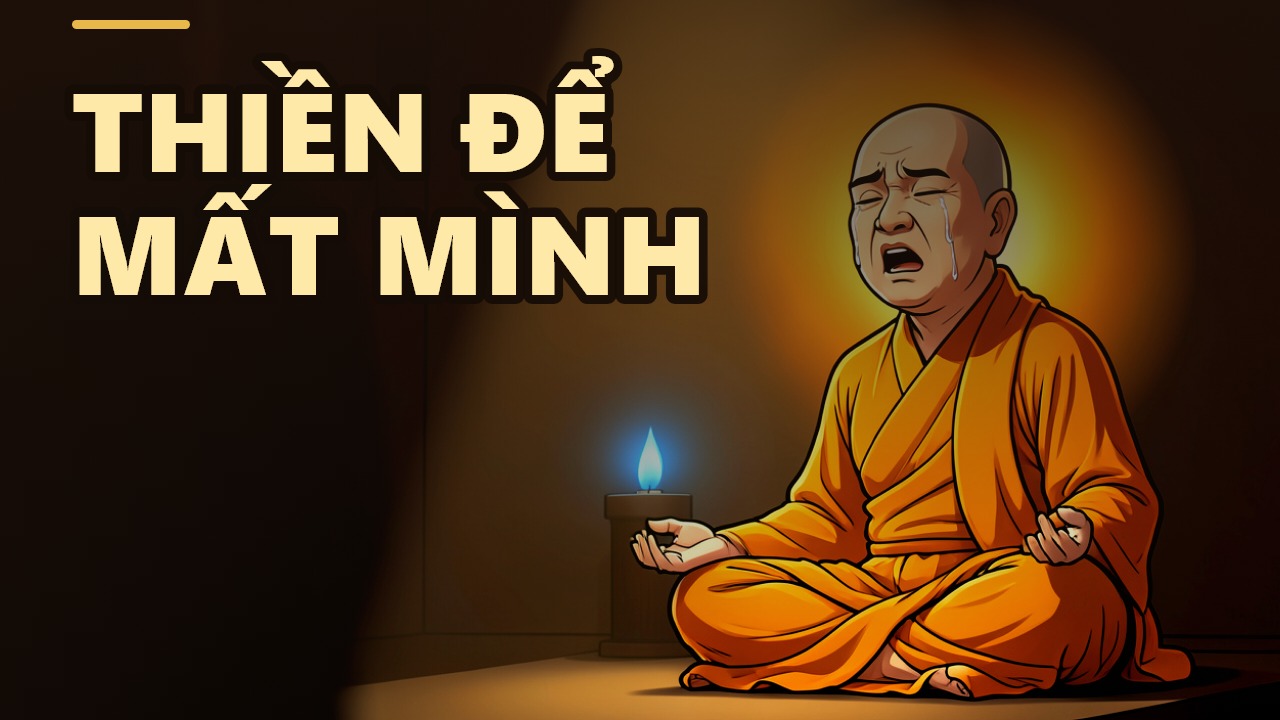
Have you ever asked yourself why you meditate? You sit quietly, follow your breath, and feel a sense of peace. But what comes next? Many people turn to meditation as a remedy to soothe the busyness of life. However, for a Buddhist disciple, meditative concentration is an entire path leading to a far deeper goal.
## The Heart of the Festival Is Meditative Concentration
During the Guanyin Festival, the abbot shared a profound insight. Behind the solemn rituals and the bustling stalls, there must be a core, a heart of practice. That heart is meditative concentration. He stated that while festivals may be grand events, they must possess this central element of spiritual cultivation.
When a festival includes meditative concentration, it becomes more than just an occasion for making offerings or entertainment. It transforms into an opportunity for each person to return to themselves, listening to their body and soul. This marks the beginning of stepping onto the inner path, something the modern world deeply craves.
## Two Paths for the Practitioner
The Buddha taught that there are two tendencies when people approach the Buddha's teachings (Dharma). One is seeking something for oneself: practicing to gain blessings from merit, better health, or more peace. The other is seeking the path to no longer be "oneself," which is non-self (anatta). Venerable Thich Chan Quang emphasized that this distinction determines one’s spiritual journey.
He noted that if someone hears that practice is about gaining something and feels excited, they remain an ordinary sentient being. But if someone hears that practice leads to losing the self and feels joy at this goal, they have cultivated at a very high level in past lives. This truth might startle us. After years of practice, what are we truly seeking? If we still chase fame, profit, assets, or status, we are merely feeding our ego. Yet, when hearing about non-self brings happiness and acceptance, we touch the profound layer of practice taught by the Buddha.
## Four Characteristics of Buddhist Meditation
Buddhist meditative concentration differs from all other schools of meditation in the world. Venerable Chan Quang outlined four distinct characteristics. First, it is taught by the highest enlightened one, the Buddha, who attained ultimate wisdom. Second, it has a clear formula, precise like mathematics, without ambiguity. Third, it offers a specific roadmap where each step leads to a clear state, free from error. Fourth, it leads to ultimate non-self (anatta), the sole goal Buddhism aims for.
Because of these traits, Buddhist meditation is not merely a relaxation technique. It is a path to liberate the mind, studied and revered by the world. It is scientific and structured, capable of guiding practitioners to the pinnacle of realization.
## Three Supporting Factors for Meditation
In his talk, Venerable Chan Quang pointed out three foundations necessary for deep meditative concentration: merit, morality, and energy cultivation. Merit involves doing good deeds and creating blessings from merit. Morality means cultivating a pure heart and keeping precepts. Energy cultivation refers to practicing breathing techniques to harmonize vital energy. All three are essential to build a solid foundation for the practitioner.
A person practicing meditation must generate great merit, nurture moral integrity, and diligently practice energy cultivation. When these three elements converge, meditative concentration can carry the practitioner further along the path to enlightenment.
## The Ultimate Goal: Non-Self
Meditation is not about gaining anything; it is about letting go. It is about losing what we think is "me." This goal contradicts common habits, yet it is the essence of the Buddha's teachings (Dharma). Without the goal of non-self (anatta), Buddhism would become ordinary, like any other religion. But because of non-self, it remains the unique path to liberation.
Look into your own mind. Why do you practice? If hearing about non-self opens your heart with peace, it is a sign of deep roots of goodness from many lifetimes. Remember that the Dharma survives through those who do not chase the ego but strive toward the ultimate nature. Today, begin your sitting meditation with this vow: "I practice so that I am no longer myself." This is the path of those beloved by the Buddha, and it is the way to preserve the true Dharma.
AI-assisted translation from the Vietnamese original.
Read in Vietnamese →