
The Buddha's Meditation: A Formula, a Path – And Unexpected Obstacles
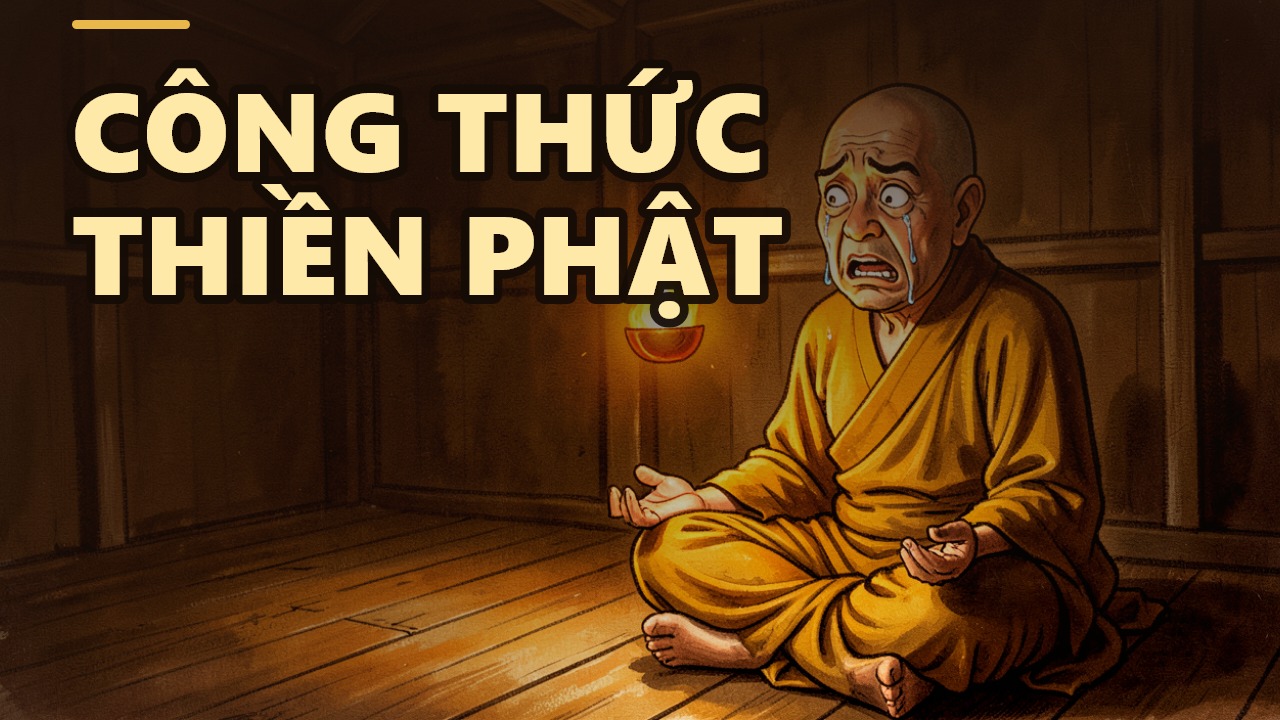
Venerable Thich Chan Quang reveals why the Buddha’s meditation is supreme. He warns of dangerous obstacles such as arrogance, the loss of grounding energy, and a lack of merit in spiritual practice.
Have you ever wondered why some people meditate for decades yet their mind remains scattered? Some even suffer from neurological issues. Meanwhile, others sit for just a few months and experience clear peace. Where does this difference lie?
In a recent dharma talk, Venerable Thich Chan Quang revealed an important truth. The Buddha’s meditation is a science with a clear formula and path. It is not merely romantic or vague poetry. However, on the journey of practice, we will encounter many obstacles. Understanding these clearly helps every Buddhist disciple walk steadily.
## Why Is the Buddha’s Meditation Supreme?
Venerable Chan Quang emphasized that while many schools of meditation exist worldwide, only the Buddha’s meditation was taught by one who attained full enlightenment. This makes it qualitatively different.
He stated, "The Buddha’s meditation has a formula. Two plus two equals four. Two plus three equals five. It is precise. Secondly, it has a clear path. You know exactly where you are at each stage without error."
When you meditate according to the Buddha’s method, you understand your position on the path. Other methods can lead to confusion. Seeing light might make you think you have attained realization. Hearing faint sounds might make you believe you possess divine hearing.
Venerable Chan Quang shared a story. A teacher was meditating in his hut when he saw a bright light before him. He thought, "I am about to attain enlightenment." But it turned out someone outside was shining a flashlight into his window. Without understanding the path, we easily misunderstand our experiences. We may falsely claim enlightenment, bringing harm upon ourselves.
## First Obstacle: Growing Arrogance Through Practice
This is a subtle trap. Many meditators begin to feel superior. They think they have become Buddhas and look down on others. Venerable Chan Quang compared this to a patriarch who ate brown rice and sesame salt but forced others to eat it until they nearly died, while he remained healthy.
He constantly warned against arrogance. When beginning meditation, we must cultivate three attitudes. First, absolute reverence for the Buddha. Second, infinite compassion for all beings. Third, ultimate humility, seeing ourselves as grass, dust, or sand.
These three attitudes guide us away from wrong views. One monk heard an old man appear and praise him, saying, "You have attained the Shurangama Samadhi." Overjoyed, he went mad the next morning, dancing naked. The notion of "attaining this" or "that," combined with demonic illusions, destroyed his entire life of practice.
## Second Obstacle: Energy Rising to the Head and Loss of Grounding
Traditional Eastern medicine identifies an invisible system of vital energy. The most important center is the Dantian. The Buddha taught that during meditation, we must be aware of the whole body. We should not focus only on the head but also on the chest and abdomen. This keeps energy circulating in the lower belly.
However, many methods encourage focusing too much on the head. This causes energy to rush to the brain, damaging the nervous system. Venerable Chan Quang explained, "When the lower belly becomes empty, the brain suffers. We develop neurological disorders. We do not go insane, but we hallucinate. We cannot sleep or eat properly. Life becomes unbearable."
He told of a female devotee whose brother suffered from mental illness. After he died, she dreamed he fell into hell. Venerable Chan Quang clarified that states of mental instability are akin to realms of hell and animals. This is called the suffering of the five aggregates burning intensely. Choosing the right method determines the outcome of a lifetime of practice.
## Lack of Merit: Cultivate Blessings While Practicing
Venerable Chan Quang advised that wise meditators must generate merit alongside their practice. The highest way to create blessings is to help others practice. He shared an example. Someone struggled to learn English. They were advised to give English books to others. Within a year or two, their own English improved naturally.
Similarly, in spiritual practice, if you meet someone who does not understand meditation, encourage them. Explain its benefits. Even if they do not meditate yet, if they admire it in their heart, you have planted seeds of merit within them.
The more you help others practice, the greater your merit becomes. Your own obstacles diminish. Do not cling to silence and practice alone. Guide and encourage everyone to walk the path together.
## Repentance: The Foundation of Practice
Every practitioner faces obstacles. Even great patriarchs like the Fifth Patriarch Hongren and the Sixth Patriarch Huineng endured immense hardship. Therefore, do not lose heart. To overcome karmic obstructions, Venerable Chan Quang highlighted the daily practice of bowing to the Buddha in repentance.
He noted, "Great masters are always humble. They frequently bow to the Buddha in repentance. No one dares to claim they are free from karma or sin. Only arrogant people with wrong views believe they are sinless and refuse to bow."
Those with wisdom see that sins can arise in a single moment. So, whenever they have free time, they kneel before the Buddha. They find happiness and warmth there. Like a child full of mistakes returning to their father, they realize that kneeling with clasped hands before the Buddha, offering infinite reverence, is enough to sustain life and face death.
## Walking Steadily on the Path
Meditation is a long journey filled with difficulties. Remember that the Buddha’s meditation offers a formula, a path, compassion, and humility. By anticipating obstacles, diligently practicing repentance, and generating merit through helping others, you will walk steadily.
Do not let incidents destroy your ideals. Always maintain the three attitudes: reverence for the Buddha, love for all beings, and ultimate humility. These ensure you are walking correctly on the path of the Tathagata.
AI-assisted translation from the Vietnamese original.
Read in Vietnamese →