
Deep Roots of Goodness: A Lesson from the Diamond Sutra on Precepts and Merit
In a dharma talk on the Diamond Sutra, Venerable Thich Chan Quang reminds us not to abandon form before establishing a foundation in keeping precepts and cultivating merit. If we misunderstand emptiness, it becomes a numbing agent that drains our blessings and leaves body and mind weary.
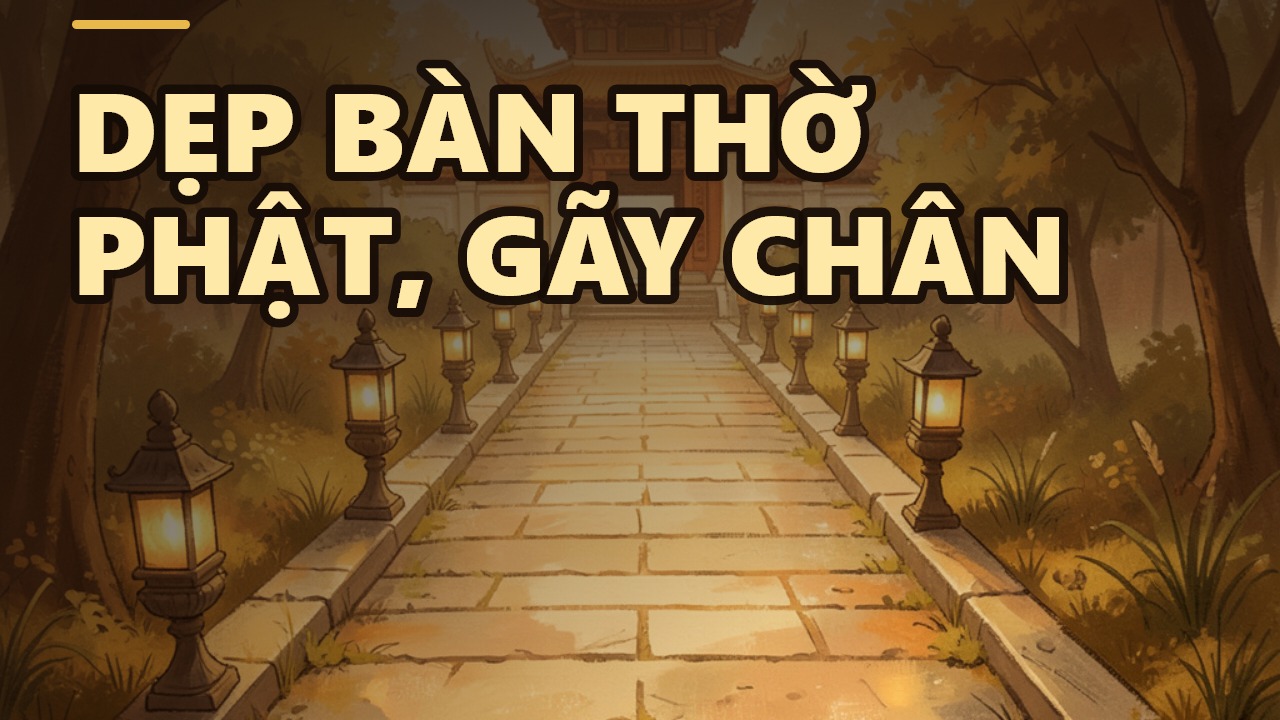
A friend once shared a story about his intellectually inclined son-in-law who was deeply interested in Buddhism. One day, the young man removed the family’s Buddhist altar, declaring, "The Buddha is without form; why worship with superstition?" This sounded profound, but shortly after, he slipped on the stairs and broke his leg. Was this coincidence or cause and effect? Perhaps both. It brought to mind a teaching from Venerable Thich Chan Quang: "If we misunderstand the word 'emptiness,' it instantly turns into a numbing drug." The concept of emptiness in the Diamond Sutra is not meant to destroy everything, but to build an unshakable moral foundation.
The Diamond Sutra – The Scripture of Unbreakable Morality
Many people hear the Diamond Sutra and immediately think of "emptiness" – no form, no attachment, no clinging. However, Venerable Chan Quang emphasizes that this sutra speaks of conduct and morality. It is named "Diamond" because morality built upon true understanding of emptiness is indestructible. He explains that the Diamond represents solidity; it can break other things, but nothing can break it. Thus, the Buddha named this sutra the Diamond Sutra to signify that morality accompanied by such wisdom is the highest kind, impervious to destruction.
The First Three Practices on the Path to Enlightenment
In the Diamond Sutra, Subhuti asks the Buddha how to settle the mind and subdue its disturbances. The Buddha does not immediately answer with meditation techniques but offers three foundational practices: saving beings without claiming credit, giving without dwelling on appearances, and honoring the Buddha beyond mere forms.
Venerable Chan Quang elaborates: We must help others learn the Buddha's teachings (Dharma) without attaching to our own achievements. Second, we must give and assist sentient beings without clinging to the appearance of the act. Third, we must understand how to honor the Buddha by transcending ordinary, temporary, and illusory forms to perceive the supreme value of the Buddhas. These three practices seem simple but are incredibly difficult because we usually rely on external forms for recognition. If our mind is still swayed by whether a statue is beautiful or ugly, or if a temple is grand or humble, we have not truly understood the Buddha. For instance, visiting a temple only when the statue is beautiful shows attachment to form, while refusing to bow to a concrete statue shows attachment to emptiness. The Middle Way is seeing through the form to recognize the inner value.
Keeping Precepts and Cultivating Merit – The Key to Deep Roots of Goodness
The Buddha taught, "All that has form is illusory." Yet, few can truly understand and practice this correctly. The Buddha told Subhuti, "Do not say so. Five hundred years after my passing, if there are those who keep the precepts and cultivate merit, hearing these words will they believe them? Know that such persons have planted roots of goodness under countless thousands of millions of Buddhas." Why are precepts and merit so vital? Venerable Chan Quang explains that one must first keep the precepts and cultivate merit. Wisdom arises from merit; without merit, there is no wisdom. Therefore, claiming to understand "emptiness" without ethical discipline is a misunderstanding. To grasp the Diamond Sutra, one must live according to the precepts and diligently perform good deeds. This creates the deep roots of goodness praised by the Tathagata.
Do Not Turn Emptiness into a Numbing Agent
The greatest danger is using the concept of emptiness as an excuse for inaction. Venerable Chan Quang warns that some people, hearing that "everything is empty," become lazy, ceasing to practice, accumulate merit, or help others. They end their lives lying dormant, as if injected with a numbing drug. He states strongly that anyone sitting idle, doing nothing, believing they are practicing emptiness, has been sedated by this misunderstanding. This contradicts the spirit of the Diamond Sutra entirely. The Buddha teaches emptiness so we may let go of ego-clinging, yet we must simultaneously engage actively in doing good. Using "emptiness" to justify breaking precepts is wrong view.
Giving Without Claiming Credit – Preserving Blessings Daily
A practical aspect of the Diamond Sutra is helping others without recounting our contributions. Venerable Chan Quang illustrates this with an example: if you donate one million to a temple but tell everyone about it, your merit diminishes. After telling ten people, the merit may vanish, and further boasting requires repayment. Conversely, if you remain silent, forgetting the act even within your own heart, the merit grows large. When we boast about our good deeds, we destroy our own merit. Practicing the Diamond Sutra means performing acts of kindness without claiming credit, without clinging to the self, and without getting stuck in appearances. Try applying this today: when giving money, helping someone, or contributing to temple construction, do so with a light heart and let it pass. Do not dwell on what you gave. Do not tell others. Do not praise yourself. This is the solid practice of the Diamond path.
Practice Starting Today
The Diamond Sutra is not merely for recitation but a method for living. It requires us to begin with basics: strictly keeping precepts, diligently cultivating merit, helping others without claiming credit, and honoring the Buddha with wisdom. Remember, planting deep roots of goodness takes many lifetimes. But right now, we can start with small actions: give without remembering, help without telling. This is the secret to becoming a person with deep roots of goodness, as praised by the Buddha in the Diamond Sutra.
AI-assisted translation from the Vietnamese original.
Read in Vietnamese →