
Transforming the Mind: The Key to Lasting Blessings in the New Year
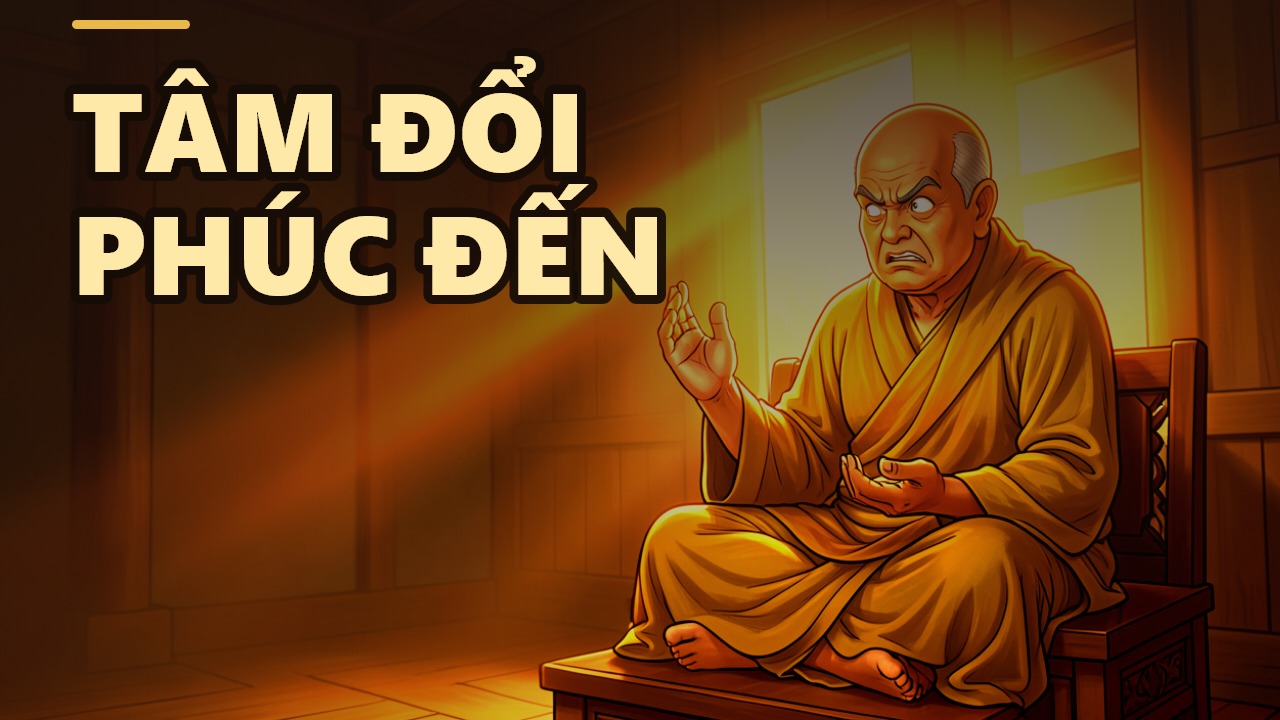
In a New Year’s lecture, Venerable Thích Chân Quang guides us on the true meaning of attracting good fortune: through releasing lives, doing good deeds, and transforming the mind so that blessings spread far, wide, and across many lifetimes.
Each New Year, Vietnamese people often visit temples, perform rituals to avert bad luck, or seek ways to secure good fortune for the year. But according to Venerable Thích Chân Quang, truly attracting good fortune does not lie in these external rituals, but in transforming one’s mind. In a New Year’s lecture at the Phật Hạnh practice center, the Venerable shared a touching story to illustrate the power of true blessings.
**What is the right way to seek good fortune?**
Many believe that rituals to avert bad luck can turn misfortune into luck. But Venerable Chân Quang states this lacks a foundation in the Buddha’s teachings. According to him, such rituals are merely beliefs inherited from a tradition of fortune-tellers and cannot truly change the law of cause and effect.
"In Buddhism, seeking peace is different from rituals to avert bad luck. Such rituals have no basis in the Dharma; they are merely beliefs from a tradition of fortune-tellers."
Instead, he advises us to perform good deeds: releasing lives, planting trees, building roads, and helping others. These actions not only bring peace of mind but also create true merit and blessings.
"Releasing lives is wonderful, but beyond that, there are many other good deeds we must do at the start of the year."
**Blessings that spread far, wide, and long**
According to Venerable Chân Quang, when a person knows how to do good, their blessings affect not only themselves across many lifetimes but also spread to those around them and to their descendants for many generations.
Length: Merit accompanies us through the cycle of rebirth, helping us be born in pleasant circumstances, with intelligence, talent, and potentially reach the status of a saint.
Width: Blessings influence one’s family and community. A person who practices and does good brings luck to their entire family, helping them overcome hardships.
Distance: Blessings are left for descendants many generations later. For example, the Nguyễn Đức lineage prospered for a long time because their ancestor lived virtuously.
The Venerable emphasized:
"When a person knows how to do good, the goodness multiplies many times over."
**Transforming the mind: the core of the matter**
But what makes us know to do good and enjoy doing it? It is the mind. A person with a good heart will have a life full of blessings. However, transforming the mind is very difficult. Goodness does not come naturally; it requires training and reason. Evil, however, is the natural instinct of sentient beings.
"When our mind is good and understands the Dharma, we know how to do good, enjoy doing it, and endure hardship to do it. A person without a good inner mind will not think of doing good or practicing."
He borrowed the saying, "Rivers and mountains are easy to change, but a person’s nature is hard to alter," to say that changing one’s fundamental nature is extremely difficult. For a bad person to become good is much harder than for a good person to become bad. Therefore, we must actively "cultivate" goodness within our minds.
"Rivers and mountains are easy to change, but a person’s nature is hard to alter. This is a saying that distills the wisdom of the ancients."
**Beginning with a spark and a daily vow**
So how do we start? Venerable Chân Quang affirms: the path of practice often begins unexpectedly—when we meet a saint or a noble person and are inspired by them. In that moment, a seed of goodness is planted in the mind, and it will grow across many lifetimes.
"It begins unexpectedly in life. We meet a saint unexpectedly. This is not a predetermined condition from cause and effect; it is simply by chance. We meet a saint and admire them when we understand they are a saint."
However, admiration alone is not enough. We need to make vows daily before the Buddha, such as the vow to eliminate selfish living and live altruistically. According to the Venerable, if we persist for three years, that vow will become the nature of our mind and shape us until we attain enlightenment.
"We must make a vow. Every day, we must vow before the Buddha... If we can keep this vow for three years, it begins to become the essence of our soul and shapes our spirit until the very day we attain enlightenment."
The New Year is not merely a time for shopping, travel, or ritualistic luck-seeking. It is an opportunity for us to reflect on our own minds, choose goodness, and bravely transform from within. Every small good deed—releasing lives, building roads, or helping others—is a brick in building lasting merit and blessings. And remember, the most important thing is to transform the mind—for only with a good heart can we have a life of true and lasting blessings.
AI-assisted translation from the Vietnamese original.
Read in Vietnamese →