
Deities in the Invisible Realm: Believing Rightly Brings Blessings, Believing Wrongly Loses Them
A dharma talk by the Venerable Thích Chân Quang explaining the deities of the invisible realm, helping us distinguish real deities from false ones, so that we may worship in the right way and receive blessings from merit.
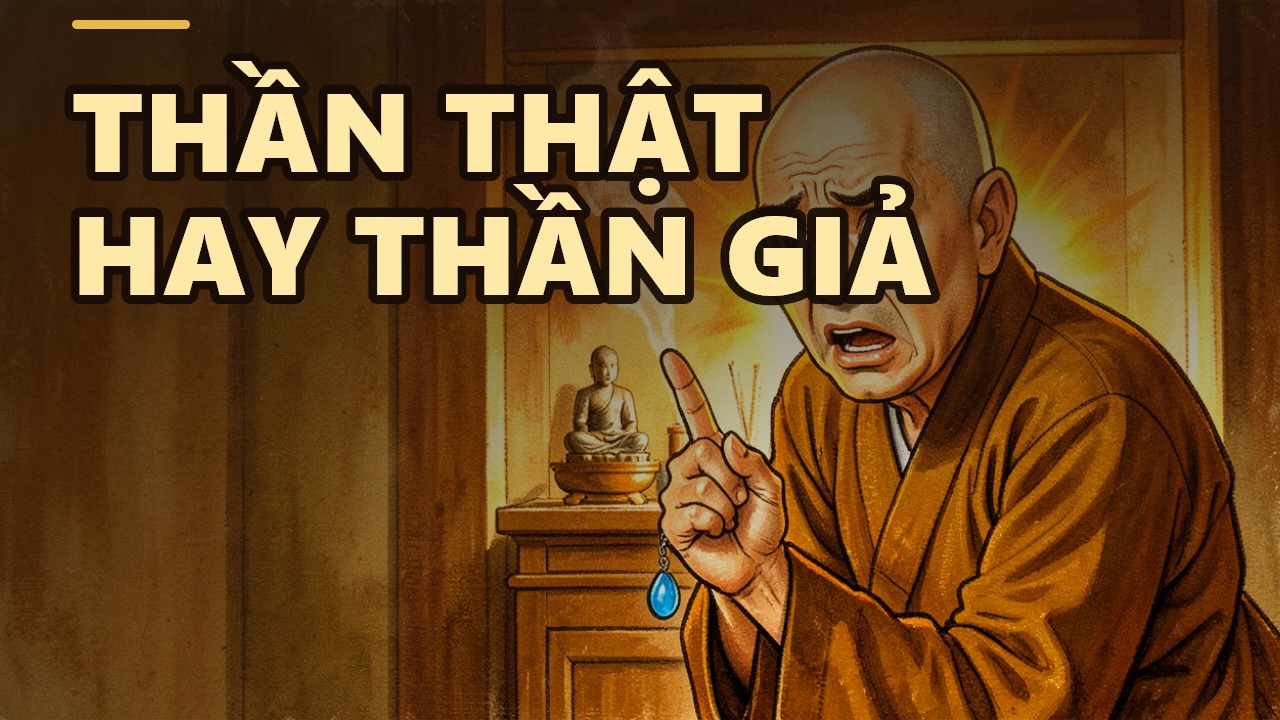
Have you ever wondered: Are the deities I worship every day real? And why do some people worship endlessly yet remain poor, while others offer just a few sticks of incense and meet with good fortune?
In his dharma talk "The Deities in the Invisible Realm," the Venerable Thích Chân Quang made it clear: deities come in many kinds, but only when we worship rightly do we receive blessings from merit; worshipping wrongly leads into superstition. Let us learn how to tell the difference, so we do not waste our effort, time, and sincerity!
Deities Who Truly Existed in History
Throughout human history, there have been those who truly lived and devoted their whole lives to a great cause. They were people who served selflessly, sacrificed for others, and had few faults. When they passed away, the people honored them as deities.
Our Vietnam has Lạc Long Quân, Âu Cơ, the Hùng Kings, Trần Hưng Đạo, and others. They are heroes of great merit, radiant in virtue. Thầy Chân Quang said:
"Whoever has lived a life of service, dedication, great accomplishment, and achievement of great influence, people worship them as deities... When we worship deities who truly existed in history, we gain virtue, our character is not clouded by confusion and blind belief, and we are not easily deceived."
When we worship these figures, we learn from their example, deepen our love of country, and feel gratitude toward our ancestors. That is true blessing from merit.
Deities With No Origin — Worshipping Them Brings No Blessings
By contrast, there are deities invented by fortune-tellers or made up entirely. Examples include Cửu Thiên Huyền Nữ, the goddess of the Nhâm seat, the "princes" and "lords" of folk altars. They cannot be found in any scripture or history. Thầy affirmed:
"If such a being does not truly exist and we keep venerating them anyway, no blessings can come from it."
There is even a story of a person who was told that a heavenly lord was protecting them, and that they needed to visit a spirit medium to find out who this lord was. Thầy Chân Quang sternly reminded them:
"Please, for goodness' sake, don't be deceived anymore. It is so painful. All of that is made up."
When we believe in illusions, we easily lose right view and drift away from the Buddha's teachings (Dharma). What a waste!
Ông Địa — Real, But Must Be Worshipped Correctly
Ông Địa, or Thổ Công, on the other hand, has a clear basis. In the Buddhist scriptures, when the Buddha attained enlightenment, the Demon King came to disrupt him, and the Buddha called upon the Earth Deity as witness. In Vietnamese history, the village guardian spirits were people of merit who were appointed by kings to govern a region. So Ông Địa is real. However, we often worship him the wrong way: placing him on the floor, leaving snacks before him, or even turning his back to us.
Thầy Chân Quang reminded us:
"We worship a being who holds an official position, yet we place him on the ground. So Thầy advises: since Thổ Công is an official with responsibility and dignity, we must worship him in a high place."
So if your home has a statue of Ông Địa sitting on the floor, quickly place him on a proper altar!
Ông Trời and the Celestial Beings — Worthy of Respect, But Not Creators
Many people outside Buddhism worship Ông Trời as the creator. But in Buddhism, Ông Trời refers to beings of lofty spiritual cultivation, such as Indra and Brahma. They are bodhisattvas, disciples of the Buddha, with great blessings from merit. Thầy emphasized:
"In the Buddhist scriptures, of the six subjects of recollection, do you remember what one of them is? The celestial beings... Recollection of the Buddha, recollection of the Dharma, recollection of the Sangha, recollection of the devas, recollection of generosity, recollection of virtue."
"Recollection of the devas" is a contemplative practice that brings us blessings from merit. For this reason, the celestial beings are deeply worthy of respect. But we do not regard Ông Trời as a creator, because cause and effect (karmic law) is the foundation.
"The celestial beings are a kind of deity we do not know clearly, with no recorded history. But in the general sense, we understand that the heavenly realms truly exist, and we must show them the utmost respect."
Cause and Effect — The Foundation of the Buddha's Teachings
Finally, no matter whom we worship, the most important thing is to believe in cause and effect (karmic law). To receive blessings from merit, we must plant wholesome seeds. Thầy told the story of an unlucky young man who donated blood, and then his life suddenly turned fortunate. He had given away the most precious thing he had — his own blood. From then on, he believed in cause and effect (karmic law).
Thầy taught:
"When we believe in cause and effect (karmic law), that is the spirit of the Buddha's teachings (Dharma)."
So before worrying about preparing offerings, let us first correct our own mind/heart, do good deeds, and practice generosity abundantly. That is the true root of blessings from merit.
Let us be awakened Buddhists: worship those of true merit and virtue, respect the celestial beings, and believe deeply in cause and effect (karmic law). Then worship is no longer superstition, but becomes an auspicious condition (dependent origination) leading us to peace and happiness.
AI-assisted translation from the Vietnamese original.
Read in Vietnamese →