
This Body Will Soon Lie Upon the Earth – Understanding the Karma of the Body
From the story of Elder Putigatta, who endured the bodily results of his karma from killing, we learn the contemplation of the body's impermanence (anicca) – the gateway that opens to liberation.
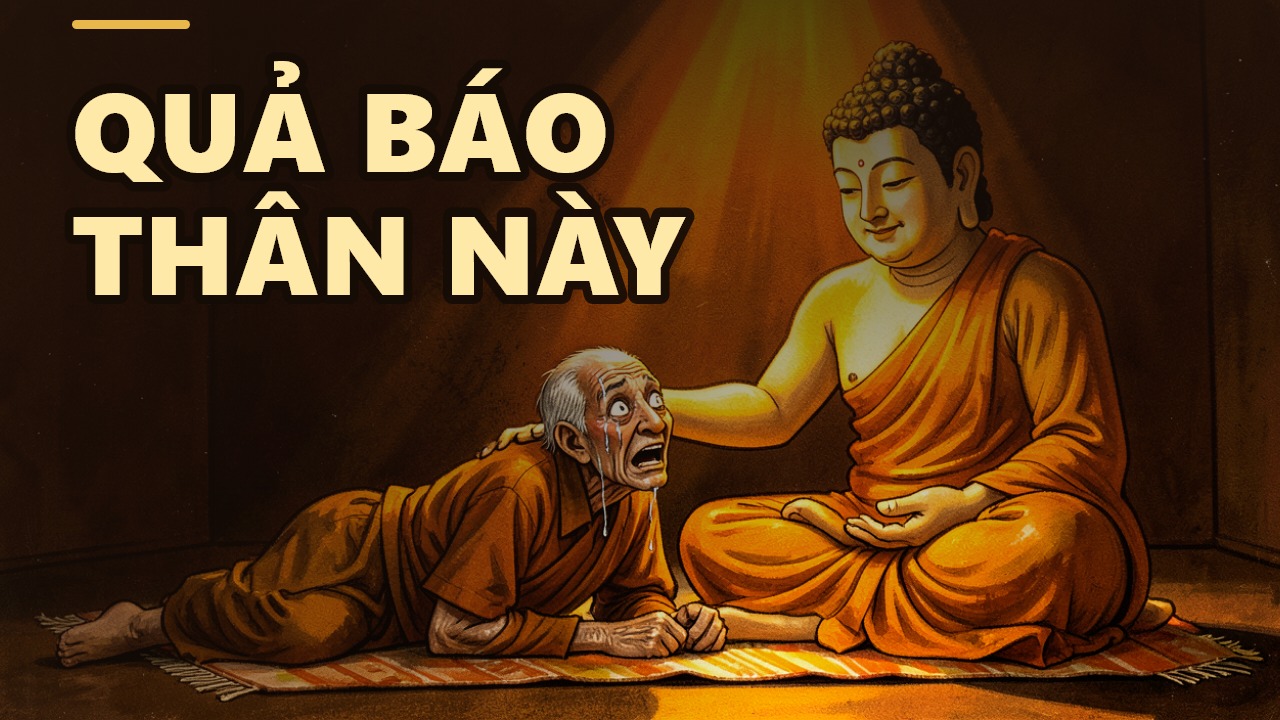
In life, we sometimes meet a gentle, virtuous person who nevertheless suffers misfortune after misfortune. It can seem as if cause and effect (karmic law) does not exist. But the Dhammapada tells us that the Buddha could see through the karma of countless past lives to answer this question. Let us listen to the story of Elder Putigatta.
The Story of Elder Putigatta: The Results of the Karma of Killing
Elder Putigatta had ordained and practiced diligently. Yet suddenly his body broke out in festering sores from head to toe, causing unbearable pain that no remedy could cure. A foul odor spread from him, and the other monks could no longer care for him. They moved him outside to a porch, and no one dared come near.
When his illness was near its end, the Buddha came to him personally. With his own hands, the Buddha washed his robes, cleaned his wounds, and recited a verse to him:
"Soon this body will lie upon the earth, discarded and without consciousness. Without consciousness means knowing nothing, like a useless log."
As soon as these words ended, the Elder realized the truth and entered nirvana in peace. The monks were astonished, and the Buddha then explained his past lives.
Many lifetimes ago, the Elder had been a hunter of birds. Whenever he caught a bird, he would break its wings and legs so it could not escape. The result of this cruel deed was a body covered in festering, rotting sores, in pain just like the birds he had once tortured.
But in one past life, he had met a Solitary Buddha. While making offerings of food, he made the aspiration, "May I attain the same realization as you." The seed of liberation was planted from that moment. In this life, once the results of his old karma had been repaid, his wholesome roots ripened, and he attained realization.
This story shows us that cause and effect (karmic law) can reach back across many lifetimes, far beyond what our ordinary eyes can see. A kind person suffers, a diligent practitioner still falls ill – because they are settling an old karma, especially the karma of the body.
The Buddha Cares – A Heart Greater Than a Mother's
While everyone else recoiled from the foul odor, the Buddha remained present, washing each wound with his own hands. He did not place himself above others, did not consider himself too noble to touch what was unclean. This is a shining example of boundless compassion.
The Buddha also wished to show us that although this body is subject to impermanence (anicca), destined to die and decay, in the final moments of life a practitioner should still be cared for properly and with dignity. The final dignity of a human being is something worthy of deep respect.
"Only those who have great love for one another can overcome such unpleasantness and continue to care for one another."
In hospitals and at home, those who care for the gravely ill must face foul odors and open wounds. They are practicing the conduct of a bodhisattva. Let us be grateful to them, just as the Buddha set an example of care filled with compassion.
The Great Lesson: Attachment to the Body Is the Root
The verse the Buddha taught Elder Putigatta – "this body will lie upon the earth" – may sound simple, but it is the fundamental contemplation of impermanence (anicca). Why? Because the body is what human beings cling to most.
We are willing to lose all our possessions to save our lives. People have begged, "Take the money, just don't kill me." No one ever says the opposite: "Kill me, but let me keep the money." This is why ownership of the body is the supreme possession. From this attachment to the body, we cling to our homes, money, power, fame, and family.
"Ownership of the body is the supreme possession. All other possessions can be let go without great loss."
When we contemplate the body's impermanence (anicca), we saw through this very root. If this body will one day be gone, what use are houses and money? This is why the contemplation of the body's impermanence is a foundational practice.
Contemplating the Body's Impermanence – A Humble Practice That Is True
Many people want to practice lofty, mystical methods, forgetting the essential foundation. Thay Thich Chan Quang once taught:
"What is lofty is often wrong, and what is humble is often right. So the contemplation of the body's impermanence is very basic, very humble, but it is right. It is the true gateway that opens onto the sky of liberation."
We need not search far away. Simply each day, while sitting in meditation, while walking or standing, remind yourself: "This body will one day decay." Greed, hatred and delusion will gradually diminish. Like a tree whose roots have been sawn away, its branches may stay green for a while, but slowly they will wither. Our spiritual strength, through this contemplation, is quietly growing each day.
Do not look down on small things. A single verse, a single reminder, can change an entire life.
Practicing Daily to Transform the Karma of the Body
We may be carrying karma of the body from many past lives. But through practice, through contemplating the body's impermanence (anicca), we can settle that karma and plant new wholesome roots. Like Elder Putigatta, the moment of deepest suffering can be the very moment our wholesome roots ripen.
Today, anyone who is ill or facing hardship, remember: this may be the opportunity to step into the sky of liberation. Do not blame or despair.
And if you are able, care for the sick and the elderly with the same compassion the Buddha showed. This is how we transform karma and nourish our wholesome roots.
The three stories in the Dhammapada carry a profound message: this body is subject to impermanence (anicca), yet within that very impermanence lies the opportunity for liberation. Contemplate and practice each day. Do not underestimate the contemplation of the body's impermanence – it is the gateway to the transformation of body and mind, the beginning of a life of peace and happiness. Let it begin in this very moment.
AI-assisted translation from the Vietnamese original.
Read in Vietnamese →