
The End of the World: Will Most Humans Become Hungry Ghosts? – Awakening with Venerable Thich Chan Quang
Venerable Thich Chan Quang reveals that when the Earth reaches its end, the majority of humans will become hungry ghosts. Yet, there remains a path of practice to transcend this fate. The Earth is dying: Where will you go?
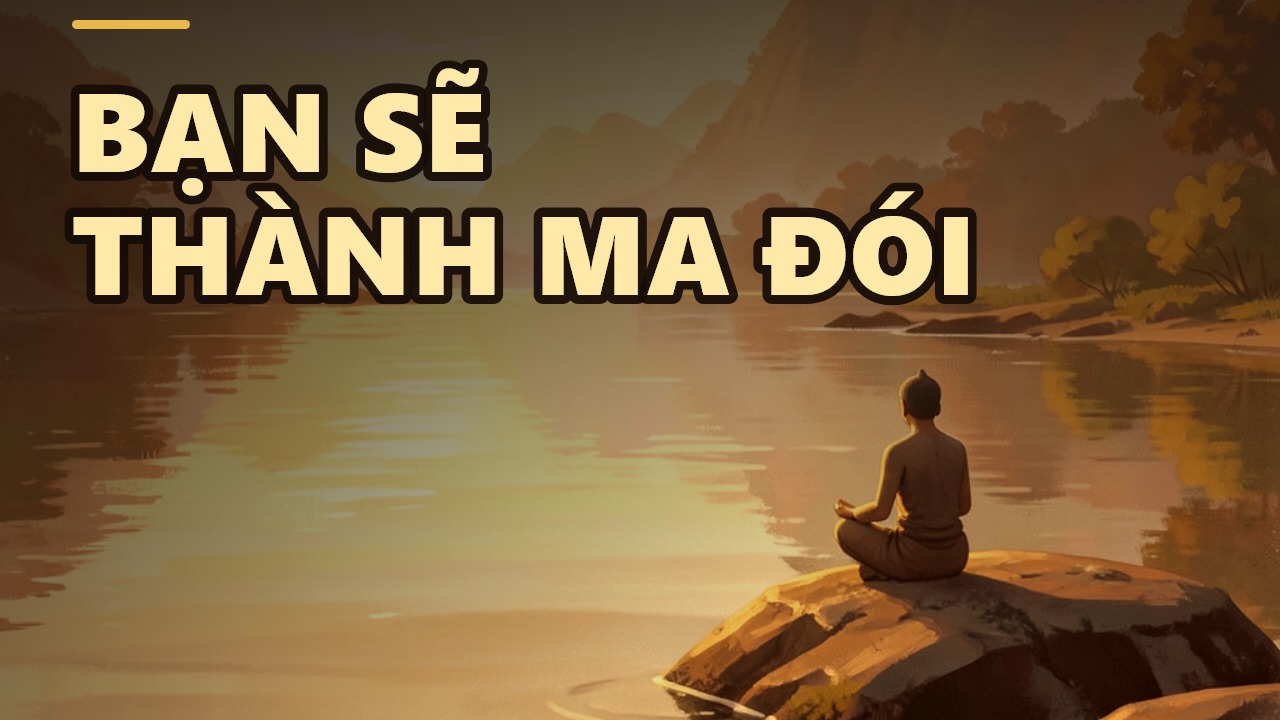
Hearing news of the Amazon burning and Arctic ice melting, have you ever wondered where we would go if this Earth died? In his dharma talk on "Protecting the Dharma," Venerable Thich Chan Quang answered frankly and with deep concern. He stated that most of us will not randomly ascend to heaven or become Asuras. Instead, it is highly likely we will become wandering hungry ghosts on a silent, dead planet. But hope remains, and the teacher points out the way.
Venerable Thich Chan Quang poses a very honest question regarding our destination after death. Traditionally, there are six realms of existence, but the human realm will no longer be an option because there will be no place to be reborn as a human. The animal realm will also cease, as there will be no environment for animals to survive. This leaves four possibilities: the deva realm, the Asura realm, the hell realm, and the realm of hungry ghosts.
He then asks the audience: Does anyone think they will be born in the deva realm? No one dares to raise their hand. Does anyone think they will become an Asura? Also no. Does anyone think they will fall into hell? Again, no. This leaves only the path of the hungry ghost. The teacher shares a heartbreaking truth: Most humans, along with all other species, will face this fate. When the world ends, billions of people and countless types of beings will become wandering hungry ghosts, clinging to this dead planet with nothing to eat.
This is a terrifying vision. However, it highlights that we are living in a decisive moment. If we do not awaken now, our future is extremely fragile. We must understand why the Earth is heading toward destruction. The teacher identifies two pervasive tendencies within the human heart: indulgence and destruction. Media and advertising are flooded with images of resorts, delicious foods, and services designed to satisfy the senses. Very few promote places of spiritual cultivation, such as temples.
The teacher explains that our current habits mirror these trends. The dominant mindset in human consciousness is solely focused on enjoyment and exploitation. Every lifestyle choice seems driven by the desire to consume and destroy. We continue to exhaust natural resources and kill countless beings to satisfy our appetites. As a result, the Earth is slowly dying.
Fortunately, humans possess a noble characteristic: we are never fully satisfied with ourselves. We always seek to transcend our limitations. The teacher affirms this drive to rise above our current state. There are two ways to achieve this transcendence. The first is through spiritual practice, specifically cultivating meditative concentration directed toward non-self (anatta), aiming to become a saintly being. This is the path currently practiced at the meditation center.
The second method is creating artificial intelligence and robots that surpass human capability. The teacher warns that scientists worldwide are pursuing this route. If humans create robots smarter than themselves and allow them to develop autonomously, these machines may alter their own code. Eventually, humanity could become enslaved by these robots. This represents another form of apocalypse.
The teacher also analyzes three common reactions when encountering someone more talented than oneself. The first is admiration and learning from them. The second is healthy competition. The third is jealousy and harming others. He notes that many people react with envy, wishing to eliminate those who excel so that no one stands above them. Unfortunately, this third type constitutes the majority of human responses globally.
This psychology of jealousy hinders progress. Talented individuals are often harmed or slandered, making true talent rare. Therefore, we must awaken from this mindset. The teacher advises us to pray daily to the Buddha, expressing the wish for everyone to be better than us. We should ask for the strength to love, cherish, and support those who surpass us.
Buddhism is a religion of wisdom and gentleness. The word "Dao" means path, method, and approach. In ancient times, phenomena were explained through deities and spirits, which was called Dao. Modern science explains reality through physics, chemistry, and biology. Over time, religion and science separated. Religion became a matter of faith and emotion, requiring no logical explanation. However, when religious institutions gain power, followers, and political interests, conflicts arise.
Among all religions, Buddhism is exceptionally gentle. Yet, precisely because of its gentleness and its transcendent nature, it faces opposition. The teacher recounts a story from Chinese history where a monk named Tri Huyen won a debate against Taoist priests. He explains that Buddhism is too holy, too enlightened, and far superior. When compared logically, Buddhism clearly rises above other views. Thus, Buddhist practitioners should avoid jealousy and competition. Instead, they must maintain humility and love for all beings.
How can we avoid becoming hungry ghosts? We must resist the twin tendencies of indulgence and destruction. Do not live merely to enjoy; do not destroy the world. Live to cultivate and transcend. Each day, bow to the Buddha and pray for others to be better than you. Practice meditative concentration and direct your mind toward non-self (anatta). This is the only path to escape the fate of a hungry ghost or a slave to robots.
At the meditation center, we have the opportunity to listen to the dharma and practice. However, the teacher reminds us that while listening to teachings is common, sitting in meditation is often avoided. We must strive to practice diligently. Spiritual cultivation is not a luxury; it is a matter of survival.
Each of us must ask: Which path am I walking? Is it the path of indulgence and destruction, or the path of awakening and love? Begin today with a heartfelt vow: May everyone be better than me. Grant me the ability to love and support those who surpass me. Then, as the teacher instructs, sit in full meditation and listen completely to the dharma. This is the way to transcend the end of the world—not as a hungry ghost, but as a liberated saint.
AI-assisted translation from the Vietnamese original.
Read in Vietnamese →