
The Wandering Mind: Why Must the Wise Guard Their Mind?
The story of the young nobleman Anugupa in the Dhammapada — what the Buddha taught about generosity, keeping precepts, and the simplest practice of all: guarding the mind to attain true peace.
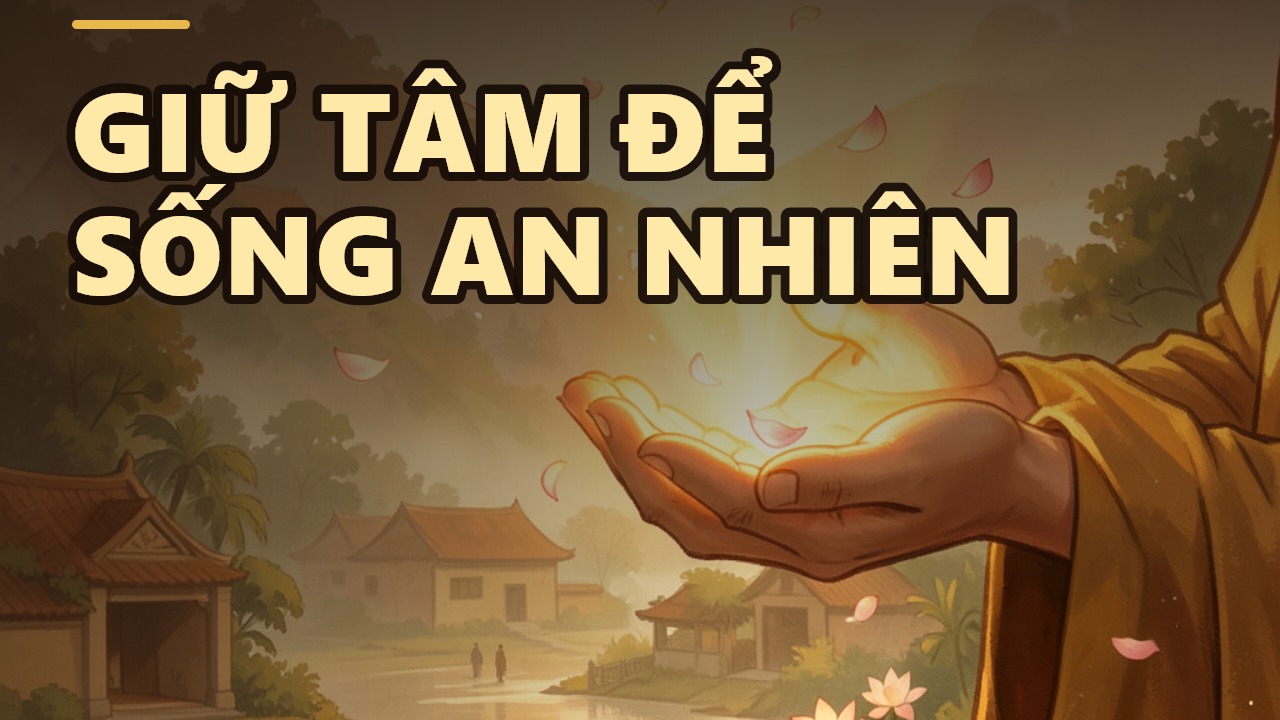
There was once a wealthy young nobleman named Anugupa, the son of a treasurer — one who managed the nation's assets in ancient times. He had everything: money, fame, a comfortable life. Yet he shared a special bond with an elder teacher. He obeyed his teacher with absolute devotion. When the teacher taught generosity, he practiced it; when the teacher taught keeping the precepts, he kept them; when the teacher told him to ordain, he ordained at once. But after ordination, he encountered countless difficulties: the teachings were vast and overwhelming, the monastic rules were intricate and confining, and he felt he could not practice. He wanted to return to lay life. The Buddha did not blame him. He simply said: "You need only keep one thing — keep your mind." And he spoke this verse:
"Deep and subtle is the mind, hard to see, whirling after desires. The wise guard the mind, and thereby attain great peace."
This story is a profoundly deep lesson on the path of practice that each of us can apply.
Generosity — the first door that opens the mind
In the story, the elder taught Anugupa generosity first. This is a fundamental teaching for all sentient beings. Why must generosity come first?
"Generosity is the first door through which we practice. If we cannot yet take out money to give to someone, or carry rice to offer someone, then we do not yet know how to practice. All of our spiritual cultivation is false."
Generosity brings two great benefits. First, it opens our mind. The first door that closes our mind is a narrow, selfish heart. When we cannot yet help anyone, when we feel no ache at the suffering of others, then every merit in our mind has no root. Second, generosity creates blessings from merit that transform our lives. Wealthy people enjoy blessings from merit accumulated in past lives, yet they must still continue giving in this life. The poor must give all the more, to transform their poverty.
Many people ask: "Why do I keep doing good deeds yet remain poor?" Remember that some people are poor because they were stingy in a past life, while others are poor because they spent their resources in the wrong ways. Even so, there is no other way out of poverty than giving and helping others. Thay Thich Chan Quang once made an interesting observation:
"Do not wait until you have fallen into destitution. Strive to do good deeds from now on, because no one can save the poor through prayer alone."
Rich or poor, live beautifully
When we are rich, we can live simply. When we are poor, we must also know how to live joyfully in poverty. For if we have never been poor, it is hard to empathize with those who are. One who knows how to practice is one who can find joy in poverty. That is an art of living — living with contentment, knowing what is enough.
"One who knows how to practice is one who can find joy in poverty. See poverty as something delightful."
Thay Chan Quang also told a story about a Vietnamese girl living abroad who demanded that her mother buy her an expensive phone to keep up with her friends. Thay advised the girl to be grateful for her poverty, to live with confidence and contentment. Why be grateful for poverty? So that we learn to empathize with the poor, and when we become wealthy, we know how to love them.
When keeping the precepts becomes difficult
After ordaining, Anugupa stumbled upon two great difficulties: the vast teachings he could not remember, and the intricate monastic rules that filled him with fear. He said to the Buddha: "Everything I do is forbidden; I fear to move a hand or foot. I felt more at ease living at home." This is the common feeling of many who first enter spiritual practice: the more they practice, the more rules they see, and the more wrong they feel. But the Buddha did not say that ordaining was a mistake. He taught only one thing: guard your own mind.
The Buddha said: "You need only keep one thing — keep your mind." And so the verse was born:
"Deep and subtle is the mind, hard to see, whirling after desires. The wise guard the mind, and thereby attain great peace."
This is not a practice separate from the rest, but the root of all practices. When the mind is at peace, the teachings become clear, and the precepts become natural.
Guarding the mind — a practice for everyone
In modern life, our minds are always wandering after everything: work, money, fame, relationships. We chase one thing after another, never at rest. The lesson from the Buddha is this: turn back and guard the mind. When the mind is no longer dragged along by desires, we will attain true peace.
Guarding the mind does not mean suppressing or repressing, but observing, clearly knowing what is happening within the mind. When greed arises, recognize it; when anger arises, recognize it; when distraction arises, recognize it. It is a simple act of recognition, yet practiced daily, it will gradually lead us to a deep and lasting peace.
As Thay Chan Quang often reminded his students:
"My disciples do not practice in this life to enjoy the next. My disciples toil in this life, and toil again in the next. But the more blessings from merit one has, the more one toils, because one has more opportunities to help others."
That is an inspiring spirit of dedication. We do not practice in order to enjoy life's comforts, but to become people of benefit to the world.
Conclusion
Through the story of the young nobleman Anugupa, we see that practice need not be complicated. Begin with generosity — opening the door of the mind. Then continue by keeping the precepts. And finally, when you grow weary from too many rules, return to the simplest practice of all: guarding the mind. Practice each day, and you will realize that peace is not found far away — it is found precisely when our mind no longer wanders.
Begin today. Give a little, guard your mind a little, and observe how your life changes.
AI-assisted translation from the Vietnamese original.
Read in Vietnamese →