
The Mind as Master: What Do Two Stories from the Dhammapada Teach Us?
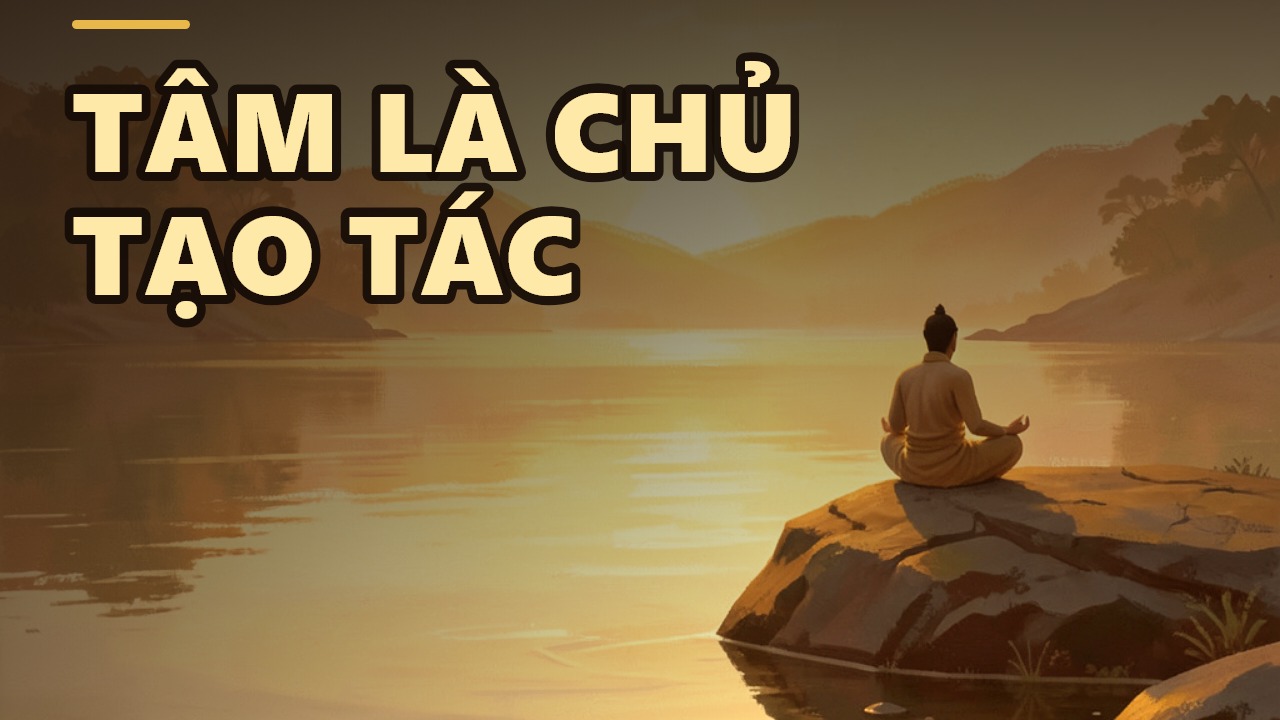
The first two verses of the Dhammapada: the mind leads all things. Through the story of a physician and a young man, the Venerable Thích Chân Quang helps us see that the mind determines whether we know suffering (dukkha) or happiness.
Have you ever wondered why some people are wealthy yet live in suffering (dukkha), while others are poor yet remain content? Why does the same act bring disaster to one person and good fortune to another? The Dhammapada, a short but profoundly deep scripture, answers this right in its first two verses: the mind is the root of everything.
Mind Comes First — A Simple Teaching with Great Depth
In his teaching on the Dhammapada, the Venerable Thích Chân Quang shares that this scripture is easy to understand; anyone who reads it feels its truth immediately. Yet this very simplicity hides a surprising depth. The opening verse reads:
Mind precedes all things; mind is their chief and maker. If one speaks or acts with a defiled mind, suffering follows him, as the cart follows the horse that pulls it.
It sounds simple: before anything is said or done, the mind must arise first. When the mind is unwholesome, our words and actions become unwholesome, and the fruit we reap is unwholesome as well. But have we ever truly looked back at our own thoughts? Have we ever realized that a single flash of anger can plant karma that stretches across many lifetimes?
The Story of the Physician: Anger and the Fruit of Blindness
The Venerable Thích Chân Quang tells a story from the time of the Buddha. An elder monk practiced so diligently that during the three months of the rains retreat he never lay down, until he lost his sight completely. When the monks asked the Buddha why, he told a story from a past life: this elder had once been a physician. He healed the eyes of a poor woman, but she broke her promise and refused to serve him as agreed. Out of anger, he put medicine in her eyes and made her blind again. The karmic fruit of blindness followed him through many lifetimes, and even now, having met the Buddha and joined the practice, his eyes remained dark.
This is living proof of the first verse. The physician spoke and acted with a defiled mind, the mind of anger, and suffering followed him like a cart trailing behind the horse that pulls it.
Mind precedes all things; mind is their chief and maker. If one speaks or acts with a defiled mind, suffering follows him, as the cart follows the horse that pulls it.
This story startles us into reflection: how often do we grow angry, speak harsh words, and then think, never mind, it is nothing? Yet the force of karma works silently, like a shadow following its form, and it never simply disappears.
The Story of the Young Man: One Moment of Reverence, a Lifetime Transformed
In contrast, the second verse speaks of the pure mind: if one speaks or acts with a pure mind, happiness follows him, like a shadow that never leaves its form. The Venerable Thích Chân Quang tells of a young man lying gravely ill in a courtyard, the son of a wealthy but stingy man. When he saw the Buddha approaching from afar, walking with the bearing of a royal elephant moving through the clouds, his heart rose in absolute reverence. In that final moment, he passed away and was reborn in a heavenly realm.
How wonderful! He had not gathered many blessings from merit in his life, yet with one complete moment of reverence he was freed from suffering (dukkha). The Dhammapada confirms it:
Mind precedes all things; mind is their chief and maker. If one speaks or acts with a pure mind, happiness follows him, like a shadow that never leaves its form.
This does not mean we can wait for the last moment to summon a good thought. But it shows us the immense power of the mind/heart. Why not train ourselves to live each day with a heart of reverence and compassion, so that one day purity becomes our natural state of being?
What Is the Mind? Wanting — Deciding — Acting
In his dharma talk, the Venerable Thích Chân Quang goes deeper to answer a question: the mind is not one solid block. Within the mind there are many parts, discernment, calculation, feeling, memory. But the part that gives rise to our words and actions is intention, the wish. When we see someone, we want to greet them, and only then do we walk over and say hello. When we see someone in need, we want to help, and only then do we act.
Yet between wanting and doing there is one more step: deciding. The teacher offers an example: we may want to give a flower to an elderly woman, but we have not done it yet. Only when the mind decides does the hand pick up the flower and carry it to her. So wanting and deciding are both movements of the mind/heart. When the wanting is good and the deciding is good, our words and actions will be good as well.
And yet, how many times each day do we want to do good and then fail to decide? How many times does anger arise in the mind/heart, and we simply let it take the reins? In truth, mastering the mind is not a matter of understanding theory. It is choosing each thought, each decision, in each passing moment.
Putting the Lessons of the Dhammapada into Practice
- Observe your mind each day: set aside a few minutes in the morning and evening to look back at your thoughts, words, and actions. - Pause before you speak: before opening your mouth, ask yourself whether these words arise from a mind/heart of compassion. - Nurture a heart of reverence: hold the aspiration to honor the Buddha and all people of virtue, as a way of gently steeping the mind in purity, little by little. - Change begins with small things: when anger arises in the mind/heart, remember that if you simply refuse to feed it, suffering (dukkha) will not follow you.
The Dhammapada speaks nothing lofty or remote. It speaks of the very life each of us lives. The mind/heart we carry today will shape the person we become tomorrow, and the karmic fruit we will one day bear. Let a pure mind/heart be the master, so that every word we speak and every action we take becomes a seed of joy. Because, like a shadow that never leaves its form, happiness will follow us when we have learned to master our own mind.
AI-assisted translation from the Vietnamese original.
Read in Vietnamese →