
When the Mind Is at Peace, the World Is at Peace: The Secret to True Happiness
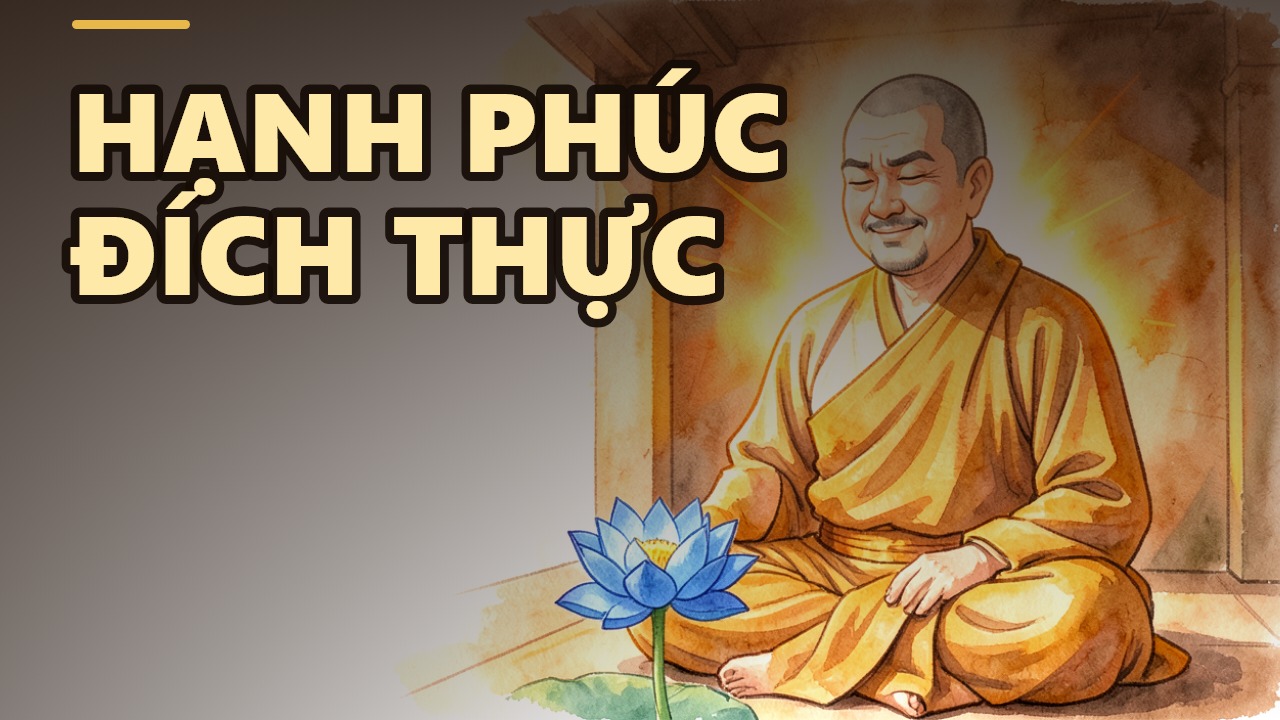
**Summary:** In this dharma talk, Venerable Thích Chân Quang illuminates the profound meaning behind the saying, "When the mind is at peace, the world is at peace." He teaches that true happiness does not lie in wealth or fame, but in a peaceful mind and a virtuous heart.
Have you ever heard the saying, "When the mind is at peace, the world is at peace"? The first time you hear it, you might wonder, "My mind is at peace, yet the world is still full of chaos, war, and suffering—how can that be?" In his dharma talk on "The Mind and the World," Venerable Thích Chân Quang explained this teaching of the ancestral masters, helping us re-examine our definition of happiness and our path of cultivation.
**True Happiness: From a Peaceful Soul or from Wealth and Status?**
When our understanding of the Dharma is still shallow, everyone dreams of wealth and nobility. We even go to the temple with these wishes to pray and ask for them. But one who truly understands the path sees that such desires ultimately do not lead to happiness. Venerable Chân Quang affirms:
"True happiness is an inner peace, tranquility, and immovability of the heart."
Let us reflect: young people often equate success with riches and status. Yet when they achieve it, they often have to trade away their integrity, relationships, and even see their families fall apart. Sitting on a pile of money while the heart is full of anxiety—is that truly happiness? If someone defines happiness as the peace of the soul, we know that person has gained a fairly deep understanding of the Dharma. So, which kind of happiness are we choosing?
**The Three Levels of Happiness: Root, Branch, and Fruit**
The Venerable clearly states: a person with true understanding arranges these three values in the following order:
First: Inner peace and virtue—this is the root.
Second: The opportunity to contribute and serve life—this is the branch.
Third: The resulting karmic rewards, glory, and wealth—are merely the fruit.
A wise person nurtures the root and tends to the branch; the fruit will then come naturally without having to sacrifice one's virtue. A worldly person does the opposite: they see the fruit as the main goal and are willing to trade their inner peace to achieve fame and profit. The Venerable emphasizes:
"The most precious thing is an inner peace rooted in virtue. That is the most valuable. And the second most valuable is from that peaceful, virtuous mind, we contribute and serve life. Then the third part is the blessings that come naturally."
**A Peaceful Mind in an Unpeaceful World**
Life is inherently not peaceful: there is war, economic recession, betrayal by loved ones, and treachery from friends. Such upheavals can easily disturb us. But one who has strength of practice can maintain a peaceful mind amidst all adversity. The Venerable gives a very relatable example: at the temple, if someone implies you "only like to eat but don't like to work"—if you take offense and leave, your mind has already been agitated. Instead, smile and explain, then happily eat your meal and wash the dishes to make up for it, with no resentment or anger. That is a small test. A bigger test: a husband has a mistress, and the whole family comes to kneel and cry before the teacher. The teacher tells a story of an old woman who lived with her husband for many years, and he had a child with another woman. He advised her to become the "big mother"—to love even that other child. She opened her heart, felt lighter, and all her anger and resentment dissolved. He teaches: "A disciple of the Buddha seeks compassion. The love between men and women is a temporary debt of conditions—what is there to hate?"
Even before extreme suffering like war, losing a home, or having to live like a beggar, we must still maintain a peaceful mind. If we can view ourselves as having no home, no possessions—just like monastics who own nothing but are still serene and at ease—we will become unmoved. Likewise, in times of glory, when others honor us, we must also remain lucid and not become overly elated. The mind should be like a mountain, unmoved by any storm.
**An Unpeaceful Mind in a Peaceful World**
Conversely, some people live a comfortable life but their minds are constantly anxious and restless. Why? Because of distorted thinking. The Venerable defines it very simply: distorted thinking means thinking ill of others and thinking well of oneself. This is the instinct of all thinking beings. When we keep thinking poorly of others and well of ourselves, our minds become chaotic, leading to stress, depression, or even madness. He tells a story: a man walking in the forest sees a dangerous deep pit and takes the effort to fill it with earth, even though he himself is thin and frail. An observer might think he is doing it for show. That is thinking ill of others. Instead, we should keep our minds pure and look at others with the eyes of compassion.
**Practicing for a Peaceful Mind**
Start with small things: when someone makes a veiled remark that irritates you, open your heart to forgive. Practice seeing others as their own world, instead of judging. Every day, we can contemplate: "My mind is a mountain; no storm can shake it." And remember the teacher's words:
"We vow to have a heart like a mountain, a mind like the empty sky. To cultivate is to be like that."
Begin with a smile in the face of a challenge, with a deep breath amidst afflictions. When your mind is at peace, your world will be at peace. That is the miracle you can practice starting today.
AI-assisted translation from the Vietnamese original.
Read in Vietnamese →