
Truth and Silence: Two Faces of Morality
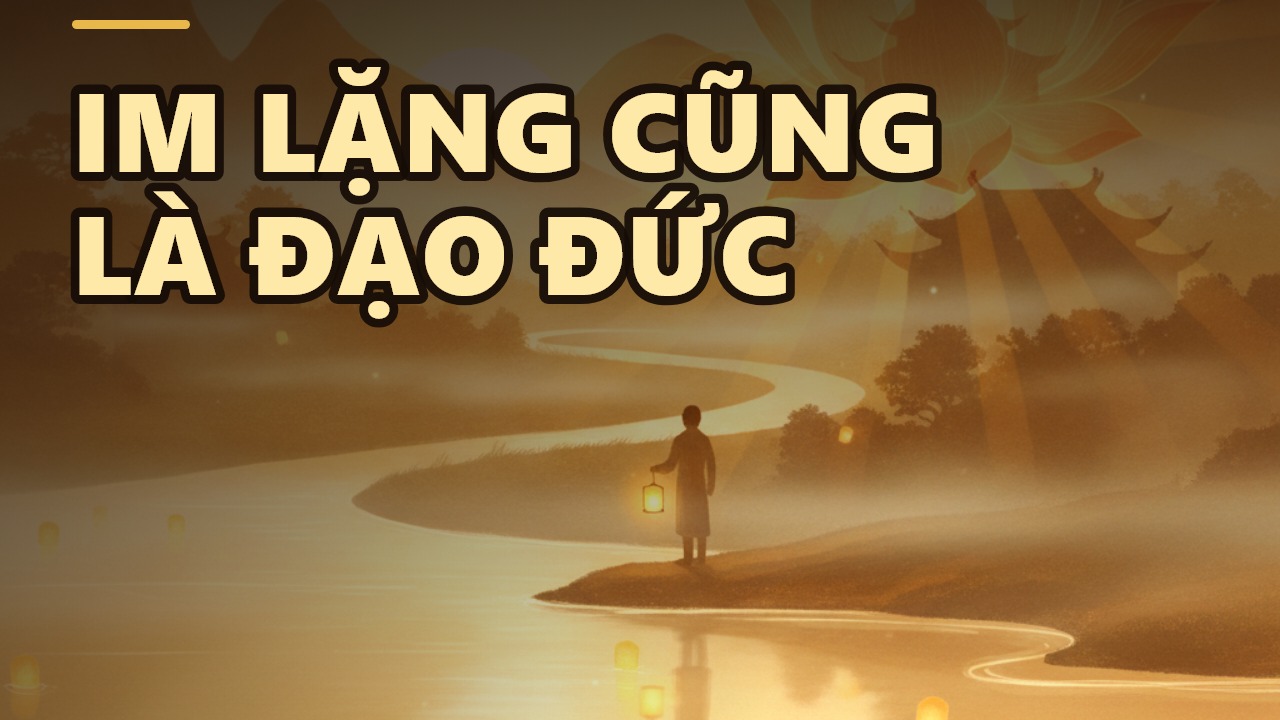
Venerable Thích Chân Quang teaches about truth: telling the truth is moral, but there are truths that must be kept in silence, and even truths of the ego-self that must be transcended.
Have you ever wondered whether there are moments when telling the truth only makes things worse? Are there times when silence is itself a moral act? In the dharma talk "Practice and Morality," Venerable Thích Chân Quang opened a profound perspective on truth — not simply a matter of speaking rightly or wrongly, but an art of wisdom and compassion.
Telling the Truth Is the Foundation of Morality
Venerable Chân Quang begins with a simple truth: those who walk the path of practice must respect truth. Say things as they are; live as things are. When you speak the truth, you do not need to invent or calculate, and so the mind becomes serene, resting easily in meditative concentration.
The person who respects truth is a person of morality; that is the very foundation of spiritual practice.
In contrast, a liar must constantly invent stories to cover their tracks, and the mind never knows a moment of rest. The Venerable also pointed out with gentle humor: to lie well one must be quite clever, while an honest person is "foolish" in an endearing way. Yet it is precisely this "foolishness" that makes it easier to gather the mind and to practice letting go.
When the Truth Must Be Kept Hidden
However, not every truth should be laid bare. The teacher offers many examples: you stumble upon a military installation, you learn a colleague's professional secret, or you discover another person's mistake. If revealed, such truths could harm the nation, a family, or another person's honor. In those moments, silence itself is morality.
There are truths that run contrary to morality. If we are people of morality, we must not speak them.
One who can guard another person's private secrets, preserve for a child the good image of their father, or conceal a chapter of the past so that a family may remain happy — such a person has extraordinary strength of character. No one may offer praise, but the heavenly beings and King Yama will surely take note.
Going Against the Truth of the Ego-Self
Most remarkably, there is one truth that a practitioner must "go against" in order to live morally: the truth about the "I" that we take for granted every day. In the Buddha's teachings (Dharma), the deepest truth is non-self (anatta) — there is no self. This may sound startling, but whoever can believe it has their name inscribed in the golden book of the heavenly realms.
One need only believe and nod in faith. Believe that there is no self.
In other words, to live morally, we must practice letting go of the ego, neither boasting nor seeing ourselves as someone important. The Venerable humbly admits: "I am only a speck of dust; how could I dare to open a path of my own." The more we embody non-self (anatta), the more we sacrifice and serve, the more blessings from merit we receive, and the more easily we progress along the path of practice.
Conclusion: Truth Is Not Merely About Speaking
Through these three levels of truth, Venerable Thích Chân Quang teaches us: to live true to our hearts, to keep silence when it is needed, and to have the courage to move against the current of the ego. May each of us ask ourselves: today, have I known how to speak the truth, how to keep silence, and how to be humble?
AI-assisted translation from the Vietnamese original.
Read in Vietnamese →