
The Wise Choice: Do Not Let Blessings from Merit Become a Danger
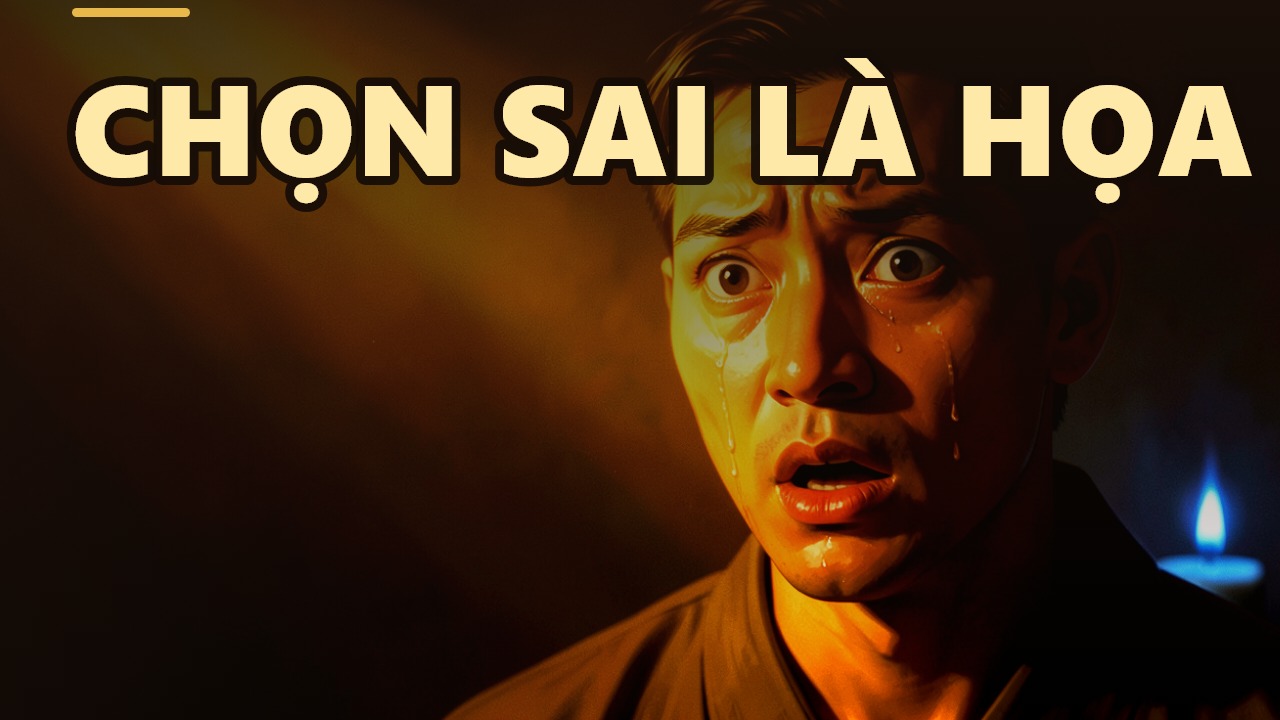
Today, when you open your eyes to awaken, how many choices do you have? Sleep longer or wake early? What to wear? Go to the temple or go out for fun? Every day, life continuously presents us with crossroads. There are moments when we feel confused: "What should I choose?" In the dharma talk "The Wise Choice," Venerable Thích Chân Quang reveals a surprising perspective on the right to choose and the art of choosing within the Buddha's path.
**When You Have Few Choices, Do Not Let Suffering Pile Upon Suffering**
Each of us has faced a deadlock: not enough money to buy a house, so we can only rent; no romantic partner, so we must live in solitude; unemployed and not knowing what to do. Venerable Quang teaches that this is a sign of having little blessings from merit.
"If in this life we have many choices, we should know we have blessings from merit. If we have no choices at all, we should know we are lacking in blessings."
But what the Venerable emphasizes is this: when we have no more choices, we must not let our suffering compound. Do not be hungry and simultaneously fantasize about delicious food. Accept the circumstances with a mind that is at peace and serene. "When the water is shallow, raise your heel; when it is deep, lift your robe." Face adversity directly, just like that teacher who lost his clothes while bathing in the river, yet calmly walked home. Thanks to this, we find happiness right within our difficulties.
"Right within the suffering, the hardship, the lack we must endure, we simply face it, look at it, live in it, and find peace within it. In this way, we can realize many interesting things. And sometimes, from that very realization, happiness is born."
**Many Choices, Many Dangers**
Conversely, those who have many choices seem fortunate, yet they are unaware of the dangers. Why is that? Because successful people often believe less in the karmic law of cause and effect, thinking everything is due to their own ability and planning. They fail to see that all their calculations and strategies are themselves also within the realm of karma.
"Our calculations, our choices—all of this is karma, not nothing at all."
When there are too many choices, without wisdom, we can easily resort to unscrupulous means, become greedy, and fight to grasp. That is the greatest calamity. Therefore, the right to choose must go hand-in-hand with responsibility.
**What Constitutes a Wise Choice?**
Venerable Quang gives a very clear definition: A wise choice is to choose what benefits others and to avoid what causes harm. There are people who build an ancestral hall using money siphoned from a public concrete road construction project—they think it is a spiritual act, but in reality, it is taking public resources for private use. The result is that the road quickly deteriorates, and the clan also finds it difficult to prosper because the spiritual foundation is not pure.
"Among the many things that come to give us many choices, if we choose something good—meaning that thing benefits others—then we gain further blessings. If we choose something that afterwards has a negative impact on others, we incur sin. That is a wise choice."
**From Small to Large: The Eighty Thousand Subtle Practices**
Wise choosing is not only about grand matters; it also lies in every detail: what to wear to the temple, arriving early to do what, where to sit. This is the "eighty thousand subtle practices"—small actions that reflect the cultivation, character, and wisdom of a Buddhist practitioner.
"The choice in every tiny action in this life, where each choice is a manifestation of wisdom and intelligence. That is, it benefits everyone and helps eliminate the ego."
To achieve this, we need to train our inner mind and guard our every gesture and word. The Buddha taught monks to maintain three thousand deportments, which is also to make every small action beautiful.
**In Conclusion**
So, every time you stand before many choices, ask yourself: Who does this benefit? Does it harm anyone? If we act according to the Buddha's way, we will avoid faults and gain further blessings from merit. Right now, begin practicing wise choosing in the smallest of things—from going to the temple this morning, to how we look at others, to the words we speak. A wise choice, a life of peace and joy.
AI-assisted translation from the Vietnamese original.
Read in Vietnamese →