
Fair Recognition: Why Do Those Who Give Endure Injustice?
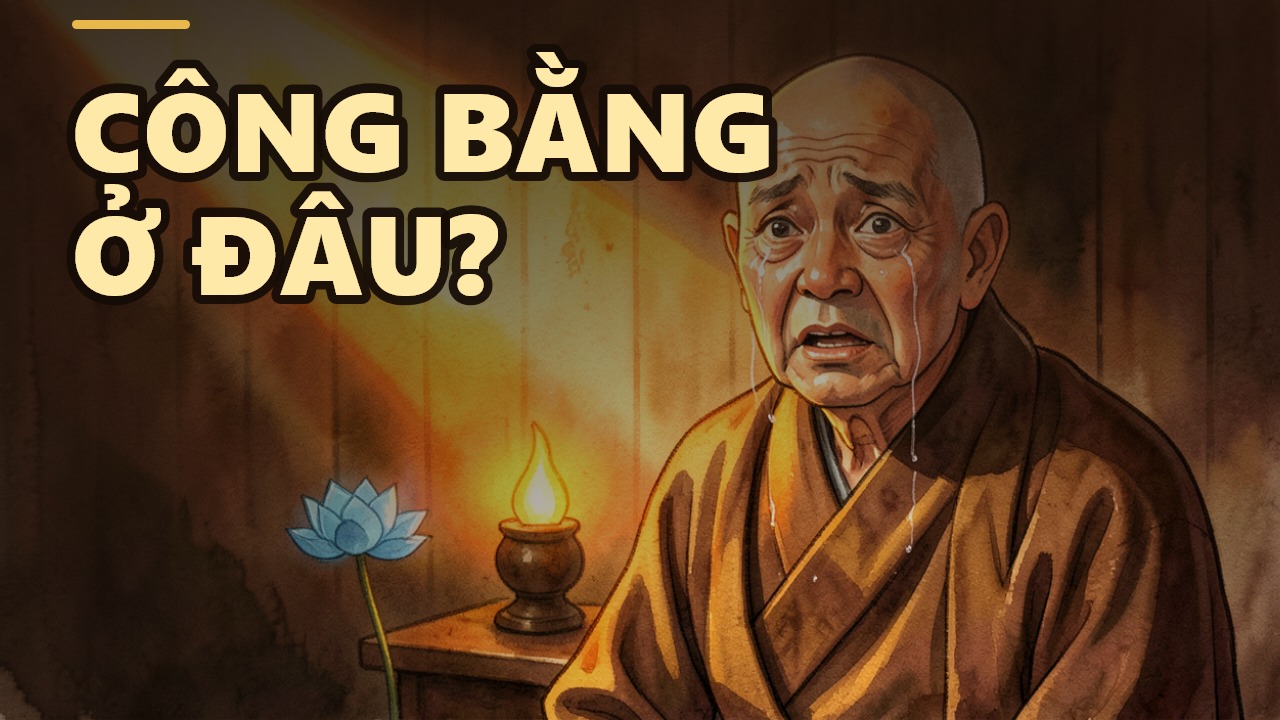
This dharma talk by Venerable Thich Chan Quang offers a profound perspective on karma. It reveals that merit does not automatically guarantee immediate reward. True happiness lies in giving without expecting recognition, allowing the spirit to soar rather than fall.
If you dedicate yourself entirely to others yet receive unworthy treatment, do you feel life is unjust? Some contribute greatly but suffer injustice, while others are honored and some silently endure loss. What is the true mechanism of fairness? Let us listen to the deep teachings of Venerable Thich Chan Quang in this talk titled "Fair Recognition."
### Everyone Walks a Journey, But Destinations Differ
Every person is born, grows old, and eventually passes away. This is an inevitable journey for all. Yet, on the same path, those with wisdom and those with ignorance reach vastly different destinations.
The wise walk and then fly. The foolish walk and then fall. Where do they fall? They fall into realms of suffering, such as animal rebirth, hell, or the realm of hungry ghosts.
The teacher explains that the difference lies not in whether we walk, but in whether we transform our minds along the way. The wise practice diligently, perfecting their character to rise upward. The foolish create negative karma, neglect moral cultivation, and sink deeper.
### A Year Passes: Cherishing Every Moment for Ascension
At year’s end, facing impermanence (anicca), we often reflect on what we have achieved. For the wise, a year is a precious opportunity for spiritual cultivation because they cherish every minute.
Those with wisdom regret wasting even a second, just as they would regret spilling a grain of rice. They regret unnecessary words and frivolous spending.
The wise are not generous with themselves, but they are generous toward all sentient beings. They feel ashamed if a morning passes without doing good deeds. Therefore, as the year ends, they become more diligent and avoid wasting time.
### Unrecognized Effort: Due to Karma or Human Nature?
Looking at history, Nguyen Trai had great merit and exemplary virtue, yet he was executed along with his three generations of family. Only later was his innocence proven, compensated by eternal reverence. This seems unfair, but it reflects karmic law we must understand.
This person still carried unresolved negative karma from past lives. Thus, although he performed many meritorious deeds and received blessings in this life, past karma obstructed favorable outcomes.
Beyond past karma, there is also human narrow-mindedness and jealousy. A director once told an employee, “You are not wrong, but you are better than me, so you must leave.” This jealousy serves as the condition (dependent origination) for past karma to ripen. These two causes combined bury the merits of good people.
### Do Not Demand Absolute Fairness from Life
We often think that doing good must be repaid immediately. However, according to Buddhist teachings, cause and effect (karmic law) is a long stream spanning countless lifetimes.
Fairness is not measured by a few years or months. It is calculated over the accumulation of infinite eons.
Sometimes we pray for the Buddha’s protection, borrowing merit to overcome disasters. Later, we may repay this debt by receiving no recognition. Therefore, if you do not see positive results yet, do not lose heart. Trust that everything operates according to the subtle laws of cause and effect (karmic law).
### True Happiness: Giving in Silence
In the series CSI, after surviving a near-death experience, the team leader walks through the city, watching people live peacefully without knowing him. He realizes his joy lies in the joy of others. The teacher says:
When sentient beings are happy, I am happy. I no longer need my own separate pleasure. Live like this.
When we do good without seeking recognition, we gain freedom and peace. The teacher smiled and said, “I rejoice when my disciples endure hardship, for it means you are on the right path.” This is the joy of one who has let go of ego.
### Walking and Flying – Choosing the Path of Wisdom
Each day, ask yourself: Am I walking, flying, or falling? Do not let time pass meaninglessly. Start with small acts: give, sacrifice, and do good without demanding return. When the mind is free from attachment to reward, the wings of wisdom will open naturally. Those who keep walking will eventually fly. This is the compassionate and wise affirmation of Venerable Thich Chan Quang.
AI-assisted translation from the Vietnamese original.
Read in Vietnamese →