
Living Selflessly: The Secret to Uprooting Suffering
Suffering originates from selfishness. Living selflessly is the remedy that heals from the root, bringing peace and helping us find joy in life.
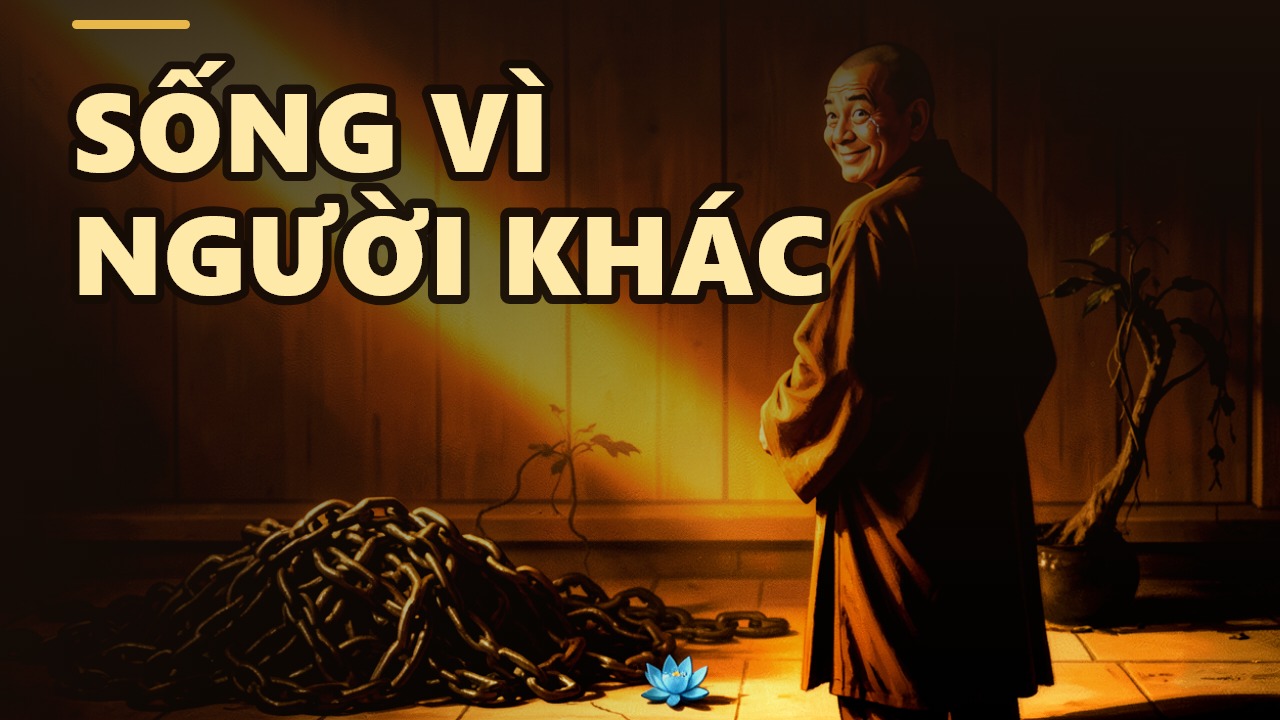
Have you ever asked yourself why you still suffer despite practicing meditation, chanting the Buddha’s name, or contemplating impermanence? Why do sorrows keep returning, sometimes quieting down, only to rise again? Perhaps we have been treating the symptoms while forgetting the root cause of suffering. In his dharma talk "Moral Psychology" during the retreat season, Venerable Thich Chan Quang offered a profound perspective: the key to ending suffering lies in a way of living—living selflessly.
Where does suffering come from?
According to the Buddha’s teachings, suffering is a reality of life. However, the important thing is not to flee from it, but to recognize its cause. Venerable Chan Quang emphasized: "The cause of all suffering is entirely due to selfishness. All of it stems from selfishness."
Selfishness—living only for oneself—is the strongest instinct within each of us. From childhood, we compete for food and affection with our siblings. As we grow up, we struggle for wealth, power, and fame. This very egoism is the source of all afflictions. The world is full of pain because people think only of themselves.
A specific cure from the roots
Many people use contemplations such as impermanence, impurity, or illusion to counteract afflictions. Venerable Chan Quang calls this "treating the disease at the top," similar to taking Western medicine. He said, "Those contemplations used to counteract afflictions are just like taking pills. Once one illness ends, another appears."
If we only contemplate in this way to seek reassurance, we will gradually lose compassion—a hidden danger. But if we heal from the root, from selfishness, then suffering will truly vanish. The teacher offers an absolutely correct formula: "If for one or two years you live a truly selfless life, abandoning selfishness, then feelings of inferiority and sadness will completely dissolve. When selfishness is destroyed, suffering disappears. That is the absolute truth."
Living selflessly means living for others, no longer living only for oneself. This is a beautiful life praised by saints across all religions, such as Saint Gandhi, the Buddha, Jesus Christ, and Mother Teresa. They are recognized by the world because they lived fully for others, without selfishness.
Do we practice to gain or to let go?
Here is an interesting question: "Why do we practice?" If you answer, "To attain enlightenment," you might be deceived by your own ego. Deep down, you may still want to accumulate more, unwilling to lose anything. Venerable Chan Quang distinguishes between two types of practitioners: "Why do we practice? We practice to lose. To lose everything, even ourselves."
Those who practice to "gain" have lower spiritual capacity and still cling to the self. Those who hear "practice to lose" and feel inspired possess right view and wisdom. We must examine our minds: what are we seeking through practice? If we seek peace, freedom, and liberation for ourselves, we are still dominated by selfishness. Conversely, if we live selflessly and forget ourselves, we truly find peace. The teacher recounts the story of Master Shenxiu and Master Huineng competing for the robe and bowl. Even though these were symbols of enlightenment, the competition was disguised ambition. Therefore, let us learn letting go; living for others is liberating ourselves.
Living selflessly in every moment
Selflessness is not something grand. It resides in small daily acts: helping someone carry a package, doing minor charitable work, or participating in large relief projects. All stem from one vow: "End the goals of my own life. From now on, the only goal is to bring benefit and joy to others, not for myself anymore."
People who live this way may face hardship, sun, rain, darkened skin, and wrinkled faces, yet deep inside, they know no suffering. They do not seek happiness for themselves, yet they are the happiest people. This is the wonderful paradox of a selfless life.
Start with a role model
To live selflessly, we must first cultivate admiration. Seek out the examples of saints in Buddhism and around the world. When we respect someone for their selflessness, we gradually become like them. Venerable Chan Quang shared: "To have a selfless life, we must read about the examples of saints in Buddhism and globally to awaken admiration as the initial cause."
Begin with the Buddha, who left the palace to renounce the world for the sake of all sentient beings. Or look to Zen masters and wise sages throughout history. Each day, practice one act of selflessness, hoping that in future lives, you will have the capacity to benefit many more people.
A selfless life is not an abstract concept. It is a practical path to transcend suffering and find peace. Try living selflessly starting today, beginning with small things, and you will discover the miracle.
AI-assisted translation from the Vietnamese original.
Read in Vietnamese →