
Living Fast and Living Slow: The Key to Success and Happiness
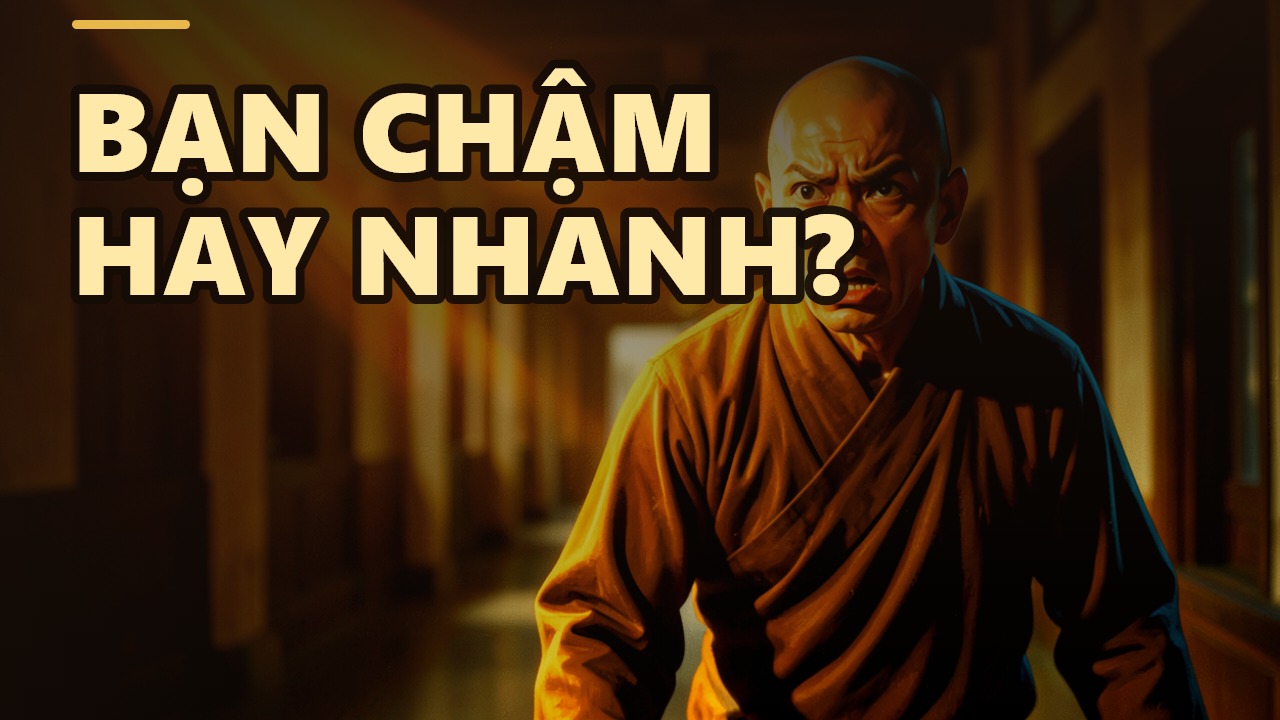
Have you ever wondered why some people always seem hurried yet achieve so much, while others move at a leisurely pace but their lives seem to stagnate? In his dharma talk, "Living Fast, Living Slow," Venerable Thích Chân Quang offers a profound perspective on the pace of life and its influence on success, ethics, and happiness.
**What is Living Fast?**
According to Venerable Chân Quang, the speed of life is defined by the amount of work we accomplish within a unit of time. If in one hour, you only write three pages while another writes four, then your work speed is slower. Similarly, if in two hours, another person has time to exercise, eat breakfast, shower, and get to work, while you are still in bed reading a newspaper, you are living slowly. But slow living is not entirely wrong—the real question is whether it brings any benefit.
"The speed of life is defined as how much we can do in a given unit of time."
**Do Not Confuse Delay with Lack of Intelligence**
Many believe Vietnam is less developed due to a lack of intelligence. But Venerable Chân Quang asserts the opposite. He once thought some nations were more intelligent, but later realized that most nations are equally intelligent. The difference lies in where we channel that intelligence. In civilized nations, intelligence flows into science, technology, and the arts. In less developed countries, intelligence is often channeled into deceit and manipulation.
"In this world, no nation is less intelligent than another."
This is why, in economic and technical competition, Vietnamese people often lose. But during war, when there was an ideal to protect the nation, we concentrated our energy, lived very fast, and won. Therefore, the issue is not capability, but urgency in work.
"Urgency in work gets the job done."
**Training Speed from the Smallest Tasks**
Venerable Chân Quang recalls that as a child, he had to work on the farm. As the only son, he had to handle many heavy tasks. To keep up with his younger sisters who followed to sow seeds, he had to dig the earth very quickly. Over time, the habit of urgency became his nature. When doing any task slowly, he felt uncomfortable, as if being lazy and irresponsible. He advises everyone to use every opportunity to train their speed—even tasks that seem small, like carrying things for the temple. Walk quickly, organize neatly, and hurry back to receive the next item. This is how one trains a habit of productivity.
"Working slowly is a sin; it is a lack of virtue."
He also advises that to make a habit part of one's nature, at least three years of continuous training are needed. Then, the fast pace of work becomes natural, helping us contribute more and accumulate blessings from merit.
**Living Slow: The Right of Those Who Have Fulfilled Their Duty**
If living fast is about working productively, then living slow is the right to enjoy life after fulfilling one's duties. But if we abuse this right to indulge in the pleasures of the five senses, we will exhaust our blessings from merit. Conversely, we can live slowly to nourish the spirit—such as by sitting in meditative concentration. Meditation is the slowest form of living, as we stop all thoughts and simply follow the breath. In that slowness, we open the door to a world of wisdom and happiness.
"We have the right to live slowly. There are moments when we slow down to do what? To nourish our spirit for peace and ease."
He also warns that in the future, robots will control many aspects of life, but only those with a pure inner mind and moral integrity through meditative concentration will not become dependent. Therefore, living slowly in meditation is not passive; it is a way to protect and cultivate inner happiness.
"What is sitting in meditative concentration? It is an extremely slow life, sitting still without moving, calming the mind, not thinking, following the breath."
Hopefully after this dharma talk, you will reflect on how you are living. Be not hasty in thought, yet not lazy in action. Train yourself to have urgency with a sense of responsibility, and set aside time for your mind to settle. Life is a journey of balance. When you work fast with ethics and live slow with wisdom, you will find both success and peace.
AI-assisted translation from the Vietnamese original.
Read in Vietnamese →