
Living as if Already Dead: Lessons from Two Queens
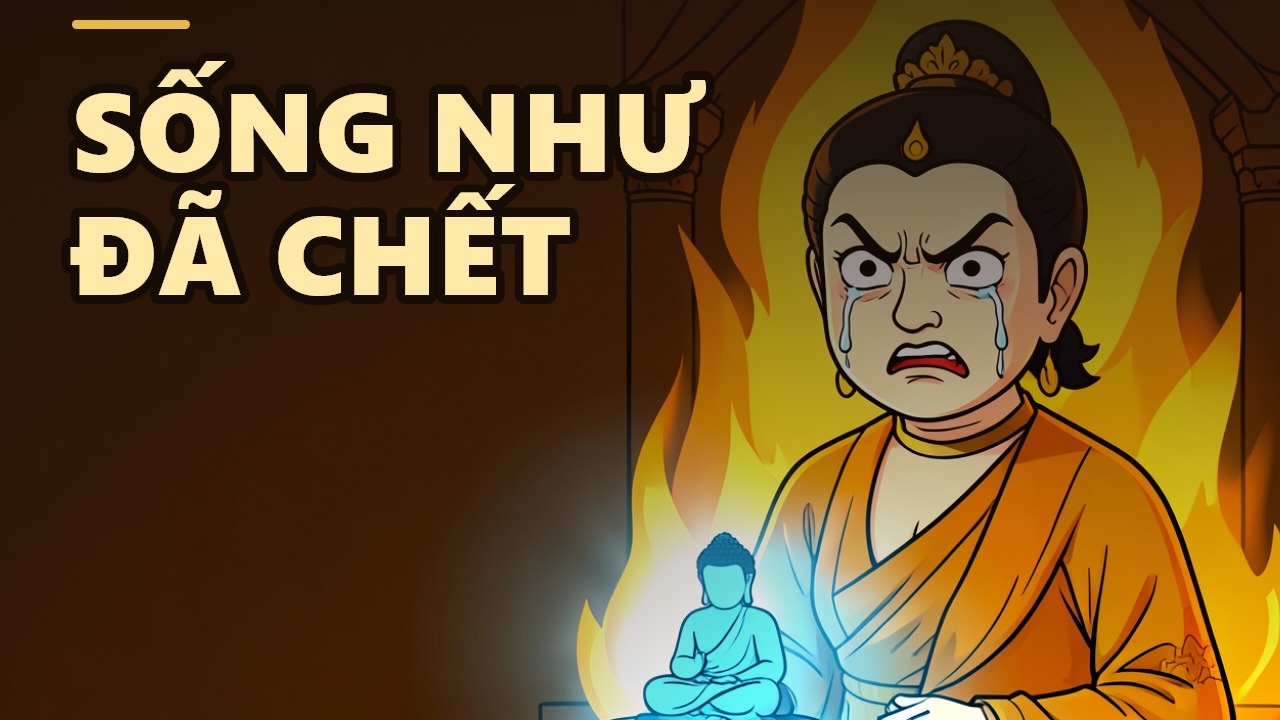
In this dharma talk, Venerable Thich Chan Quang helps us realize that living a meaningful life means practicing the teachings, bringing joy to others, and advancing spiritually. The story of two queens serves as a mirror for our self-reflection.
Have you ever asked yourself: Am I truly alive, or am I merely existing amidst the rush of daily life? In his teaching titled "The Person Who Lives Meaningfully," drawn from the Dhammapada, Venerable Thich Chan Quang opens a profound perspective on this seemingly simple question, which is actually the greatest issue of human existence. Through a story from the time of the Buddha, he guides us through two contrasting destinies to understand clearly: What does it mean to live a meaningful life?
### Living as if Already Dead
Upon hearing the verse, many might immediately agree: If we live without knowing how to practice, without doing good deeds, only seeking pleasure, and living selfishly, then we are not truly alive. We may still breathe, eat, and move about, but our mind/heart lies dead in anger, jealousy, envy, and competition. We cause suffering (dukkha) to ourselves and trouble those around us.
"To live without knowing how to practice, without performing good deeds, is like being already dead."
Venerable Chan Quang shares that many Buddhists, after encountering the Buddha's teachings (Dharma), awakened and transformed their lives. Previously, they might have gambled, drank excessively, or argued constantly. Now, they know how to endure, consider others, and maintain a pure mind/heart. They suddenly realize: "For the past year, I have finally been a person who knows how to live. Before that, I lived as if I had never lived at all."
### Two Destinies, Two Paths
The story in the teaching recounts the two queens of King Udena in Kosambi. Queen Samavati was devoted to the Triple Gem, always guiding her attendants toward the Buddha, living gently, and performing many good deeds. In contrast, Queen Magandiya harbored hatred toward the Buddha, incited the entire kingdom against Him, envied Samavati, and eventually plotted to burn down Samavati’s palace along with nearly one hundred attendants.
Later, Magandiya faced terrible punishment, burned alive alongside her accomplices. Yet, the deeper truth pointed out by the Buddha is this: Both died, but Samavati, despite her tragic end, lived fully meaning because she practiced the teachings. Magandiya, though physically alive, had long been "dead" inside due to her evil mind/heart, jealousy, and hatred, before her body even perished.
"A person who lives very meaningfully is one who knows how to practice. Those who live as if already dead are those with evil minds."
### Defining a Meaningful Life
So, what constitutes a meaningful life? Venerable Chan Quang summarizes two main points: First, our presence brings joy to others; second, our spiritual and moral character advances every day.
Bringing joy to others is not easy. Consider a husband who is generally good but enjoys gambling. When his wife discourages him, he says, "I have no bad habits; gambling is my only source of fun." His wife advises him to find healthier joys, noting that losing money earned through sweat and tears brings no happiness, and winning offers only fleeting satisfaction. This story shows that living exemplarily, decently, and sacrificing to serve others is not easy. Those who can do so are truly precious.
However, we must go further. We need to learn tolerance and patience. No one who comes into our lives is perfect. If we love yet remain hot-tempered and competitive, it is not enough. We need wisdom to transform ourselves and help those around us advance as well. Only then does our life become truly beautiful and meaningful.
### The Measure Lies in Those Around Us
Venerable Chan Quang offers a practical insight: To know if someone lives meaningfully, look at the people around them. While alive, do people enjoy meeting them? When they pass away, do people genuinely mourn them? People often say, "Respect for the deceased is the ultimate respect," judging a life only by the funeral. But this is not the true measure.
"A meaningless life looks like this: While you are alive, people do not want to see you. When you die, they cook sweet soup to celebrate."
A genuine Buddhist does not wait until death to be praised. They live so that while present, everyone wishes to meet them with joy, and when they depart, they leave behind beautiful memories. The measure of a life lies in the hearts of those around us, not in our own boasting.
### Spiritual Advancement: The Path Out of Samsara
The second aspect of a meaningful life is spiritual advancement. We cannot stop at merely doing good and accumulating merit. The Buddha once recounted that He had been a ruler of the world, yet still had to continue cycling through samsara (cycle of rebirth), experiencing fatigue and trouble. Therefore, true happiness is stopping samsara, not just accumulating worldly merit.
Thus, each day we should bow to the Buddha, sit in meditation, control our mind/heart, and eliminate negative traits. This is the path out of ignorance, leading toward nirvana. Venerable Chan Quang reminds us: "Within samsara, we must live kindly, beautifully, strictly, and in service." This is how we live meaningfully each day.
### Begin Today
You and I do not need to wait until death to know if we have truly lived. Look back: Did you bring joy to anyone today? Did you learn something new spiritually? Did you reduce your anger and jealousy? If yes, you are living fully. If not, correct your course starting today, starting this moment. This is the most intimate and relevant teaching Venerable Thich Chan Quang conveys through his talk on "The Person Who Lives Meaningfully." Practice diligently so that every breath and every step becomes a peaceful spiritual journey.
AI-assisted translation from the Vietnamese original.
Read in Vietnamese →