
Living Simply – Why Less Is More Liberating?
A dharma talk by Venerable Thích Chân Quang reveals the true meaning of living simply: it is not self-mortification, but having just enough for one's duties, helping us overcome the instinct for pleasure and preserve our blessings from merit.
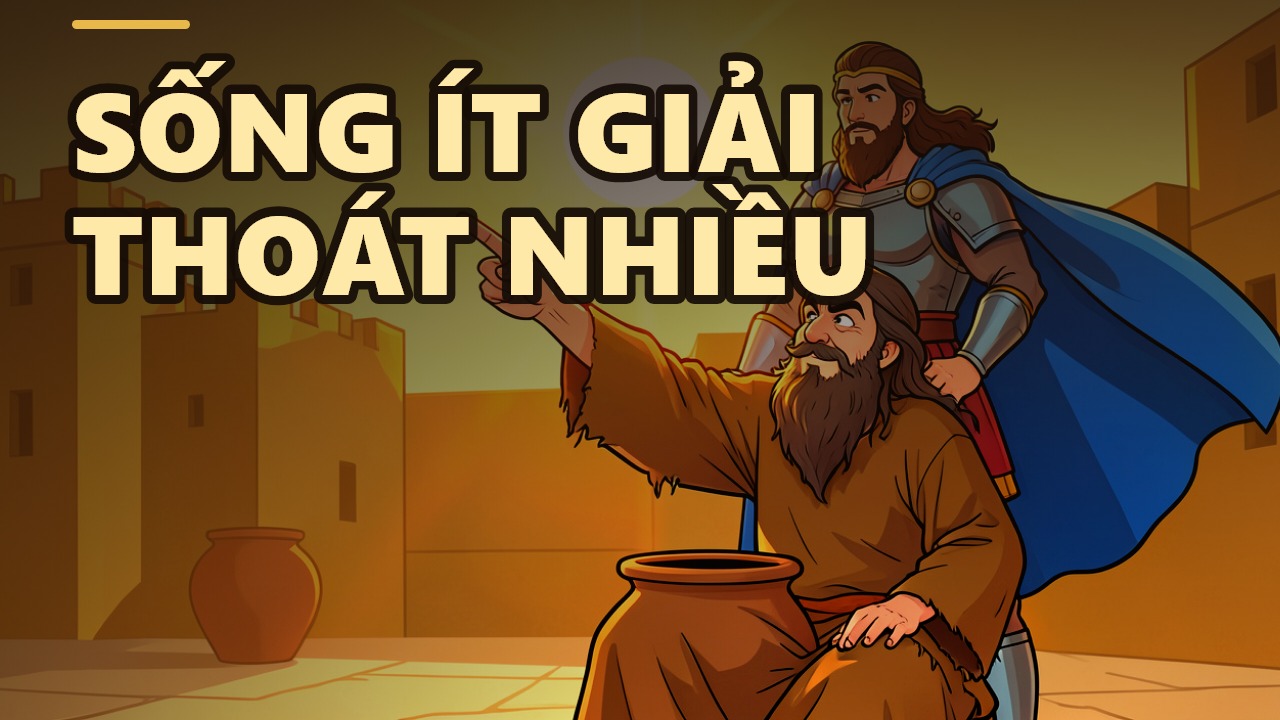
Have you ever wondered why some people command our respect with just a few words, even though they own very little? Or have you ever felt exhausted by all the things you need to buy and worry about? Perhaps what you need is a moment to breathe: in life, the less we have, the more liberated we become.
What is living simply? It is not self-mortification
When it comes to living simply, many people immediately think of eating less and owning fewer clothes. But according to Venerable Thích Chân Quang, the core definition is this:
Living simply means not using more than what is needed for one's duties.
In other words, we do not use more than what is necessary to fulfill our responsibilities. A practitioner needs enough food to sustain the body, a place to live, and clothing; beyond that, nothing more is needed. A civil servant is the same: they need a car to get to work and a decent set of clothes, but not a luxury car or a wardrobe with a new outfit for every day. This is an important measure to avoid two extremes: harsh asceticism and extravagant indulgence. We choose a level of living that is just enough and reasonable, so that the mind can be at peace.
The story of Diogenes and Alexander the Great: The paradox of greatness
Centuries ago, there lived a philosopher named Diogenes who lived extremely simply. He had no house, no door, only a robe to cover himself and a bowl for drinking water. One day, seeing someone cup water in their hands to drink, he threw away his bowl, thinking he still had more than he needed. When Alexander the Great, the conqueror of the world, came to meet him, the king asked what he needed. Diogenes only asked the king to step aside so he would not block the sunlight. Alexander exclaimed: "If I were not Alexander, I would wish to be Diogenes."
What made a wealthy king of the highest power admire a poor man? Because deep down, we all recognize it. The Venerable shares:
Anyone who can live a simple life is a truly great person.
Ordinary people all want comfort and pleasure. But rising above one's own desires, refusing to be bound by possessions, is what makes a person truly free.
The instinct for pleasure: The greatest challenge for a practitioner
Within every person there is an instinct for pleasure, simply put, "wanting to feel good." This is natural and recognized by law, as the declaration of independence clearly states the right to pursue happiness. But if everyone chases pleasure, humanity becomes ordinary. Conversely, whoever overcomes that instinct, no longer craving happiness for themselves alone, becomes a great person. The Venerable emphasizes:
Whoever overcomes that instinct for pleasure... has transcended that ordinariness to become great.
This is something we should reflect upon. We do not deny basic needs, but we know to limit ourselves there, not letting them pull us too far.
The trap of needs: From a single mouse to an entire ecosystem
The Venerable tells of an Indian hermit who lived in a cave, living only on alms and devoted to practice. One day, mice began to destroy his bag of food. So he got a cat. The cat needed milk, so he got a cow. The cow needed someone to care for it, so a Buddhist laywoman asked to stay and help. Gradually, from a single cave, he had an entire village full of tasks and affairs. The Venerable warns:
We say we are doing it for our practice, but the needs that arise to serve that practice end up destroying the practice itself.
This is a very practical reminder. In life, we often want to solve one small difficulty, only to find it dragging along countless other troubles. Sometimes, accepting a little hardship in order to keep life simple is actually the most complete solution.
Preserving simplicity amid blessings from merit and greed
The Venerable also shares his own dilemma: as his merit grew through practice, disciples gave him more and more robes and items. Although he wished to keep his poverty, the blessings kept arriving, impossible to avoid. He says:
A person with spiritual power is one who has conquered the instinct for pleasure, who knows how to refuse in order to keep a simple life.
A practitioner must always remain vigilant before the flow of blessings from merit. Blessings are the result of merit, but do not let them turn you into an indulgent person. When disciples wish to offer something, we should look inward: do I truly need this? How much is enough? Should I accept it and then transform it into helping others?
Conclusion: Choosing a minimalist life for peace of heart
Living simply is not about being harsh with ourselves, but about choosing a light, unencumbered life. When we have enough, our mind is at peace; when we want more, our mind grows anxious. Let us begin with small things: a desk with only a few essentials, a wardrobe with just enough, a schedule that is not overloaded. Remember, living simply is precisely to liberate the soul, freeing it from attachment, from the noise and confusion of the outside world, drawing us closer to inner peace. Let us practice starting today, a little each day, to experience the lightness and happiness that simple living brings.
AI-assisted translation from the Vietnamese original.
Read in Vietnamese →