
What Is the Purpose of Living? The Answer from Venerable Thich Chan Quang
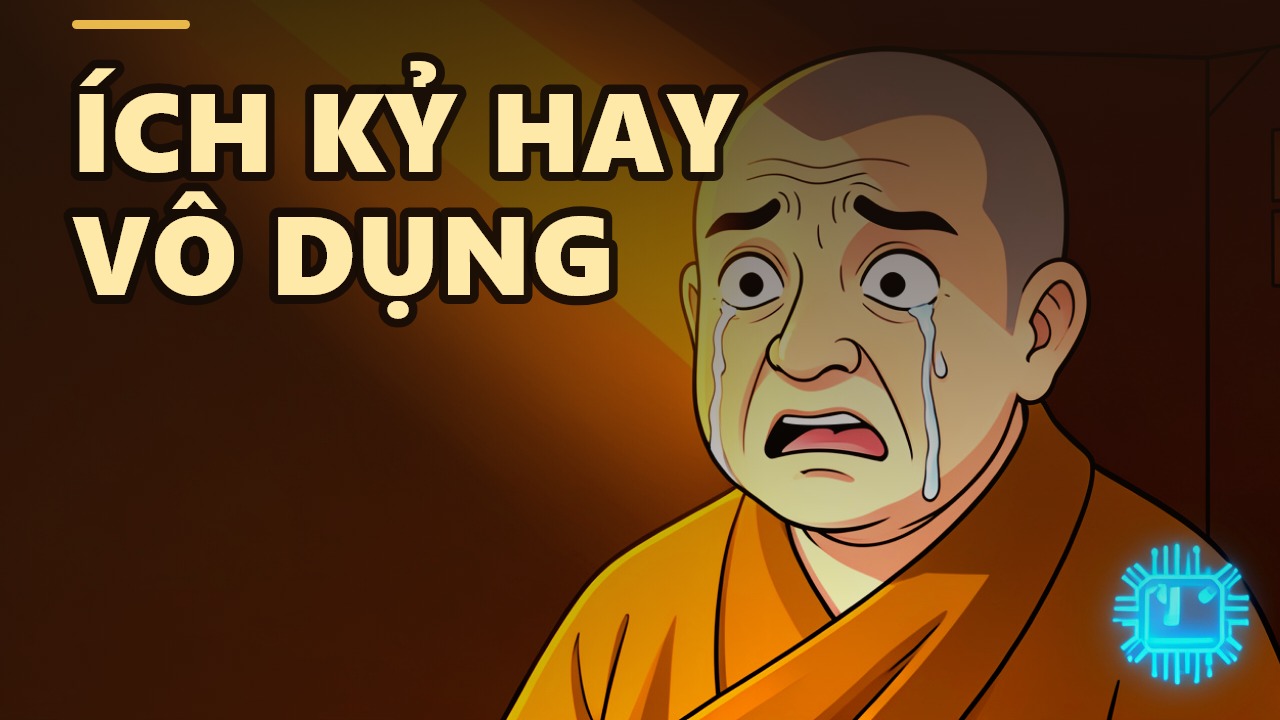
Have you ever asked yourself, “What is the purpose of my life?” Many people believe that living is simply about satisfying their own desires. But if you look closely, you will notice that your needs are growing larger: a new phone, a motorbike, branded clothing. We create these demands ourselves, only to find them binding us in return.
Venerable Thich Chan Quang teaches that the most intelligent species is the one that creates the most needs for itself. This very intelligence becomes a trap. When we generate desires and expect them to bring joy, we fail to see that they also become burdens, chains, and sources of suffering (dukkha). Each new need, whether it is a device or a garment, adds to our fatigue rather than relieving it.
When asked what the purpose of life is, Venerable Thich Chan Quang does not offer abstract theories. He speaks directly: “We must live as useful beings for the world.” This is more than a slogan. By defining our purpose as being useful, we avoid two dangerous mindsets: selfishness and emptiness. Without a motive for living, many fall into despair, sometimes even taking their own lives over minor issues. However, when we have a clear purpose, we gain the strength and perseverance to overcome difficulties.
Living usefully is not just about choosing a profession; it is about serving others, contributing to life, and bringing joy to those around us. The teacher emphasizes bringing noble values to the community, society, the nation, and humanity. Yet, to give, we must first possess something. To give money, we must have wealth. To give happiness, we must be happy. To teach others, we must be skilled. If we are inferior to others, we may become redundant. Therefore, living usefully requires us to constantly upgrade ourselves.
Humanity has progressed through many stages, from using hands and tools to harnessing natural energy, machines, computers, and now artificial intelligence. Venerable Thich Chan Quang describes the sixth stage: humans delegate the search for purpose to machines, allowing them to formulate and solve problems independently. With artificial intelligence, machines can create art and films. If humans cannot surpass machines, they risk being marginalized. As the teacher notes, even with the wish to be useful, one may find that society no longer needs them. In such a case, there is no opportunity to practice, because there is no chance to serve.
No machine can practice on our behalf. We must cultivate ourselves, sit in meditation, and enter meditative concentration. However, to remain relevant in this era, we must also engage with technology. The teacher advises disciples to learn programming, not merely as a skill, but as a way to remain useful in the future. If we do not know how to communicate with computers, we risk being left behind by human progress. Learning programming is not about becoming an expert, but about knowing how to interact with machines, much like a street vendor who must calculate prices even without formal education. It is fundamental to maintaining our value.
During the dharma talk, the teacher had his disciples stand and make a vow before the Buddha: “I promise to study programming diligently so that I may continue to be a useful person for life, for the country, for humanity, and for the Buddha's teachings (Dharma).” This is not just a personal oath, but a lesson for all of us. Before asking what the purpose of life is, ask what you have to contribute. Then, take action—study, practice, and serve. Do not allow yourself to become redundant in your own life.
AI-assisted translation from the Vietnamese original.
Read in Vietnamese →