
Zero: When "Nothing" Contains Everything
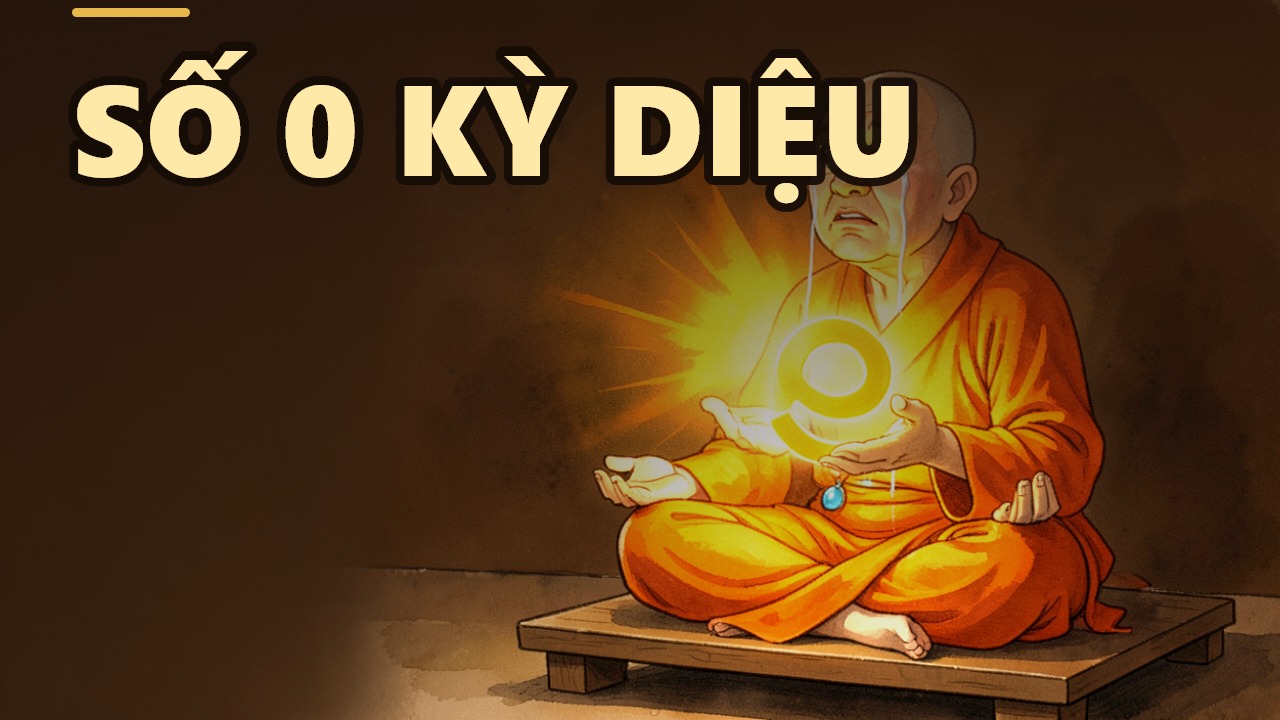
Have you ever wondered why the number zero, which seems empty, is the foundation of our entire digital civilization? In this dharma talk, Venerable Thich Chan Quang reveals a mysterious world hidden within this simple digit. Let us listen to these profound teachings and discover that "nothingness" is not an absence, but a presence full of power.
Zero in Digital Technology: From Two Digits to All Things
When we hear the term "digital technology," many immediately think of computers, phones, and movies. Yet few realize that all these wonders originate from just two numbers: one and zero. Venerable Thich Chan Quang emphasizes that digital technology creates every aspect of our current civilization. Spaceships, screens, special effects films, remote surgical robots, and artificial intelligence all stem from the combination of the number one and the number zero.
It is precisely this simplicity of "existence" and "non-existence" that creates a complex and miraculous world. The number zero is not an empty figure; it is a signal, a possibility, and an infinite potential.
The Misunderstanding of "Emptiness": A Dangerous Wrong View
In Buddhism, the word "emptiness" appears frequently. However, if we misunderstand emptiness as doing nothing at all, we fall into a dangerous trap. Many people hear phrases like "let go of everything" and assume they need not make merit or practice cultivation, believing that merely sitting idle leads to enlightenment. Venerable Thich Chan Quang warns that thinking we are free or superior by doing nothing actually destroys our lives, leaving us without blessings from merit.
He advises against speaking of high spiritual states before building a foundation of good deeds. If you have no money, do you still have rice to eat? You can share a portion of your meal as charity. Do you still have clothes to wear? Then go out and pick up trash. These actions are still ways to create merit. Therefore, before discussing emptiness, we must establish a foundation of having—having merit, virtue, and good works. Only when merit is complete can we truly practice the Mahayana concept of non-attachment to merit.
Boundlessness: Infinite Evil or Infinite Good?
The word "zero" also carries a deeper meaning: boundlessness or infinity. If evil is boundless, beings suffer boundless karmic consequences and fall into endless hells. But if goodness is boundless, one attains the stage of sainthood. Venerable Thich Chan Quang teaches that boundless evil leads to boundless suffering and eternal imprisonment in hell. Conversely, opposing this endless evil with endless goodness transforms our destiny.
To achieve this boundless goodness, we must cultivate infinite compassion. This is the essence of the Four Immeasurables: loving-kindness, compassion, sympathetic joy, and equanimity. When love fills our hearts without limit, every action benefits sentient beings, and cause and effect (karmic law) guides us toward enlightenment.
Ungratefulness: An Instinct That Must Be Transformed
One of the most frightening forms of "nothingness" is ingratitude. This is a natural human instinct. Venerable Thich Chan Quang notes that fundamentally, we are often ungrateful. We easily forget the kindness of teachers, parents, and those who have helped us. Yet the Buddha taught that gratitude is a great moral virtue.
Gratitude is a significant ethical quality for humans. As taught in the Anguttara Nikaya, we should reflect on this and vow to be grateful people, never forgetting even the smallest favors. When we nurture gratitude, our minds become warm, humble, and open to loving others.
Meditative Concentration: Finding the Happiest "Nothingness"
Finally, the "nothingness" sought by practitioners is the cessation of delusional thoughts. In meditative concentration, when we sit quietly and the mind stops wandering, a deep peace arises. Venerable Thich Chan Quang explains that seeing the mind free from delusions brings true happiness. One should not think that a lack of thoughts means a lack of anything; rather, this very state of mental stillness is profoundly joyful.
Many fear the idea of "not thinking," worrying that life will become meaningless. But for those with good roots, this emptiness is an inexhaustible source of joy and liberation from afflictions (kleshas).
Let us begin today by diligently making merit, practicing meditation, cultivating gratitude, and directing our hearts toward boundless compassion. Emptiness is not voidness; it is liberation, infinite love, and absolute peace. In this way, we fully live the meaning of this teaching on Zero.
AI-assisted translation from the Vietnamese original.
Read in Vietnamese →