
Six Monks of the "Underworld" – A Lesson in Compassion
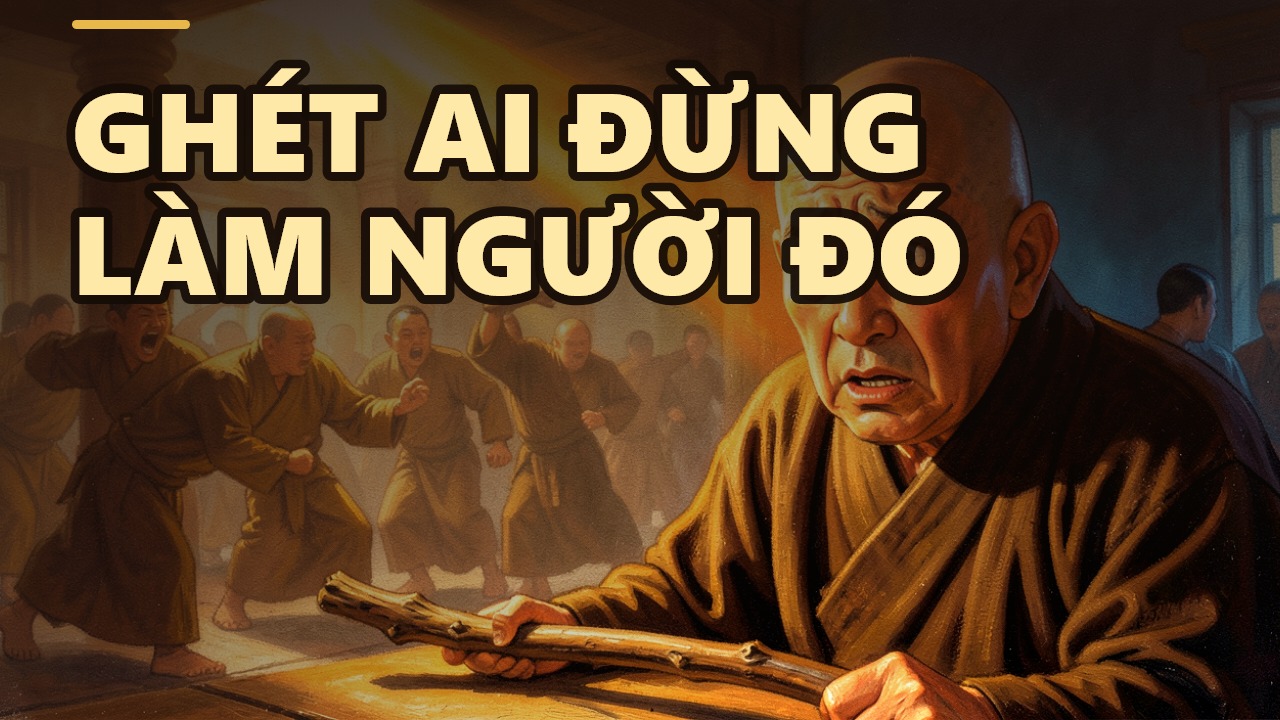
Have you ever imagined that within the pure Sangha of the Buddha, there were monks who specialized in fighting and assaulting others to seize living quarters? It sounds hard to believe, yet this is a true story from Buddhist history about the Group of Six Bhikkhus. They were not only breaking precepts but also became the reason the Buddha established many rules to guide the community.
### Who Were the Six "Underworld" Monks?
When the Buddha and his disciples arrived at a new dwelling place, the younger monks had already arranged their spaces. Suddenly, the six notorious troublemakers in the Sangha arrived and assaulted the young monks to take their places. The sounds of beating, cursing, and driving people away echoed like scenes from an underworld gang conflict.
As the teaching recounts: "Whenever the Buddha and the bhikkhus went to a new residence, these six famous troublemakers would arrive and assault the newer monks to claim the space for themselves."
The Buddha did not expel them immediately. Instead, their violent actions helped Him establish increasingly strict precepts. Consequently, the monastic rules for bhikkhus later became rich and served as strong deterrents.
### Using Oneself as Evidence – An Eternal Truth
In response to this incident, the Buddha taught a short, gentle, yet profound verse. He asked: "Who among us fears being beaten or killed? Everyone does, right? Then why harm others?"
He declared: "Everyone fears punishment; everyone fears death. Taking oneself as evidence, one should neither kill nor cause killing."
We must put ourselves in the shoes of others. If we desire love, so do they. If we desire respect, so do they. When we understand this, we cannot bear to harm anyone. This is an eternal truth.
### Buddhism Does Not Need Divine Authority
What makes this teaching special is that it does not invoke gods or divine will. The Buddha simply advised people to rely on their own feelings. Do not do to others what you do not want done to yourself; recognize that what you like, others likely like too. This was a great revolution in religious thought.
The Buddha taught us a principle based on our own emotional state, grounded in logic that every era must acknowledge. Because of this foundation, Buddhism is always praised as the most peace-loving religion. Without needing threats from deities, each of us can feel the preciousness of life and cherish it in others.
### The Underlying Nature of Violence Within Us
There is a truth few realize: within each of us lies a primitive "underworld nature" dating back to the dawn of humanity. When humans lived like animals, the law of the jungle prevailed—the strong dominated the weak. Today, despite civilization, many still hold onto retaliatory habits: if someone insults us, we insult back; if someone hits us, we hit back.
If anyone today still retains this nature—insulting those who insult them and striking those who strike them—they are still carrying millions of years of barbaric instinct. Consider action movies: when the hero defeats the villain, we often secretly wish, "Just shoot him." That desire is the "heroic outlaw" blood we must identify and transform into compassion.
### Evil Spreads – Sow Goodness Instead
In the story, after the six monks assaulted others, thirty young monks gathered to retaliate. Evil spread like a fierce fire within the community. Without restraint, the entire Sangha would have become a battlefield. But the Buddha promptly awakened everyone to this danger.
Each of us has the capacity to be a source of goodness or a source of bad karma. Stand firm on the ground of compassion; do not let anger dominate. When you see someone acting badly, think: they are unskillful because their mind is not yet transformed. If you can help them change, imagine how lovely they could become.
### Transformation Rather Than Punishment
Master Thich Chan Quang emphasized that the purpose of law is not punishment, but transformation. When imprisoning offenders, the goal is to help them perfect their minds for reintegration into society. Yet, in reality, few places achieve this.
Imprisonment is not merely to punish past crimes, but to transform individuals into good people, preparing them to return to normal life. Therefore, start with your own mind. Transform yourself; do not allow the pulses of aggression to occupy you. Use yourself as evidence to treat others with compassion.
The Buddha’s teaching in this sutra is not just for monks or ancient times. It is a reminder for each of us today, amidst a modern life full of conflicts. Remember: "Everyone fears suffering; everyone desires happiness. Therefore, do not cause suffering to anyone." When we learn to empathize, we live more beautifully, more peacefully, and sow many seeds of goodness for the world.
AI-assisted translation from the Vietnamese original.
Read in Vietnamese →