
Six Recollections: The Secret to Transforming the Mind and Finding Peace
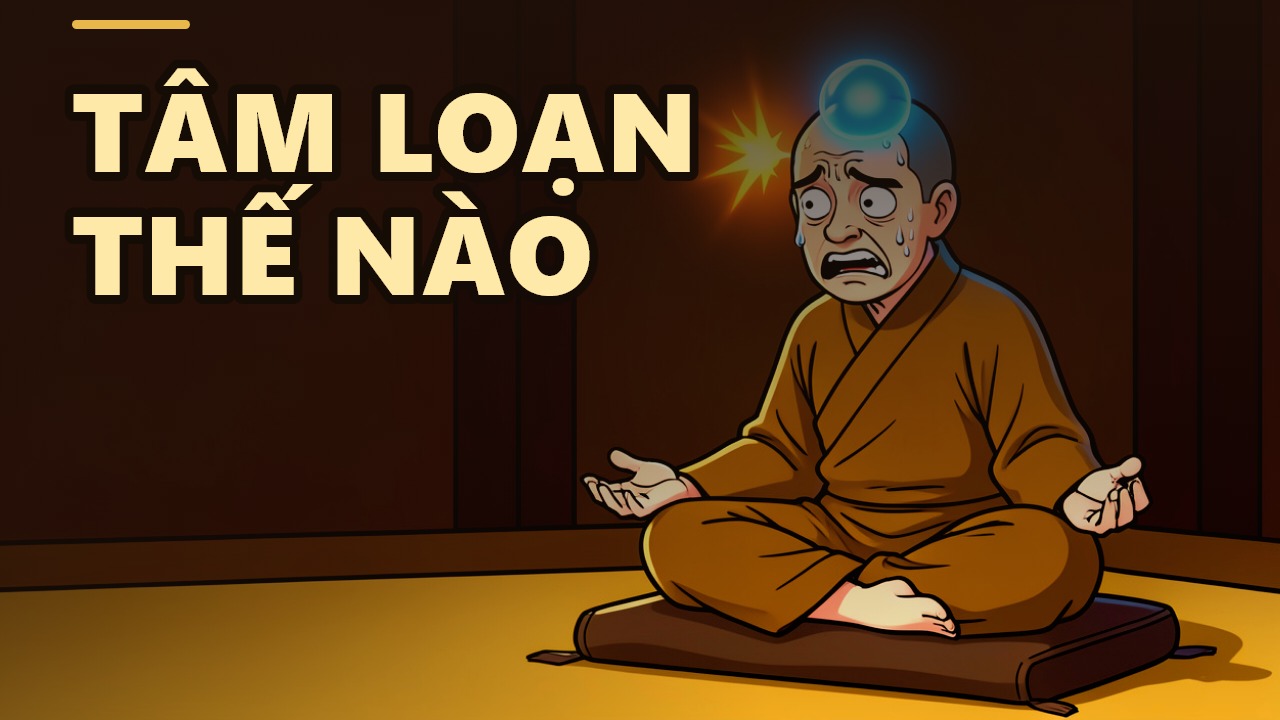
Have you ever felt your mind tangled like a knot, with thoughts wandering endlessly, making life feel exhausting? The Buddha taught us a method that is incredibly simple yet effective: the six recollections. This practice is not only a way to calm the mind but also a path leading to enlightenment. Let us listen to the profound insights of Venerable Thich Chan Quang to understand this dharma gate more clearly.
## Motion and Stillness: Two Sides of the Same Coin
We often believe that spiritual practice requires sitting still and thinking nothing at all. However, Venerable Thich Chan Quang pointed out that our thoughts are a form of mental motion, but they lead to two different outcomes. Some forms of motion lead to further agitation, while others lead to stillness. Indeed, some thoughts make us more confused, while others help us settle into peace.
How do we distinguish between them? The teacher identified three types of disturbance caused by mental agitation. First, there is restless agitation born from greed, where thoughts of wealth and material possessions keep the heart unsettled. Second, there is frantic agitation born from hatred and resentment, creating tension and heaviness within. Third, there is delusional agitation born from pride, where one considers oneself superior or holy, leading to a loss of mental control.
If we constantly nurture these thoughts, our souls will sink deeper into suffering. Conversely, if we direct our minds toward wholesome qualities, we will find true peace.
## Recollection of the Buddha: Understanding Him to Love Him
The first recollection is the recollection of the Buddha. However, this is not merely repeating the phrase "Namo Amitabha Buddha." It means remembering the Buddha and reflecting on his qualities with wisdom and deep reverence.
Venerable Thich Chan Quang used a beautiful analogy: imagine a father with twenty children. The child who understands the father best, who comprehends the hardships he endured to build their family’s legacy, receives the most love and inheritance. Similarly, if we know the Buddha only by name or external appearance, the merit we gain is limited. But if we deeply study his wisdom, compassion, and dignified conduct, our hearts will be elevated, and we become worthy children of the Tathagata.
As the teacher said, if we think of the Buddha knowing only his name, he simply provides us with daily sustenance. But those who understand him deeply receive extraordinary merit and are empowered to speak his subtle teachings for the benefit of sentient beings.
## The Five Remaining Recollections: Foundations for a Peaceful Life
Beyond the recollection of the Buddha, the Buddha taught five other recollections, forming a solid foundation for spiritual life.
First is the recollection of the Dharma. We reflect on the Buddha's teachings, the truth, and the path to liberation. When the mind turns toward the Dharma, we have a compass for living rightly.
Second is the recollection of the Sangha. We remember the monastic community, those who strive in practice and preserve the Buddha's teachings. This strengthens our faith and motivation.
Third is the recollection of generosity. We recall the virtue of giving and sharing. When we think of letting go, our hearts expand, releasing selfishness and greed.
Fourth is the recollection of precepts. We reflect on moral discipline, understanding what to do and what to avoid. Keeping precepts allows us to live peacefully without creating negative karma.
Fifth is the recollection of celestial beings. We remember the peaceful realms of devas, beings with great blessings. This directs our minds toward noble and virtuous aspirations.
These six recollections act like plows turning over the soil of the mind to plant seeds of goodness. With regular practice, our hearts become calm, clear, and filled with positive energy.
## Practice: The Key to Transformation
Venerable Thich Chan Quang emphasized that meditation serves our present life. The six recollections are no exception; they are practical tools to help us face daily challenges. When you feel stressed, try cultivating compassion. When you feel greedy, practice generosity. When you feel proud, reflect on impermanence and realize that you are merely dust.
He noted that anyone who always sees themselves as dust or grass ensures they will never lose their sanity. Do not wait until you sit in formal meditation to practice. Apply these reflections in every thought, word, and action. With just a glance or a breath, we can remember the Buddha, the Dharma, and the Sangha.
## Conclusion: Begin Today
The six recollections are an invaluable gift from the Buddha. They help us regain inner peace and serve as a path to enlightenment. Start practicing today, even with just one simple recollection. Each day, take a few minutes to remember the Buddha and his noble qualities. Gradually, you will feel a miraculous change in your heart. May you always find peace and diligence on the path of learning.
AI-assisted translation from the Vietnamese original.
Read in Vietnamese →