
Yielding: When We Give and Have Nothing Left
Yielding is harder than giving because we keep nothing for ourselves. Learn the practice of yielding through the teachings of Venerable Thich Chan Quang to escape selfishness and attain true freedom.
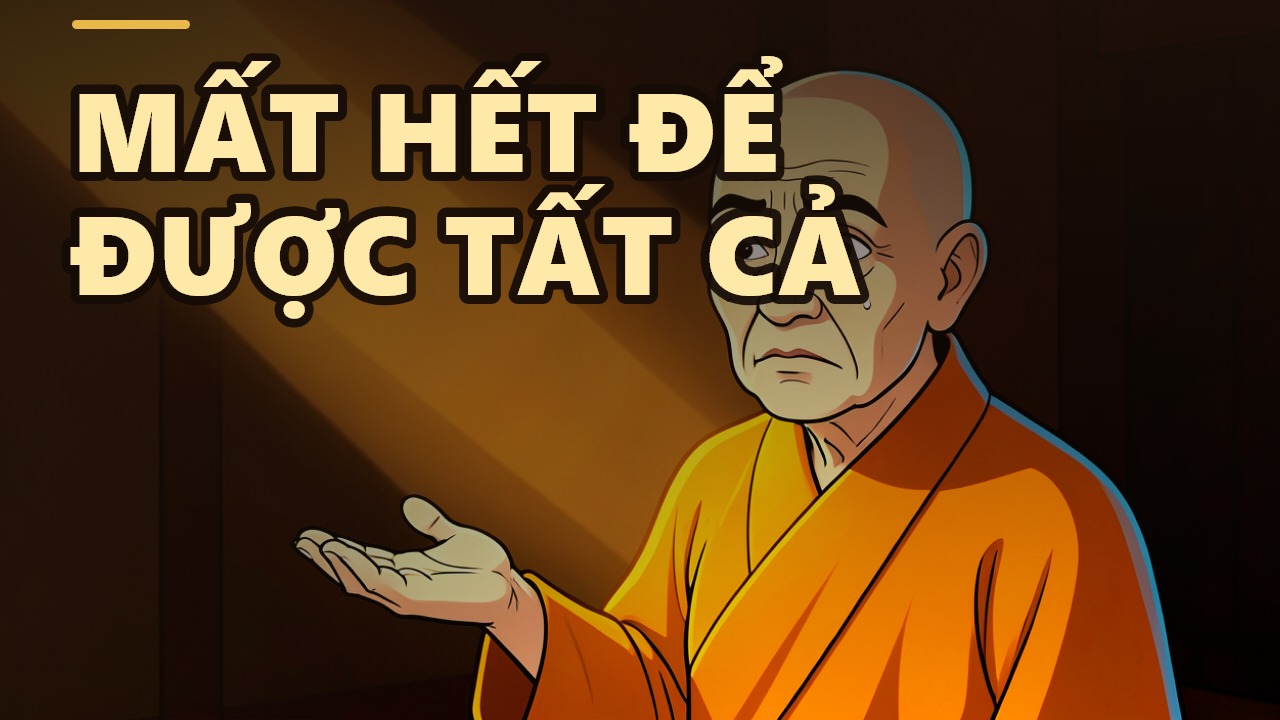
Have you ever found yourself in a moral struggle? Imagine picking up a large sum of money, then spending the entire night rationalizing why you should keep it, only to lie awake in torment. Venerable Thich Chan Quang shares a story where one person who found three taels of gold pretended to have a stomach ache to take it home, while another who found five taels felt no hesitation at all. This tale reveals a profound truth: every person’s morality has a price; it is not infinite. To go further on the path, we must learn the virtue of yielding, which is even more difficult than making offerings.
How does yielding differ from making offerings?
Making an offering means that if you have one million, you give away three hundred thousand, leaving seven hundred thousand for yourself. But yielding means giving away something you will no longer possess. It is easy to yield a shared clock because you never owned it exclusively. However, yielding a title, an opportunity, or praise means losing your right to claim them. Venerable Thich Chan Quang emphasizes that yielding implies giving something to others so completely that you are left with nothing. Therefore, though it may seem simple, yielding is higher and more difficult than making offerings, yet it lacks their visible grandeur. Consequently, yielding is not flashy, but it demands silent sacrifice and a vast heart.
Why is yielding so difficult?
The root of this difficulty lies in clinging to the self, or ego. Clinging to the self leads to selfishness, greed, and conflict. When everyone desires to be superior to others, disputes and division arise. Venerable Thich Chan Quang points out that the beginning of error lies in clinging to the self. This attachment always leads to selfishness, and from there, we engage in greedy competition with one another. To practice yielding, we must first recognize this ego. When we feel the urge to win, to be praised, or to secure a position, that is the moment our ego is speaking loudly.
The three hardest things to yield: Status, wealth, and honor
Those who have experienced inner conflict know that there are three treasures humans find hardest to relinquish. First is status. The teacher notes that status is a great craving of human beings. For the sake of status, people may scheme against each other. Yielding a class president role or a leadership position is a noble act of yielding. Second is wealth. As the saying goes, money is tied to one’s guts; parting with it causes pain. Yet, by yielding a portion of assets to others, we gradually cut through our attachments. Third is honor. Praise and respect bring joy. Yielding the opportunity for recognition to someone else is a very difficult act of yielding, but it is worth doing. Venerable Thich Chan Quang does not deny the importance of these things, but he reminds us that only a great soul can transcend worldly material bonds to yield to others.
Lessons from the Buddha: Yielding even a throne
The Buddha stands as the greatest example of the virtue of yielding. He had every condition to become a king, even a Universal Monarch ruling over a vast empire. But with transcendent wisdom, he saw that all such power was merely dust. The teacher recounts that when the Buddha left home, he yielded the throne to others, letting his Shakya clan manage without him. He gave up fame, profit, authority, and even his family to seek eternal value. His lesson is clear: when the soul is sufficiently vast, nothing in the world can bind it.
Yielding is a measure of the soul
Venerable Thich Chan Quang states that human morality has its own value and limit; it is not infinite. This means each person can only yield to a certain degree, depending on their wisdom and virtue. An ordinary person sees problems within a day or two, while a wise person views this life and many future lives. This broad perspective helps us yield more easily. Let us learn to see far ahead like the Buddha, recognizing that everything here is impermanence (anicca) and illusory. Do not hesitate to start with small acts: yield praise, yield opportunities, or yield the advantage in an argument. Each time we do this, we are gradually practicing letting go of the ego, moving toward freedom and peace.
Yielding is not weakness, but the strength of a vast heart. Practice this virtue daily, so that your life becomes lighter and more serene.
AI-assisted translation from the Vietnamese original.
Read in Vietnamese →