
Cause and Conditions: Why Was the Buddha Born in a Palace Yet Still Had to Undergo Six Years of Ascetic Practice?
Thầy Thích Chân Quang explains cause and conditions in the life of the Buddha, showing that wholesome roots from the past must be combined with present effort to achieve realization.
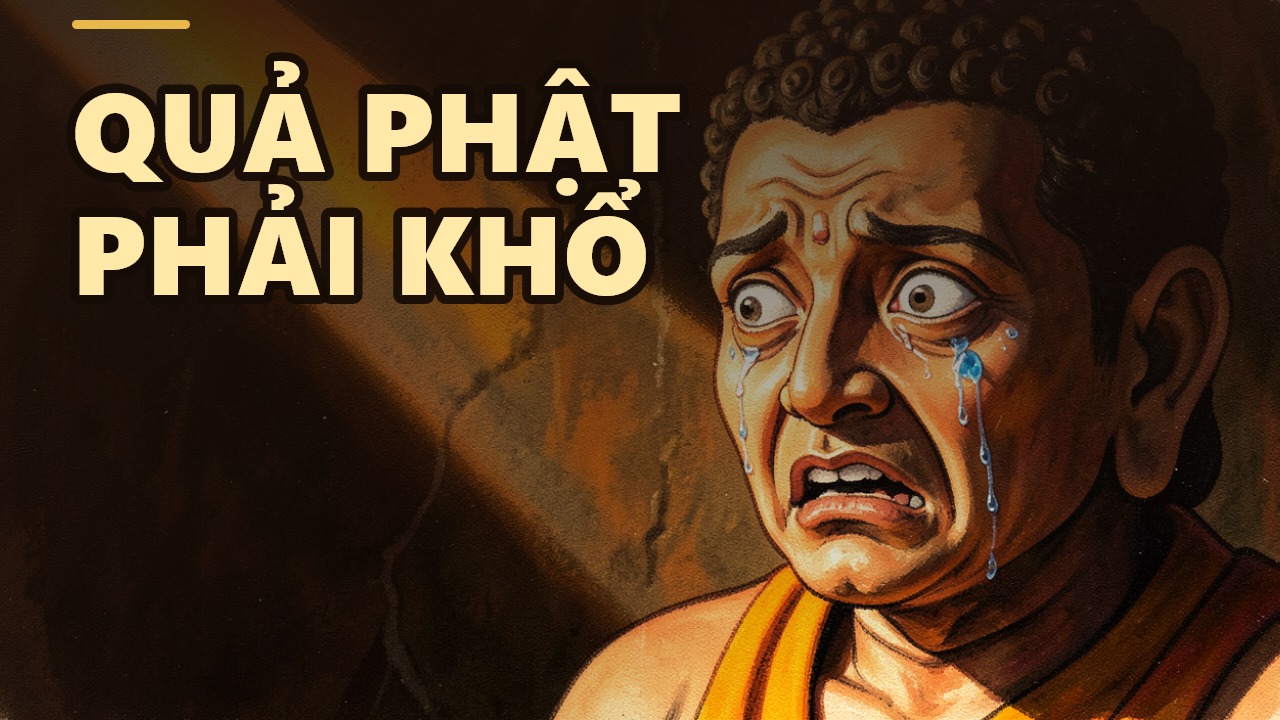
Have you ever wondered why some people are born into luxury, beauty, and good fortune, while others toil their whole lives and still achieve nothing? The answer lies in the teaching of cause and conditions (karmic law) that the Buddha realized. Today, let us listen to Thầy Thích Chân Quang speak on this topic through the story of the Buddha's life.
Wholesome Roots from the Past: The Buddha Was Born with Auspicious Marks
The scriptures record that when the Buddha was about to be born, many auspicious signs appeared: the Udumbara flowers bloomed, the earth and sky trembled in six ways, and dragons showered water to bathe him. Prince Siddhartha bore the thirty-two auspicious marks and eighty fine characteristics. These signs were the fruit of wholesome roots cultivated over countless lifetimes. Thầy Chân Quang explains:
"That was the wholesome karma he planted in previous lives, preparing for an extraordinarily remarkable destiny among all humanity."
Present Effort as the Condition: The Buddha's Renunciation and Ascetic Practice
Though born in a golden palace and pampered to the utmost, the Buddha did not stop there. He clearly saw the suffering of samsara (cycle of rebirth) that all beings endure. At the age of twenty-nine, he left everything behind, studied with renowned teachers, and then practiced asceticism on his own for many years. He endured such hardship that his hair and body wasted away. Thầy Chân Quang emphasizes:
"Effort is the condition of the present moment. The auspicious marks are the sign of wholesome karma from the past. And only when both of these come together can we achieve success in this lifetime."
A Lesson for Life: Cause and Conditions Determine Achievement
From the Buddha's life, we understand that with a cause but no conditions, blessings from merit gradually dry up; with conditions but no cause, effort becomes futile. Thầy Chân Quang gives the example of a person with noble features who is lazy, and a person who is diligent but lacks wholesome roots. He concludes:
"For a person to achieve a great status, a great destiny, a great fate, two things are needed. The first is the wholesome karma from many past lives. And the second element is that in this very life, they must make extraordinary effort."
Applying This in Daily Life: Do Not Rush to Judge Others
Thầy Chân Quang tells the story of the first five disciples who abandoned the Buddha when he accepted a bowl of milk, mistakenly believing he had given up his ascetic practice. This is a lesson about the affliction of "seeing only the outside and judging immediately." In our practice, when we encounter difficulties—when someone curses us, when we lose money—these are all conditions for us to extinguish the mind of greed, hatred and delusion. He teaches:
"If we do not diligently and tirelessly practice, nothing happens within our mind. We cannot transform our mind."
So what can we do to combine cause and conditions? Here are a few suggestions:
Practice every day, even for a few minutes, to transform the mind.
Do not judge others based only on appearances.
See suffering and challenges as conditions for training.
Plant wholesome causes through actions that benefit others.
Cause and conditions are the two wheels of the wheel of samsara (cycle of rebirth). We cannot change the causes from the past, but we can create the conditions of effort right now. Let us take the Buddha as our example: though fully endowed with wholesome roots, he never ceased striving. Therefore, whether our blessings from merit are few or many, let us resolve to practice and transform our mind today. That is the rainbow of hope for the future.
AI-assisted translation from the Vietnamese original.
Read in Vietnamese →