
The Law of Cause and Effect in Service: From the Ocean of Suffering to the Light
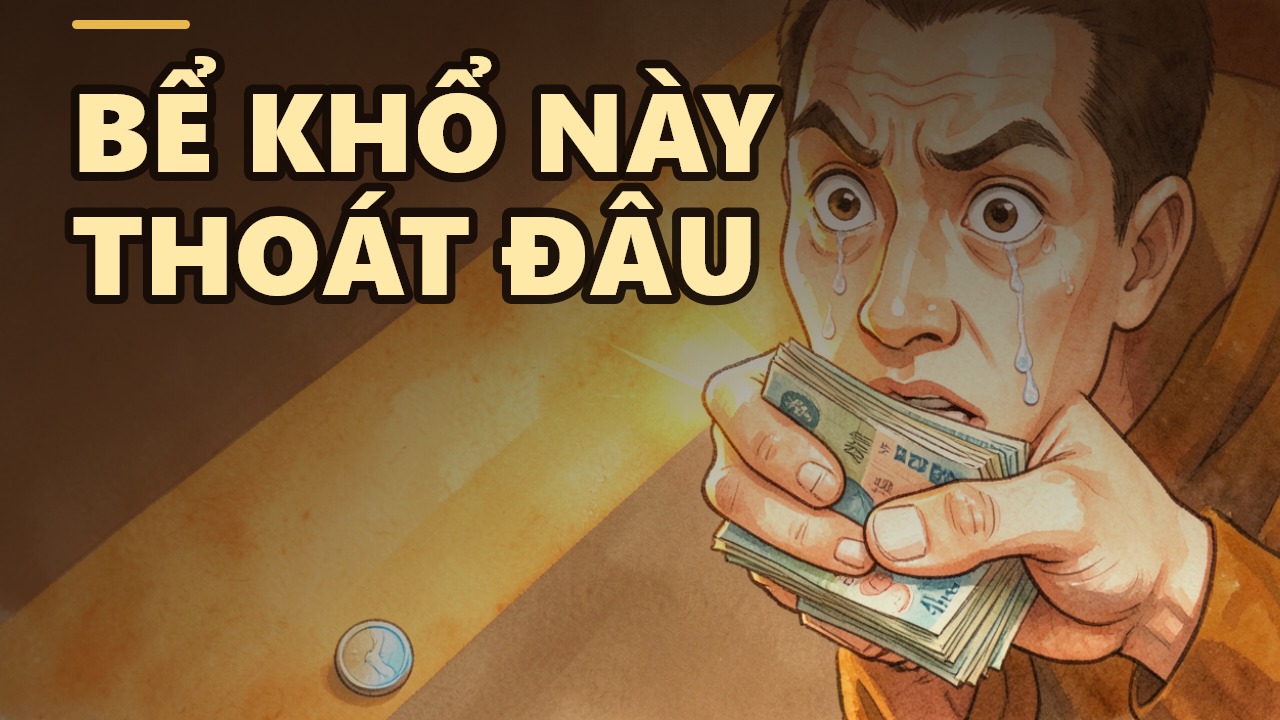
Venerable Thich Chan Quang teaches about the law of cause and effect (karmic law) and two levels of awakening. First, we understand that life is suffering (dukkha). Then, we learn to love and serve others. When we live for others, the law of cause and effect shifts our path toward happiness.
Have you ever asked yourself, "What is the purpose of living?" If your answer is merely to eat, wear clothes, or earn money, you may be walking down the wrong path. The poet Doan Nhu Khue once exclaimed, "The ocean of suffering is vast; we wander like guests on a small boat." Whether facing headwinds of pain and illness or tailwinds of wealth and fame, we are all adrift in this sea of suffering. So, how can we escape? Listen as Venerable Thich Chan Quang shares insights on the law of cause and effect regarding service.
### The Story of the Man Holding a Pile of Money
A neighbor visited the teacher, seeking to understand the Buddha's teachings (Dharma). Because the temple was crowded, the teacher could only say briefly, "Imagine your hand holding a pile of money. If you look at it and see suffering (dukkha), you have begun to understand Buddhism."
Many people laugh, believing money brings pleasure. But if we look deeply, we see that wealth, beauty, and fame are impermanent (anicca). Chasing them for a lifetime only exhausts us. The Buddha taught his first sermon on suffering (dukkha), yet for thousands of years, few truly understood it. However, when we realize that life is inherently suffering (dukkha), we begin to awaken. With deeper awareness, we recognize that behind every pain lies the law of cause and effect (karmic law): "We reap what we sow; nothing happens without reason."
### Subtle Karma: When Words Become Destiny
The teacher shared heartbreaking examples. Some beautiful women end up in prostitution, while some wealthy individuals face such poverty they must drink from muddy puddles. These outcomes stem from careless words and actions in the past. "If you harshly call someone a servant, even if you are beautiful in future lives, you will only serve others. If you insult someone by calling them a prostitute, you too may fall into that role," he explained. Or consider this: "If you leave half a cup of water untouched today, you may die of thirst in the future." The law of cause and effect (karmic law) spares no one. It is subtle and governs every aspect of life. Therefore, understanding karma helps us remain mindful in every thought, word, and deed.
### The Second Awakening: We Must Love One Another
If understanding karma is philosophy, then recognizing the need to love one another is ethics. The teacher said, "In this same ocean of suffering, humans must care for each other." This is extremely difficult, and few fully grasp it. "Among the thousands sitting here, perhaps only two or three truly understand this," he noted. He used himself as an example. Despite being busy, he always cared for his young disciples, worrying about their meals and work. "Only with food can one sustain the practice of Dharma." Through love, we help each other cross the ocean of suffering. Through love, we plant good seeds for the future. If we live selfishly, only darkness lies ahead.
### Entrepreneurs Are Creators of Life
In society, there is a special group: entrepreneurs. The teacher taught that when an entrepreneur builds a business and creates jobs for many people, this is great generosity. "Occasional acts of giving cannot compare to the merit created by entrepreneurs who provide stable livelihoods for countless people year after year. This is great generosity, supreme generosity." He spoke of Mr. Thanh, an entrepreneur with five thousand workers, who cared for their families as well. "He did not just support the worker but also their entire family." Moved by such compassion, the teacher shed tears. An entrepreneur like him embodies the noble ideal of service.
### Service: The True Purpose of Life
Ultimately, everything leads to one goal: living to serve. "Why do we live? To serve everyone. If we lack this aim, we are living wrongly." In Buddhism, patriarchs teach, "Serving sentient beings is making offerings to the Buddhas." Even politicians say, "What does it mean to be an official? It means serving the people." Thus, regardless of our position—whether owner, worker, monk, or official—if we know how to serve, we live according to the true purpose of life. Conversely, if we live only for ourselves, we walk in darkness.
Each morning, ask yourself, "What will I serve today?" When we begin to care for others, help a colleague, create employment, or simply smile at a stranger, we plant a seed of goodness. The law of cause and effect (karmic law) never overlooks anyone. It opens a bright, warm path where happiness awaits. Learn to love and serve, so your life is not just a boat drifting aimlessly in the ocean of suffering, but becomes a lighthouse illuminating the way for yourself and for all beings.
AI-assisted translation from the Vietnamese original.
Read in Vietnamese →