
Patience and Endurance: The Perfection of Forbearance to Repay Karmic Debts for Liberation
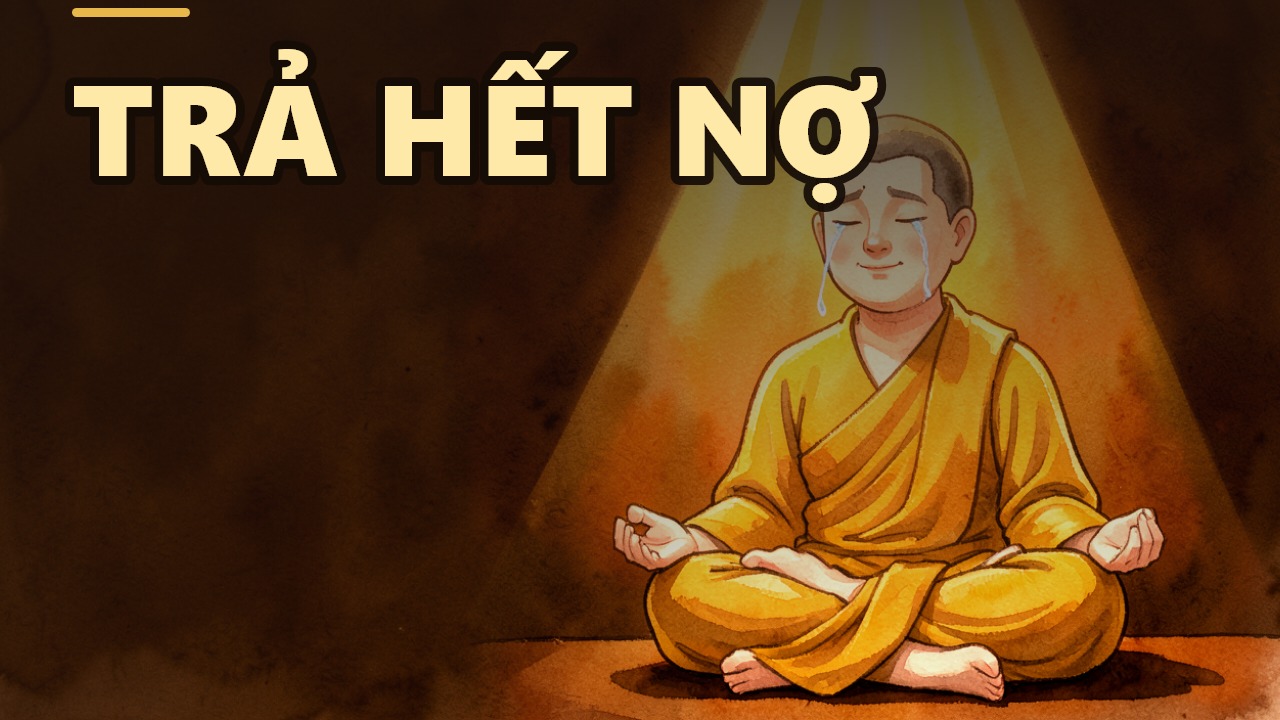
Patience is not merely silent endurance, but a way to repay karmic debts so that the mind becomes pure and liberation is attained. This article explores the profound meaning of the perfection of patience within the Six Paramitas, as taught by Venerable Thich Chan Quang.
Imagine being insulted without cause, or even struck painfully. In movies, heroes often endure until the third offense before standing up to retaliate, and the audience cheers with satisfaction. But bodhisattvas have a different approach—one that may require us to reflect deeply for a long time.
Why Must We Practice Patience?
According to Venerable Thich Chan Quang, patience is not just enduring; it is a paramita—a perfection of forbearance taken to its absolute limit. On the path of life, we constantly encounter unsatisfactory situations, insults, and injustices. However, a practitioner must not allow afflictions (kleshas), anger, or resentment to arise. Why? Because all of us were once ordinary beings who created countless karma over innumerable lifetimes. These debts are slowly coming due. To repay them, we must practice patience. The teacher uses an analogy: if you owe one million and someone comes to collect, but you only pay six hundred while resisting, they will return again. But if you pay it all off, even if little remains, you are at ease. The perfection of patience means paying it all—without resistance, without fighting back, and without holding anything back.
"If we still owe debts to this life, we cannot attain liberation. That is why bodhisattvas strive to patiently repay all past debts completely."
Five Levels of Patience
The teacher lists five qualities that a practitioner of patience must achieve. First, do not speak or reply. Second, do not become angry. Third, do not suffer, feel pride, or become sad. Fourth, do not plan when to retaliate. Fifth, wait until the other person’s anger subsides, then proactively reach out to reconcile. Hearing about the fifth step, many find it incredibly difficult! The teacher smiles and says, "If a movie showed this, I would go find the director and give him a beating!" Yet this is precisely the mind of a bodhisattva—who never abandons any sentient being, no matter how cruel they may be.
The Story of the Monk and the Goose
To illustrate this, the teacher tells an ancient story. A bhikkhu was begging for alms when a goose swallowed the donor’s gold ring. He was beaten until he bled, yet he did not reveal the truth, because if he spoke, the donor would kill the goose. Silent patience was his way of repaying karma, but he did not accept false blame—for accepting blame would cause despair among his loved ones. Only after the goose died naturally did he tell the truth. This is the essence of a bodhisattva: accepting bitterness to maintain purity of heart, without harming sentient beings.
Patience Is Not Retaliation
Some people reach a level where they remain silent, unangry, and unaffected, yet inside they secretly plan revenge. They appear calm and smile, but in reality, they are hiding a knife. The teacher warns that this is not true patience. A bodhisattva does not merely refrain from retaliation; they actively seek reconciliation to dissolve karma and create new positive conditions (dependent origination). This is because the mind of a bodhisattva never abandons any sentient being. When releasing fish during merit-making ceremonies, we see them as innocent creatures. But if we could see their previous lives as cruel humans, we might hesitate to show compassion. Yet bodhisattvas still love them and pray for them to be reborn as practitioners.
Practice Patience Daily
Patience is not weakness; it is the weapon of the strongest—the one no longer bound by karma. When insulted, first take a deep breath. Do not speak, do not get angry, do not suffer, and do not plan revenge. If possible, try to rebuild a good connection. This is a practical exercise each of us can perform daily. Through patience, we repay old debts, purify our minds, and draw closer to the shore of nirvana.
AI-assisted translation from the Vietnamese original.
Read in Vietnamese →