
The Heart of Gratitude: The Secret to Repaying Kindness Through Small Acts
**Summary:** During the Vu Lan season, Venerable Thích Chân Quang teaches about the heart of gratitude: to live meaningfully is to be truly human, and to repay our great debts of kindness, we must begin with the smallest acts.
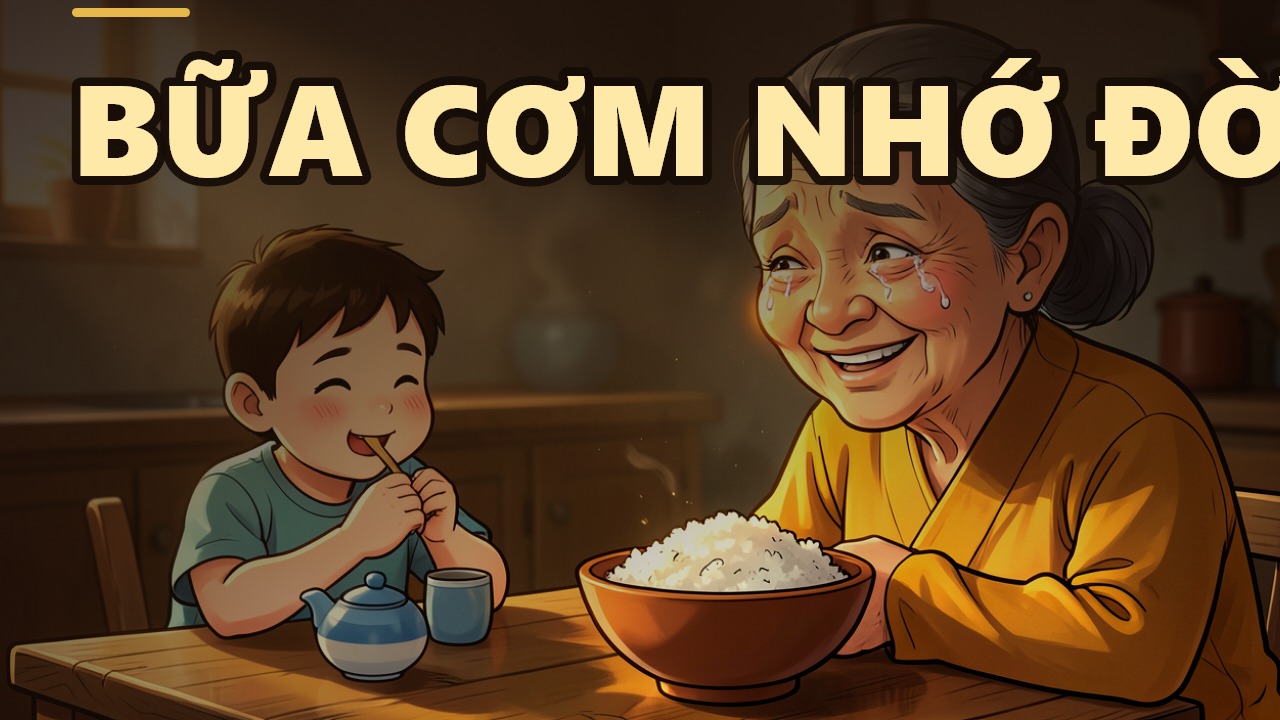
There are small kindnesses that stay with us for an entire lifetime. Venerable Thích Chân Quang once shared a childhood memory: as a young boy, he visited a neighbor's house and found an elderly woman eating alone. She invited him to share her meal, and he innocently sat down to eat with her. Only years later did he understand that the meal she offered him was her finest, while her own family ate simply. He still remembers that meal to this day and always hopes to meet her again to repay the kindness. This is a manifestation of a grateful heart—the very morality that defines our human value.
**Gratitude is the Distinctive Mark of Humanity**
During the Vu Lan season, we often hear about "gratitude and loyalty." But what is its true essence? Venerable Thích Chân Quang teaches that beings exist in three distinct levels, divided not by wisdom but by the quality of their affection. Those who live without gratitude and loyalty will gradually leave the human realm and be reborn as animals. Conversely, animals who learn to live with affection and loyalty may one day be reborn in the human world. And if humans live entirely guided by this heart of gratitude, they dwell in the realm of sages.
"Whatever we say, no matter how profound, if our actions lack this heart of affection, there is no true principle."
Gratitude is not a clumsy sentimentality we must discard when we first begin to practice. After attaining ultimate wisdom, we return to this heart of affection. It is a love illuminated by wisdom, a great compassion that the Buddha himself called nirvana. In the Mahāparinirvāṇa Sūtra, the Buddha taught: "Nirvana is the great compassionate heart." The sage lives by, for, and through this affection, for it is the highest truth.
**Vu Lan Recalls Ancient Debts of Kindness**
During Vu Lan, we focus on "old affections"—the kindnesses we have received in the past. Some debts of kindness are clear to us, such as:
Parents—for the gift of life and nurturing, as they poured all their love into their children.
Teachers and masters—who gave us the teachings, opening the path to a virtuous life.
Quiet leaders—who safeguard the nation, bringing about a life of peace and sufficiency.
And there are also the unseen kindnesses of trees and sky that have sheltered us.
The Buddha was a supreme sage, yet He too held gratitude deeply. After His enlightenment, He left the Bodhi tree, but turned back to gaze upon it for seven days, expressing gratitude to an insentient being that had sheltered Him during His forty-nine days of meditative concentration. In the Aṅguttara Nikāya, the Buddha affirmed:
"Gratitude is a quality of the noble ones."
Therefore, to live with gratitude is not only to remember those who helped us, but to be thankful for everything that has nurtured us—from people to the insentient world. Vu Lan is a time to reflect on these old debts of kindness and vow to live in a way worthy of such profound benevolence.
**To Repay Kindness, We Need Capability**
When it comes to repaying kindness, we need real capability. A person who is always sick cannot fully care for their parents. To repay our teachers and masters, we must learn the teachings, practice them, and pass them on to others. To repay our nation, we must dedicate our utmost effort to building it. Capability is the vehicle through which we fulfill our gratitude.
Venerable Thích Chân Quang tells the story of a young man, the son of a wealthy family, who studied abroad but returned to apply for a job as a driver and handyman at a company. Everyone grew to like him because he worked diligently. After a year, he resigned, and only then did everyone learn he was the designated successor to a major corporation. He had started from the lowest position to understand his employees, so that one day he could become a good leader. This story shows:
"To initiate anything great, begin with the smallest, lowest task."
Like a tall building, to reach great heights, we must dig a deep foundation. To become a sage, one must learn to bow before everyone, seeing oneself as mere dust.
**Beginning with the Smallest Things**
So, how do we build this capability? The Venerable teaches a secret: practice slowly and thoroughly, starting with the smallest things. When learning to write, his monastic disciples had to sit and practice each stroke of the letters A and B with great patience. Anyone who wrote quickly would be tapped on the head with a chopstick. By restraining the hand to write slowly and understand each stroke and corner, one gradually attains a focused mind—which is the first step of meditative concentration.
The same applies to building a career. Do not start by demanding a high salary; begin by working for free, at the lowest task, to learn and understand life. To build a civilized society, we must begin with the lowest element of society: trash. The Venerable shares:
"One day, when we understand trash and realize that it is a resource, an asset, a treasure and not something to be thrown away—that is understanding. But if we see trash as mere waste, we are ungrateful."
When we can look at trash and feel love and appreciation for it, we are contributing to building civilization. From such small acts, our capability gradually grows, until we become strong enough to repay all the kindnesses we have received in this life.
**A Life of Repaying All Kindness**
With each Vu Lan season, let us ask ourselves: Have I lived with a grateful heart? Do I have the capability to repay the kindness I have received? Do not worry—begin with the smallest acts: write more slowly, work with true heart, love people, offer care even to plants and trees. When our heart is filled with love and illuminated by wisdom, we will become people of gratitude and loyalty, living beautifully and able to repay everyone.
May each of us have a peaceful Vu Lan season, learning the great lesson from the word "gratitude"—so that we may live up to the true meaning of being human.
AI-assisted translation from the Vietnamese original.
Read in Vietnamese →