
A Person of Gratitude and Devotion: Beginning with the Smallest Things to Repay Every Debt of Kindness
The Vu Lan season is an occasion for each of us to look into our own hearts and live fully with love and devotion. This article shares the secret of a person of gratitude: knowing how to bow one's head, beginning with the smallest things, in order to repay the kindness of parents, teachers and ancestors, one's country, and all living beings.
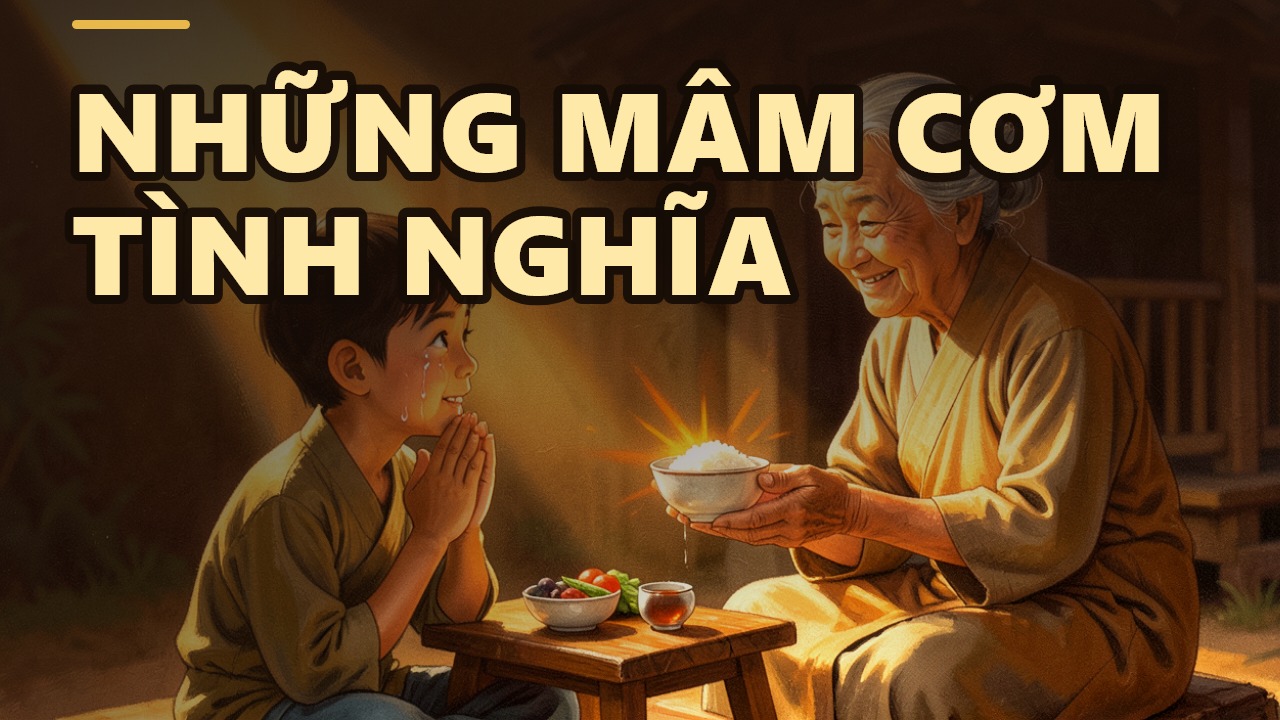
Do you remember some simple meal that, even after growing up, you still hold dear in your memory? Thay Thich Chan Quang, in a dharma talk during the Vu Lan season, recounted just such a memory:
"I once went out and passed a neighbor's house, where I saw an elderly woman having her meal. She invited me to eat, and I climbed up and sat down to eat. Only much later did I understand that she had prepared for me the finest meal she could, even though her family was poor. That meal has remained in my heart my whole life, and I vow to find her again to repay her kindness."
That dharma talk opens up a great theme: the person of gratitude and devotion — one who knows how to live with love and loyalty in this life. Vu Lan is not only a festival of filial piety; it is a season that reminds us to live with a loving heart, so that when we leave the temple, we love people more.
Vu Lan: The Season of Love and Devotion
Vu Lan is a season for each of us to immerse ourselves in love and devotion. Thay Thich Chan Quang teaches that when we come to the temple, we set aside all calculations of winning and losing in order to kindle love within our hearts. He says: "We come here to understand the Buddha's teaching of compassion and devotion. We receive the Buddha's loving love, and then when we return, we live loving people more."
But what does it mean to live with love and devotion? In his talk, Thay divides sentient beings into three levels based on their capacity for love, not their wisdom:
Those ungrateful and disloyal will gradually drift away from the human world.
Those with love and devotion are worthy of being human.
Those who live love and devotion to the fullest ascend to the realm of the saints.
"Anyone who lives with too little feeling, that is, too little love and devotion, or who is ungrateful and disloyal, is a beast. But one who knows how to live with love and devotion is worthy of being human."
So in the end, love is everything. Wisdom merely helps us adjust our love.
Old Love and New Love
In life, we encounter two kinds of love. Old love is the kindness already given — our parents, our teachers and ancestors, those who once helped us. New love is the conditions (dependent origination) of encounters with people we have not yet known. Thay teaches that the Vu Lan season emphasizes old love:
"In this Vu Lan we focus on old love. As for new love, we will speak of it at another time. Please remember this."
That is why we remember our ancestors, our parents, our teachers, and even the smallest kindnesses of the past. Gratitude is the mark of a person of virtue. The more one remembers kindness, the more one's spiritual heart grows. Thay says: "If a person does not forget even the smallest old kindness in life, would they forget a great kindness? No."
The Buddha — An Exemplar of Living with Love and Devotion
When the Buddha rose from the bodhi tree, he stood gazing back at it for seven days, expressing gratitude even to an insentient object. Thay Thich Chan Quang reminds us: "The Buddha stood motionless for seven days looking at the bodhi tree, expressing gratitude to a thing we would call insentient." And in the Anguttara Nikaya, the Buddha declared:
"Monks, gratitude is a quality of a noble one."
Thus, living with love and devotion is the pinnacle of character. A disciple of the Buddha must be rich in love and devotion, always carrying a deep sense of gratitude.
The Secret of Capability: Begin with the Small
To repay the kindness of our parents, our teachers and ancestors, and our country, we need capability. Thay points to one secret: begin with the smallest tasks, doing them very slowly and very carefully. Just as learning an instrument requires playing each note slowly, just as learning calligraphy requires writing very slowly, just as starting a business means first taking on work without pay.
"To build a very tall building, you must dig very deep. The deeper you dig and the lower you lay the foundation, the taller the building you can raise."
One who wishes to become a saint must know how to bow one's head, seeing oneself as mere dust. Thay emphasizes: "One who knows how to bow down and be humble in order to serve life, who sees oneself as only dust and ashes, that person will become great."
The Person of Gratitude and the Lesson About Trash
To build a civilized society, do not begin with skyscrapers; begin with the lowest thing in society: trash. Thay teaches this with great depth:
"Our attitude toward trash, how we understand trash... Trash is in fact a resource, an asset, a form of wealth — not something to be thrown away."
If we look upon trash with love, we are soldiers building civilization. But if we fear trash and avoid it, we are not yet people who know how to contribute to building society.
Living with Love and Devotion Every Day
The Vu Lan season is not merely a festival; it is an invitation to change: to live with gratitude, to live with love, beginning with the smallest things. Try starting today — slowly, humbly, bowing your head before everyone, cherishing even what we thought we would discard. In that moment, we are step by step becoming a person of gratitude and devotion, worthy of the Buddha's kindness and the kindness of life.
AI-assisted translation from the Vietnamese original.
Read in Vietnamese →