
The Connector Between the Buddha and Sentient Beings – The Sixth Practice of Bodhisattva Samantabhadra
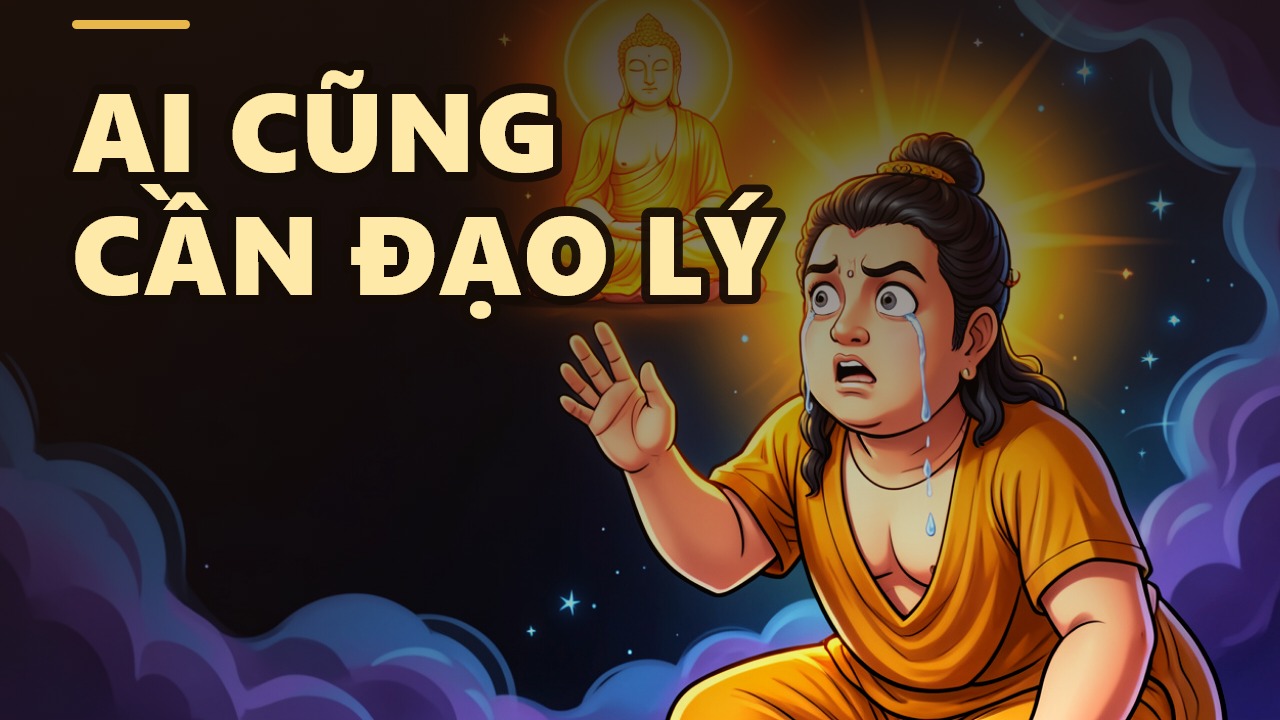
The sixth practice of Bodhisattva Samantabhadra teaches us the role of one who invites the Buddha to turn the Wheel of Dharma. This person does not directly teach, but rather awakens sentient beings to the realization that they need spiritual truth to attain true happiness. Have you ever wondered why the Buddha remained silent for forty-nine days after his enlightenment? He had realized a profound teaching yet did not know where to begin sharing it. The story of Brahma’s request offers us a deep lesson about the mission of being a connector.
Turning the Wheel of Dharma is more than just giving a sermon. In the sixth practice, "inviting the turning of the Wheel of Dharma" means asking the Buddha to initiate the work of guiding sentient beings. It is not merely delivering a single dharma talk. Venerable Thich Chan Quang explains that the word "turn" signifies rotating the wheel of teachings, which marks the beginning of the entire endeavor to educate all beings.
When the Buddha attained enlightenment, he remained seated in meditative concentration. He clearly saw the vast distance between his realm of realization and the ordinary minds of sentient beings. Because this gap seemed so immense, he initially made no intention to speak. Therefore, the request from Great Brahma became the starting point for all subsequent teachings.
A deity from the Brahma realm appeared before the Buddha and invited him to begin his work of spreading the Dharma. Only after accepting this invitation did the Buddha start to teach. The vow of Bodhisattva Samantabhadra is that whenever a Buddha attains enlightenment, he will play the role of inviting the turning of the Wheel of Dharma. Although it is only a simple request, the merit generated is inconceivable.
Venerable Thich Chan Quang shares that the crucial moment was when the Buddha, resting in deep meditation, accepted the request to begin his mission. Many consider this act of invitation to be a great blessing from merit. The role of Great Brahma was incredibly humble; he offered a single invitation and was never mentioned again. Yet, from that moment, countless beautiful things came into existence for the world.
Why do sentient beings feel they do not need spiritual truth? Today, people are enchanted by technology, by the miracles of smartphones and artificial intelligence. They do not perceive a spiritual need because they are unaware that such a need exists. Venerable Thich Chan Quang compares this to our past: we did not need smartphones because we did not know they existed. Once we learned of them, we immediately desired them. Similarly, sentient beings do not know there is a sublime teaching that can liberate them, so they do not seek it.
We only desire what we know exists. If we are ignorant of something, we cannot want it. The supreme Dharma has the power to save all beings, but if they do not know it exists, they will not ask for it. The role of the bodhisattva is to make sentient beings aware that this path has appeared in the world. From that awareness, they begin to need, like, and care about spiritual truth.
In this era, miracles are no longer found in religion but in technology. We might call someone a saint if they could speak to another person three kilometers away, yet a smartphone allows anyone to do this easily. Technology is gradually flattening the value of spiritual faith. The greatest danger is that humans may become slaves to robots. So, where lies true happiness?
Venerable Thich Chan Quang affirms that those who remain awake are special. Even as science and technology advance rapidly, these individuals are not mesmerized. They still need, still like, and still care about a moral truth that transcends technological achievements. Technology does not bring happiness. True happiness resides in how we live, in wisdom, in love, and in genuine ethics.
The greatness of the sixth practice is that the bodhisattva does not teach directly. Instead, he facilitates others to teach. He acts as a bridge between the holy ones and sentient beings. He helps people realize that they still need spiritual guidance, so that they may naturally seek out the Buddha. As Venerable Thich Chan Quang says, the bodhisattva connects two sides: on one side is a holy being capable of spreading the Dharma, and on the other are sentient beings who do not know what they truly need.
We can learn from this practice every day by awakening those around us to the value of spiritual truth. We do this by living with mindfulness, kindness, and by sharing good deeds. In a world captivated by technology, those who take time to explore the Buddha's teachings are exceptionally rare. Our task is to stay awake ourselves and quietly influence the hearts of others, helping them recognize the path to true happiness.
Remember that each time we live according to spiritual principles, and each time we inspire someone to wish to become a better person, we are practicing the sixth vow of Bodhisattva Samantabhadra. This is the greatest merit we can cultivate in our current age.
AI-assisted translation from the Vietnamese original.
Read in Vietnamese →