
People of Foresight: Living with a Vision Spanning Centuries
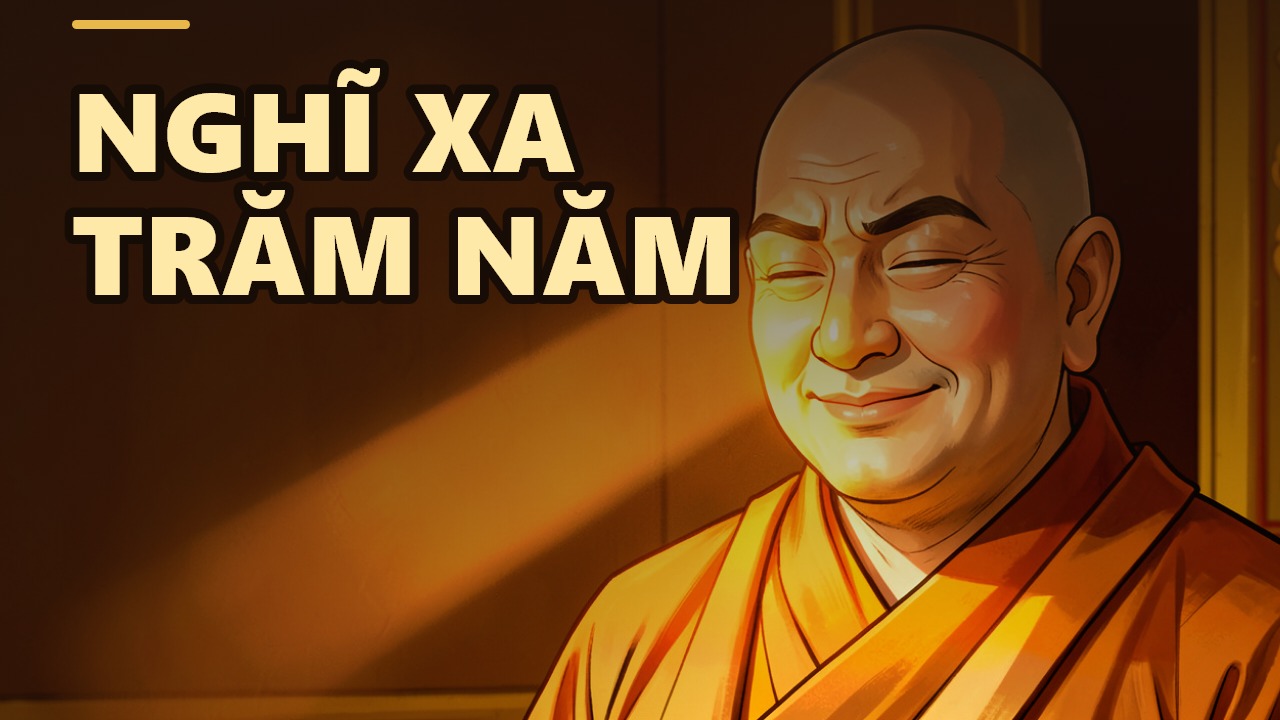
Have you ever lost the warmth of your neighborhood over a single insult or a small gain, only to be left with regret years later? Today, let us listen to Venerable Thich Chan Quang’s dharma talk on "People of Foresight." This is not about being kind-hearted in a superficial sense, nor about royalty. It is about a profound way of living that looks toward the future.
### What Does It Mean to Be a Person of Foresight?
In daily life, some people live only for the moment, worrying solely about immediate concerns. Others, however, live with foresight, thinking about what lies ahead and what will remain after they are gone. Venerable Chan Quang explains that those who consider tomorrow, who seek the well-being of others in the long run, are truly living with foresight.
Conversely, those who act hastily and shallowly for immediate gains are said to lack depth. Living with foresight requires an inner battle. It demands patience, self-restraint, and sometimes accepting personal loss. Yet, this very discipline is the essence of ethics and wisdom.
### The Story of the Chicken and Neighborhood Harmony
Imagine a neighbor whose chicken wanders into your vegetable garden. You feel anger rising and wish to scold them. But then you think of the future. As Venerable Chan Quang notes, neighbors often share their lives together for generations. We cannot simply abandon our community.
Therefore, a person of foresight suppresses their anger, prioritizing the relationship that lies ahead. Accepting a small disadvantage now is far better than destroying lasting harmony and goodwill.
### Regret and the Lesson of Sowing Conditions
Venerable Chan Quang shares his own experience. After becoming a monk and gaining some recognition, he met old acquaintances again. He reflected that because he had never bullied, fought, stolen, or acted dishonestly as a child, these meetings were free from shame. Had he lived poorly in his youth, he would have felt deep embarrassment upon seeing them again.
However, he also carries one regret. His family once quarreled with a neighbor. He wishes he could return to apologize, but that person has already passed away. Thus, we must live with foresight today so that we do not carry such heavy regrets into tomorrow.
### The Boundary Between Ordinary Beings and Bodhisattvas
Many ask how long it takes to become a bodhisattva. Venerable Chan Quang answers that the moment you begin to think of beautiful outcomes for the distant future, you start walking the path of a bodhisattva.
While ordinary people might plan for five or ten years, bodhisattvas think across thousands of lifetimes. They sow good conditions (duyên) with all sentient beings, practicing patience to help transform one another. The difference between us and them is merely the span of our vision—whether we look near or far.
### Skillfully Handling Greed When Making Merit
Disciples often wonder if dedicating merit while expecting karmic results constitutes greed. Venerable Chan Quang offers a skillful method. When you think of the fruit of your actions, immediately extend that thought. Ask yourself how you will use those blessings to do even more good.
He teaches, "I will use this result to serve sentient beings further." In this way, selfish greed dissolves. A person of foresight transforms karmic results into new conditions, continuing to plant seeds of goodness.
### Living with Foresight to Protect the Dharma
The teacher recounts a story of two monastic brothers competing for the position of abbot. The younger brother slandered and falsely accused the elder. The elder did not retaliate; instead, he praised his brother. Why? Because practitioners cultivate the perfection of patience.
As the Buddha taught, we must practice the paramita of forbearance. This is the highest form of altruism, placing the welfare of many above personal ego. A person of foresight masters their self-concept, elevating the greater good over petty disputes.
Let us live with foresight starting today. In every action and word, ask yourself: Will I feel joy when we meet again in the future? Will my actions preserve the trust of others? Will they bring peace to sentient beings? When you ask these questions, you have already stepped onto the path of the bodhisattva.
AI-assisted translation from the Vietnamese original.
Read in Vietnamese →