
The Person with the Virtue of Gratitude: What Do I See in Them?
Venerable Thích Chân Quang shares about gratitude — a virtue that has no direct karmic retribution, yet opens countless blessings, and is the mark of a beautiful, steadfast soul at the time of death.
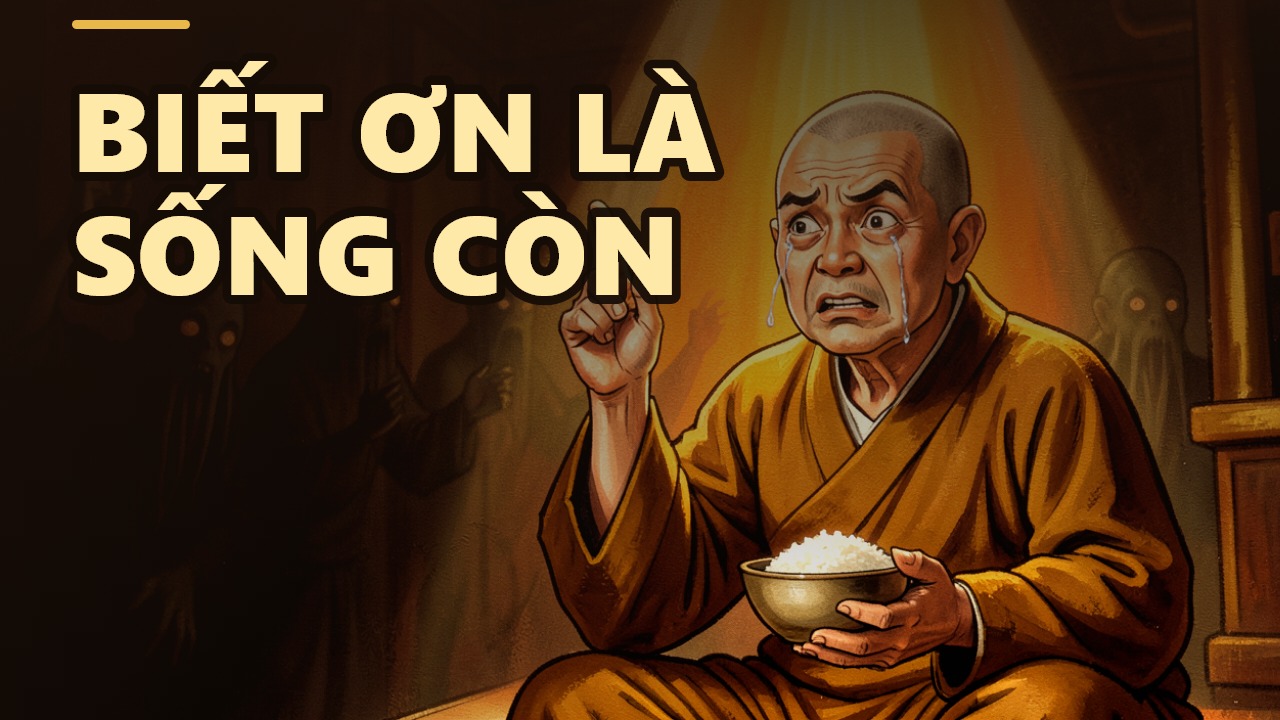
Have you ever wondered: how can we recognize a good person? They may go to the temple every day, teach others to be gentle, help the poor... But Venerable Thích Chân Quang points to a simple yet profound "vital point": look at whether they have gratitude in their heart.
Where Do We Go After Death? — A Lesson from the Unseen Realm
In a dharma talk at Hoa Nghiêm Temple, after a memorial ceremony for war heroes and fallen soldiers, Venerable Chân Quang began with a haunting question: "Let me ask you, dear devotees — do you know where our fallen soldiers have gone after they died?" He explained that although they all fought for their homeland, each person carried different karma and blessings from merit. The Buddha taught that there are three realms and six paths of samsara (cycle of rebirth), and none of us knows for certain where we will go.
The Venerable described that in the heavenly realm there are jeweled palaces glowing with radiant light; in hell there are demons who beat sinners so they may recognize their wrongs. But there is one realm where most of us will fall: the realm of hungry ghosts — the realm of starving spirits. Without enough merit to rise to heaven, without enough wrongdoing to fall into hell, we hover in between, waiting to be reborn, and "in that realm there is nothing to eat."
"All of us, if we do not rise to heaven and do not fall into hell, will enter a realm where there is nothing to eat after we die."
Why Is Making Food Offerings a Way of Saving Ourselves?
The teaching points out: if no one makes offerings of food to us, we will suffer terrible hunger. That is why Vietnamese people have the custom of placing a handful of rice in the mouth of the deceased. But what truly matters more is making food offerings every day while we are still alive. When we offer food to hungry spirits, we are also accumulating blessings from merit, so that when we die, there will be someone to offer food to us as well.
"While we are alive, if we offer food to hungry spirits, then when we die, naturally there will be someone to offer food to us, and we will not go hungry."
The Venerable reminded everyone: "Do not skip a single day, not one day of practice. Every day must count. You must chant sutras, bow to the Buddha, and do all kinds of good deeds to help those around you." For every good deed is a brick in building a solid home for us in the other realm.
Refusing to Ask, Refusing to Prepare — The Greatest Mistake
What is most worrying is that everyone must die, yet "we do not know where we are going after death, and not knowing, we refuse to ask." The Venerable gave an example: if the government announced that in five years this area would no longer be livable, you would immediately look for a new home and prepare. But when it comes to death, we simply leave it to chance.
"Not knowing, yet refusing to ask"
The Venerable advised that if we want to know where we will go, we should seek out those who understand — the teachers, those who practice — and begin building our home right now. "From this moment until the end of our lives, we must take refuge in the Buddha and practice... so that when we die, we will have a home to return to, not wandering, not hungry and suffering."
Gratitude — A Virtue Without Direct Karmic Retribution
Returning to the main theme: "Look closely at the person with the virtue of gratitude." The Venerable posed a paradox: the ungrateful person suffers no direct retribution, and the grateful person receives no direct reward either. Why is that so?
The Venerable explained: "Here is the subtle point. That virtue opens up countless other virtues and creates countless other blessings from merit." The grateful person does not receive direct karmic retribution, but gratitude is the sign of a heart filled with virtue — filial devotion, love for others, willingness to help, capacity for patience.
"The ungrateful person will face no retribution in the future. Nothing happens at all."
"That virtue opens up countless other virtues."
The Grateful Person Is One with a Beautiful Soul
The Venerable told the story of Venerable Sāriputta — the disciple foremost in wisdom, who was entrusted to lead the Sangha when he was only in his twenties. He was great not because of his age, but because of "a gratitude that no one could surpass." Throughout his life, he never forgot his debt to Venerable Assaji, who had taught him the verse "All phenomena arise from conditions (dependent origination)." Even while sleeping, he would turn his head toward the west — the direction of his benefactor.
Therefore, if you want to know whether someone is good:
Do not ask whether they often go to the temple.
Do not ask whether they are filial to their parents.
Do not ask whether they are gentle and kind.
Simply ask: "Do they have gratitude in their heart?"
"Just ask whether that person... has a grateful heart, that is all. If that person has a grateful heart, then all other virtues will follow."
Looking at the Grateful Person, Seeing the Whole Homeland
The Venerable advised young people: when choosing a companion in life, do not trust sweet words alone. Look at whether that person has gratitude. And when you look at a grateful person, you will see an entire beautiful world within them:
"Let us gaze upon a person with the virtue of gratitude, and see that within them live their parents, their grandparents, their ancestors, their homeland, and their country."
The grateful person carries in their heart the image of their parents, their homeland, the green rice fields, the forests, the eyes of their aging mother. They live beautifully each day, like the young devotee who once wrote to the Venerable: "I behold your life growing more beautiful with each passing day." But in the ungrateful person, we see only intoxication, money, and petty selfishness.
Beginning Today
So let us begin practicing today: reciting the Buddha's name, chanting sutras, making food offerings each evening, doing good deeds, and above all — learning to be grateful for the smallest things. Every word of thanks, every moment of remembering our parents, our country, and those who have helped us, is a brick in building a solid home for the time of our death. Let us gaze upon those who are grateful, so that our hearts may be refreshed and grow more beautiful with each passing day.
AI-assisted translation from the Vietnamese original.
Read in Vietnamese →