
The True Practitioner of the Modern Age: What Changes and What Does Not?
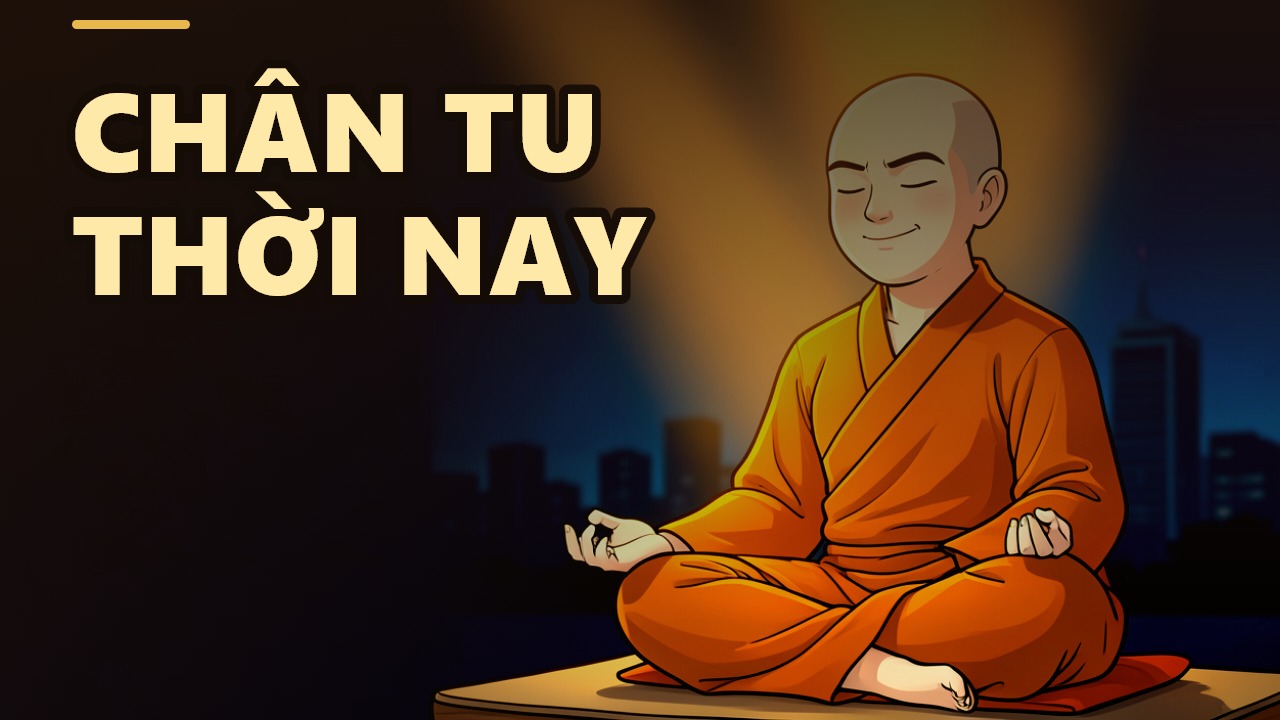
This piece explores the core qualities of a true practitioner: precepts, meditative concentration, wisdom, diligence, and compassion, and how they adapt to the modern age without losing their essence.
Walking through the city streets, you might see a monk wearing a helmet while riding a motorbike and wonder, "Is such a person a true practitioner?" This is a common question as the Buddha's teachings enter the technological age. According to Venerable Thích Chân Quang, every era needs true practitioners, and they possess unchanging qualities, only their way of expressing them differs.
**Precepts – The Unchanging Foundation**
The first quality that every true practitioner, past or present, must uphold is moral precepts. Precepts are not rigid rules for bondage, but a voluntary commitment to refrain from wrongdoing. Before formal precepts were established, the Buddha taught the Four Noble Truths and the Noble Eightfold Path, and practitioners naturally knew what to do and what to avoid. Later, the Vinaya rules were created to maintain order within the Sangha. The Venerable teaches:
A true practitioner must have a fondness for the precepts, meaning a heartfelt, resolute, and determined commitment not to do what is wrong.
Stories like Nanquan's killing of the cat may mislead people into thinking that upon enlightenment, one no longer needs precepts. The Venerable explains that such a story is merely a Zen pedagogical device, not a means to undermine the precepts. A true practitioner must first have a mind that loves and respects the precepts, viewing them as the guiding compass of their life.
**Meditative Concentration – The Inner Discipline**
Regardless of the era, a practitioner must have the discipline to calm and focus the mind. Meditative concentration is not a pill to be taken and forgotten. Certain drugs may create a mental state resembling concentration, but they destroy the body. True meditative concentration, however, is a strenuous practice that strengthens both mind and body. The Venerable teaches:
A method that allows one to sit still so the mind becomes still is called meditative concentration.
Meditative concentration is not about escaping the world, but about the ability to stand firm amidst the currents of life, keeping the mind from being swept away.
**Wisdom – Seeing Clearly Merit and Misdeeds**
Wisdom is not an academic degree or book knowledge. In the Buddha's teachings, wisdom is the ability to discern clearly what is a misdeed and what is meritorious. In the Lotus Sutra, the Buddha sits in the midst of empty space, his light shining from the heavens down to the hells. The Venerable interprets this:
That is wisdom... The Buddha sits suspended in empty space, meaning he does not rely on any prejudice... seeing to the ultimate depth of misdeeds and seeing through the full extent of merit.
A person of wisdom is one who can distinguish right from wrong in every action and every word. A long-ordained title is less important than this clarity.
**Diligence – Cherishing Every Moment**
Diligence means not letting time pass in vain. The Venerable emphasizes cherishing every moment. A lazy person wastes a day, a week, or a month of practice. A diligent person values every hour, every minute, even every instant. The Venerable says:
In every ticking second, do not let one moment slip away uselessly.
This does not mean not working, but maintaining mindfulness in all activities. Each breath, each step, is an opportunity to return to the Buddha.
**Compassion and Reverence for the Buddha**
Compassion is loving all sentient beings, but not indulging them. Sometimes one must be strict to help others correct their faults, yet the heart remains full of compassion. Alongside compassion, a true practitioner must have wholehearted reverence for the Buddha. In modern times, we seldom remember the Buddha, making realization difficult. The Venerable advises us to re-establish reverence for the Buddha in our hearts, so that every breath in and out is a moment of reverence.
**Adapting to the Times – Changing without Losing the Way**
Life has changed greatly. A monk riding a motorbike with a helmet, or practicing forest meditation in a retreat, no longer resembles the image of going on alms round with a bowl as in the past. But this does not cause them to lose their qualities as a true practitioner. The Venerable affirms:
Riding a motorbike requires wearing a helmet... but he is still a bhikkhu, is he not? Still recognized because he still observes the precepts, even though he can no longer walk to teach the Dharma.
Adapting does not mean becoming lax. For example, during the rainy season retreat, even if one must return to the temple to guard the gate, they must still arrange time to study the precepts and the Vinaya. The Venerable also touches upon patriotism: a practitioner of virtue must bear responsibility for the nation in which they live. This is a new point that a true practitioner of the modern age must possess.
Therefore, strive to be a true practitioner not just in external form, but from the depth of your soul. Diligently observe the precepts, cultivate meditative concentration, develop wisdom, live with diligence, compassion, and reverence for the Buddha. Do not let the modern age sweep you away, but stand firm in all circumstances, so that the Dharma remains ever-present in the world.
AI-assisted translation from the Vietnamese original.
Read in Vietnamese →