
The Grateful Heart: The Most Beautiful Sign of a Soul
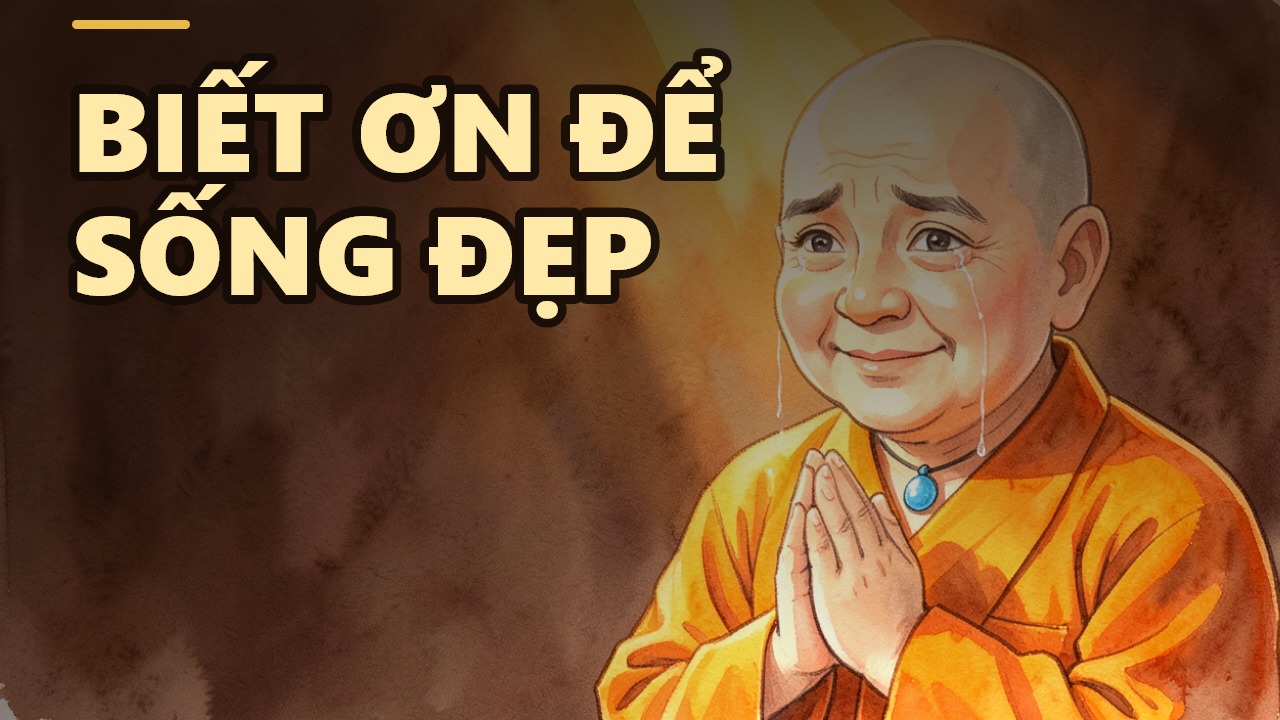
Venerable Thich Chan Quang offers a profound perspective on gratitude. This virtue may not yield immediate karmic results, yet it reflects the entire beauty of one’s soul. It helps us recognize truly moral individuals and see their homeland reflected in them.
A question that seems simple but troubles many is this: "Where do we go after death?" In his dharma talk at Hoa Nghiem Pagoda, Venerable Thich Chan Quang skillfully guides this inquiry toward a lesson about a rare virtue—gratitude. Let us explore this together.
### Where Do We Go After Death? The Fear of Impermanence
The Buddha taught that the universe consists of three realms and six paths. Each person’s destination after death differs according to their karma and merit. Depending on these forces, one may be reborn in heavenly realms, hell realms, or among hungry ghosts. Notably, there is a realm where nothing can be eaten—the realm of hungry ghosts.
Most of us, if we lack sufficient merit for heaven and have not committed grave sins leading to hell, will enter this realm. Venerable Chan Quang emphasizes this point with urgency. He reminds us that without proper preparation, we face a bleak existence. Therefore, he advises us to nourish ourselves spiritually now.
This is why the ritual of offering food to hungry spirits each afternoon is so vital. When we make offerings to suffering spirits, we sow wholesome causes for ourselves. Vietnamese Buddhists are fortunate to understand this truth deeply. Let us diligently perform these offerings so that when we eventually pass into the next life, others will offer sustenance for us as well.
### Gratitude: A Virtue Without Direct Karmic Retribution
When discussing gratitude, Venerable Chan Quang presents an interesting paradox. An ungrateful person does not suffer specific karmic retribution, nor does a grateful person receive direct blessings from the act itself. However, gratitude opens the door to countless other forms of merit.
He explains that while ingratitude brings no immediate punishment, and gratitude brings no immediate reward, the impact is far greater. These virtues unlock infinite streams of blessings. This teaches us not to seek direct results from being thankful. Instead, practice gratitude because it is a noble ethic. Like the moon hidden behind a mountain peak, its beauty is unseen but profoundly magnificent.
### The Grateful Person – A Sign of Total Morality
How do we identify a good person? We need not ask if they are filial, if they visit temples often, or if they help others frequently. We only need to ask one question regarding their memory of kindness.
If a person possesses a heart of gratitude, they inherently possess all other virtues. This is remarkable because gratitude itself does not produce direct karmic fruit. Yet, without it, a person’s soul becomes shallow, common, and prone to cruelty. Gratitude is the hallmark of a noble spirit.
When we encounter someone with this quality, we can trust them completely. They surely hold many other virtuous traits. In daily life, choose your friends and partners based on their capacity for gratitude. Let this virtue guide your relationships.
### Sariputta – The Great Mirror of Gratitude
The Buddha chose Sariputta, who was only in his twenties, to lead the Sangha. This decision stood despite the presence of many elder disciples who had already attained Arhatship. The reason was Sariputta’s unparalleled depth of gratitude.
Sariputta achieved enlightenment after hearing just four lines of verse from the venerable Assaji. He remembered this debt of gratitude throughout his entire life. Venerable Chan Quang recounts how Sariputta respected and honored Assaji for even the smallest teachings. Because his gratitude was so deep, the Buddha called him foremost in morality.
"Foremost in wisdom" and "foremost in morality" are two titles bestowed upon him by the Buddha. Both stem from his profound sense of thankfulness. His example shows us that true greatness begins with remembering those who helped us.
### The Grateful Person – Where Homeland Resides
When we look at a grateful person, we see more than just an individual. We see the image of their parents, grandparents, and ancestors imprinted on their soul. We see their homeland and nation reflected in their eyes, smiles, and hands.
Venerable Chan Quang notes that looking at an ungrateful person reveals nothing meaningful. We see only consumption, play, enjoyment, and money-making. But when we observe someone with the virtue of gratitude, we see their parents’ influence on their character. We see their ancestors’ legacy in their gaze. We feel the weight of their homeland resting on their shoulders.
In contrast, the ungrateful mind remains trapped in materialism, games, and superficial pleasures. Do not let your soul become shallow. Open your heart wide and remember every small kindness received in this life.
### Begin Today
Gratitude does not wait for memorial ceremonies or anniversaries. Every day, practice remembering the kindness of your parents, teachers, country, and those who have helped you. Visit temples, chant sutras, and perform acts of merit. In doing so, you build a sturdy home for yourself in the next life.
As Venerable Chan Quang advises, observe a person with the virtue of gratitude to see how beautiful their life truly is. Let gratitude become the lamp illuminating every aspect of your existence. It helps perfect yourself and brings happiness to those around you.
AI-assisted translation from the Vietnamese original.
Read in Vietnamese →