
Karma Not Yet Seen – Who Is the Fool?
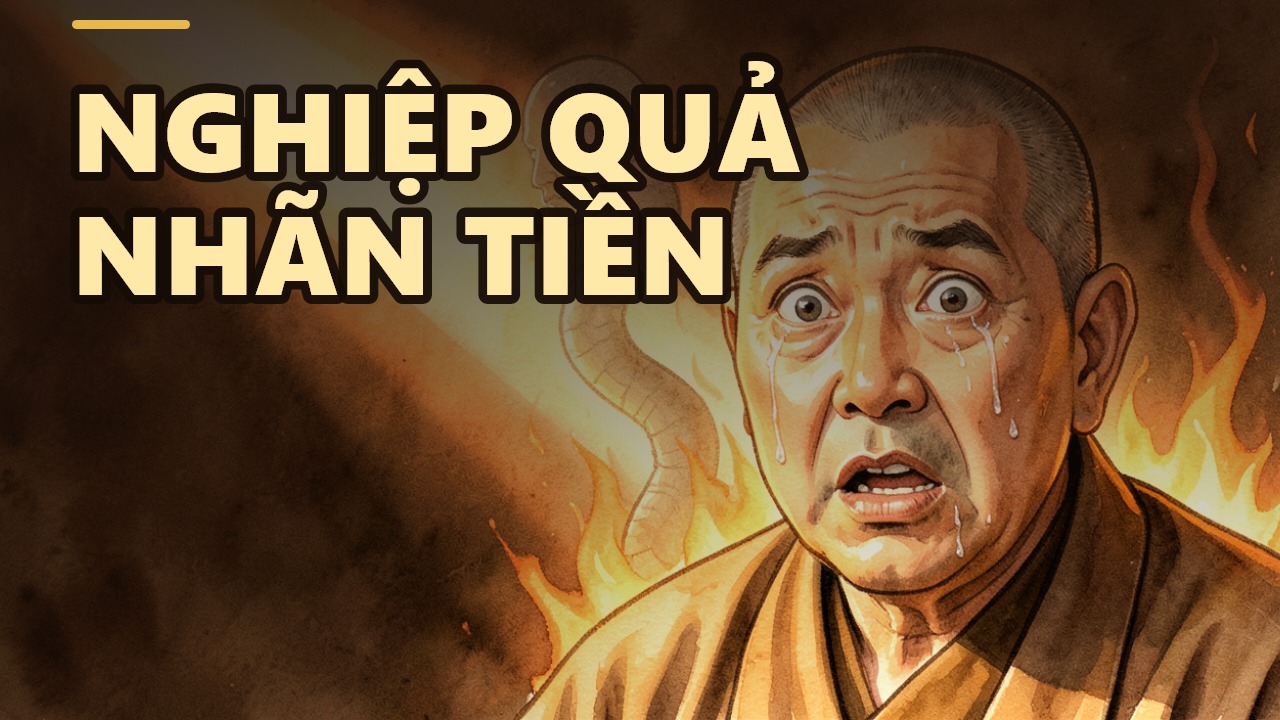
The world of spirits is not as mysterious as we imagine. Understanding karmic law helps us live peacefully, avoid hatred, and accumulate blessings from merit. Have you ever heard footsteps in an empty house, only to see no one when you look back? Has anyone suddenly become angry, shouting insults, then later asked in surprise, “Why did I do that?” These phenomena happen frequently, yet few understand their true causes. In a dharma talk on the Dhammapada, Venerable Thich Chan Quang offers a profound perspective on the invisible realm, where bad karma and anger lead sentient beings into immeasurable suffering.
Do Ghosts Really Exist? The Story of Maudgalyayana
Maudgalyayana, foremost in supernatural powers, witnessed terrifying forms in the invisible world while returning to Rajagriha. He saw a ghost with a human head and snake body, surrounded by flames, and another shaped like a giant turtle covered in insects eating its flesh. The Buddha confirmed these visions were real. However, the Buddha often chose silence to prevent doubt, for doubting the Buddha carries heavy negative consequences. As Venerable Thich Chan Quang emphasized, enlightened beings are careful about what they reveal; speaking or remaining silent is always done with wisdom.
Why Do We Fear Spirits? Because We Cannot See Them
The dead are not always frightening figures. Our fear arises because our physical eyes cannot perceive them. We misinterpret signs from the spirit world as threats, but this misunderstanding leads us to create much bad karma. Invisible does not mean non-existent. Two worlds coexist, but we only sense them when spirits choose to reveal themselves—perhaps as a cold chill down the spine or strange sounds of dishes in the kitchen.
The Dead Do Not Leave Immediately – Why?
Upon death, only those with heavy sins descend immediately to hell, while those with great merit ascend to heavenly realms. Most linger for some time. Those with light karma may be reborn quickly. Those with heavier karma, not yet ready for hell, might fall into animal births, such as pigs or dogs, driven by a craving for worldly life and fear. This is how karma guides us; death is not the end.
The Dead Know Gratitude and Resentment
A story illustrates this: a woman who buried an abandoned child found her business unexpectedly flourishing. Conversely, a family that refused to help with a flood victim’s remains faced continuous disasters. Spirits know both gratitude and resentment. Therefore, never underestimate the departed. Daily offerings to hungry ghosts help accumulate merit and create good conditions. However, these offerings must come from a sincere heart, not superficial ritual.
Small Anger – Great Disaster
A farmer, enraged because someone stepped on his rice field, burned the hut of a Pratyekabuddha. For this excessive retaliation, he was killed and reborn as a fire serpent. Venerable Thich Chan Quang teaches that this world is full of provocations. When provoked, we retaliate, often more harshly than the initial offense. Anger exists everywhere—in temples, on streets, among people. Thus, practicing the Buddha’s teachings and avoiding anger is the safest path. If every insult turns into hatred and revenge, we pile up layers of bad karma.
How to Live Peacefully?
Instead of living in anger and fear, learn the art of letting go. Spend just a few minutes daily in meditative concentration, making offerings, and reciting sutras to transform your mind. When the mind is pure and harmonious, all beings protect you, affairs proceed smoothly, and at death, you gain merit to ascend to higher realms. Living each day with awareness of the Dharma is true happiness, for only merit can carry us through samsara with less suffering.
Begin with your breath. Whenever anger arises, breathe deeply and remember the Buddha’s teaching on cause and effect. Each evening, offer food to spirits with compassion. Gradually, you will feel lighter, more peaceful, and your life will become serene. This is the precious gift the Buddha’s teachings offer us.
AI-assisted translation from the Vietnamese original.
Read in Vietnamese →