
Practicing in Adversity: When a Teacher Rebukes Out of Love
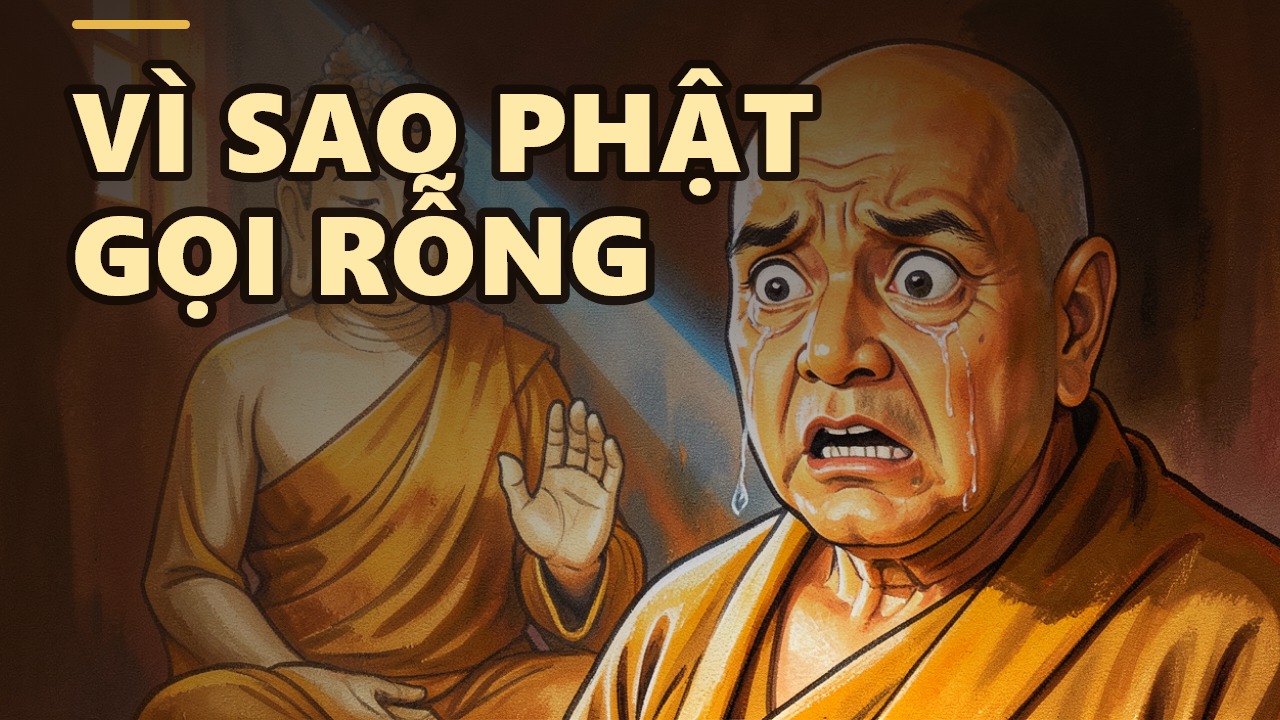
Adversity is a medicine that awakens the spirit. Through the story of Empty Potila, we come to understand that a teacher's strictness is an expression of love, helping us overcome the ego.
Have you ever felt confused when your teacher, or your parents, used harsh words, even sarcasm, while you were trying your best to do well? That is precisely when we encounter adversity in our practice. Today's dharma talk on the Dhammapada (verse sixty-seven) opens up a fresh perspective on the meaning of adversity in spiritual awakening.
The Story of Elder Potila: Why Did the Buddha Call Him "Empty"?
In the Sangha, there was an elder named Potila. He taught the Dharma beautifully and precisely, and the Buddha appointed him as a teaching master. Many young monks heard his lectures and attained realization. Yet Elder Potila himself had not attained the path. The Buddha did not criticize him, but always called him "Empty Potila." Each time he spoke his name, the Buddha added the word "empty," causing him embarrassment before his fellow practitioners.
The Buddha used this method to strike at the pride within Potila's heart. Because he considered teaching to be the main career of his life, he had neglected devoted practice. After a period of being called "empty," Potila recognized his problem and asked the Buddha for permission to leave the assembly in order to practice wholeheartedly. He went to a place where thirty Arahants lived and humbly asked to learn the way. In the end, a young novice showed him how to close five doors and keep one door open, in order to rest the whole body in stillness. While Potila was in meditative concentration in this way, the Buddha appeared and spoke this verse:
In meditation, wisdom arises; without meditation, wisdom decays. Knowing these two paths, one of downfall and one of liberation, one should strive so that wisdom grows.
Upon hearing this, Elder Potila attained the fruit of Arahantship immediately.
Favorable and Unfavorable Means: The Two Methods of a Teacher
In the Buddha's teachings, in order to guide people, a bodhisattva may sometimes use favorable means, and sometimes unfavorable means. Favorable means are attitudes of compassion, kind words, and attentive help. Unfavorable means are strictness, rebuke, and even physical discipline. Both are methods, applied according to the capacity of each person.
For example, when you want to go to the temple to hear the Dharma and your car breaks down, you might think it is bad luck. But for someone with enough inner strength, a broken car is a problem to overcome. The celestial beings use unfavorable means to increase your merit. For someone who does not yet have enough inner strength, they will use favorable means and give you a ride.
"Beings who live in wealth and comfort cannot make progress... that is why unfavorable means are so essential for practice."
Remember this: if a teacher only knows how to use favorable means, that teacher does not yet have sufficient wisdom. But if a teacher cannot yet use favorable means, that teacher does not yet have sufficient virtue.
Virtue and Wisdom: The Formula of a Good Teacher
Master Chan Quang emphasized:
"If a teacher cannot yet fully use favorable means, that is, cannot always treat everyone with compassion and kindness, then that teacher does not yet have sufficient virtue. And if a teacher has mastered favorable means but cannot yet use unfavorable means, then that teacher does not yet have wisdom."
The Buddha is one who is complete in both virtue and wisdom, and so he used favorable means at times and unfavorable means at others. But we should not imitate this mechanically. Unfavorable means are an art; they must match the conditions (dependent origination). Used constantly, they wound; used wrongly, they harm.
Adversity Helps Us Overcome the Ego
When Potila bowed down in reverence to everyone, from the elders to the young novice, he lowered his ego to its very depths. The novice even made him jump into a pond, and Potila obeyed at once. That was complete letting go. It was precisely because of this that he attained realization.
In daily life, we also encounter adversities such as illness, failure, and criticism. If we look at them with a humble mind and heart, they become tools for destroying the ego. If we react with wounded pride, they become obstacles.
Just as parents who love their children must know when to be gentle and when to be strict. As the Buddha taught: "If you love your child but always indulge them, giving them whatever they want, remember that in the end you are killing your own child."
Lessons to Apply
Let us turn every adversity into an opportunity for practice. When we are rebuked, let us listen in order to correct our faults. When we face difficulties, let us see them as a test of the mind. Do not wish for life to always run smoothly, because smoothness makes our minds weak.
Practice meditative concentration: close some of the doors of the senses, and rest in the breath and the body.
Understand that strict teachers act out of love: unfavorable means are a method to help us grow.
Look back at the ego: every time we feel wounded pride, the ego grows; every time we are humble, the mind opens.
Let us strive to practice meditation so that wisdom may grow, as the Buddha's verse teaches. That is the only path that leads us to liberation.
AI-assisted translation from the Vietnamese original.
Read in Vietnamese →