
Random or Inevitable? It Turns Out Everything Has Causes and Conditions
We often mistake certain events for random occurrences, but they are actually the results of a chain of causes and conditions. This dharma talk helps us understand karma and how to control our mind/heart.
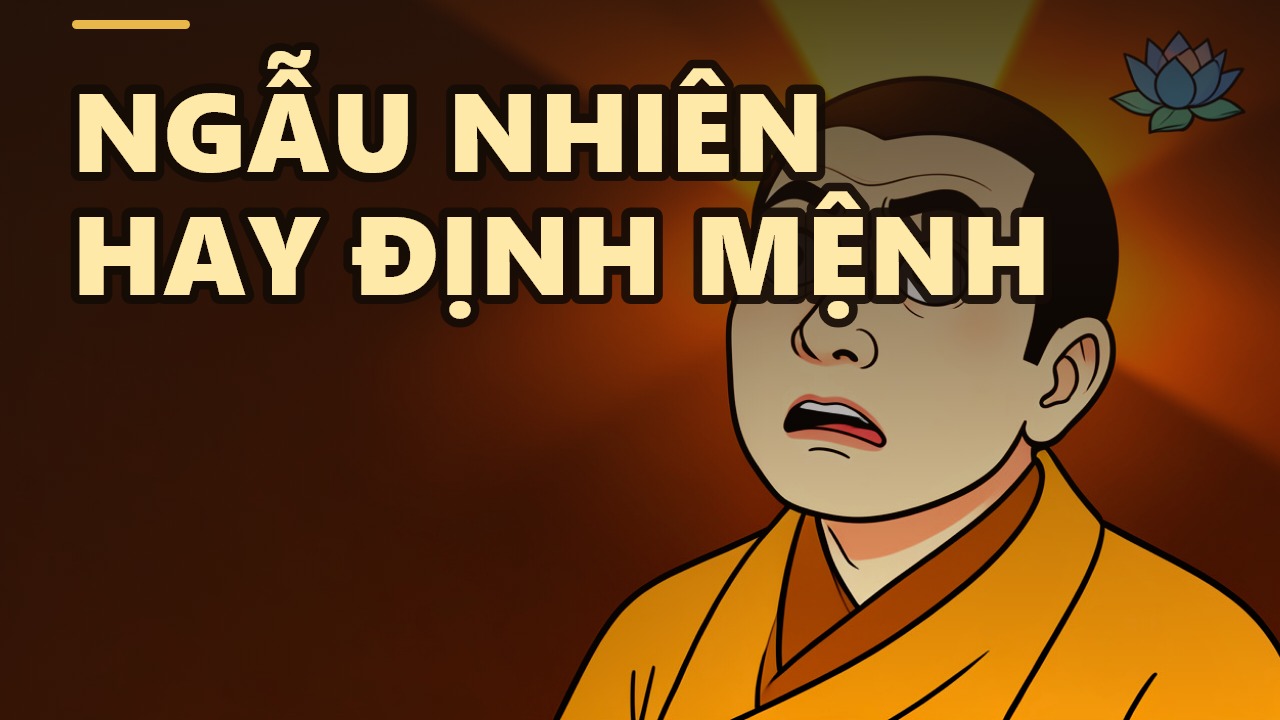
Have you ever wondered if a fateful meeting with someone, or an opportunity that suddenly falls into your lap, is truly random or part of a greater design? In the dharma talk titled "Randomness and Inevitability," Venerable Thich Chan Quang offers a surprising answer: nothing is entirely random. If we cannot see the cause, it may simply be because our ordinary vision lacks depth. Even the smallest thoughts within us possess the power to shape our future.
Randomness refers to things that happen without our prior intention, prediction, or arrangement. Inevitability refers to things that occur as expected, planned, or arranged in advance.
Randomness and inevitability are two faces of the same cycle of cause and effect (karmic law).
Venerable Thich Chan Quang begins with everyday stories. Attending a meditation retreat is inevitable because it was planned long ago, yet unexpectedly meeting an old friend seems random. However, looking deeper, that 'random' encounter might stem from karmic connections from past lives. He explains that we only call something random because we have not yet discovered its cause. Once the cause is found, what seemed random may reveal itself as inevitable.
For instance, seeing a damaged road and feeling an impulse to repair it may seem sudden. In reality, this impulse is the result of a soul cultivated in kindness and altruism over time. These small good deeds eventually become blessings from merit that feel inevitable. As the teacher says, this is the inevitable consequence of a virtuous, selfless, and morally refined heart that has been nurtured for quite some time.
Sudden thoughts are seeds of karma.
The teacher shares a thought-provoking story. A man eating at a restaurant sees another man speaking rudely to his wife. Suddenly, he thinks, "If I met him, I would break his teeth." This fleeting thought seems harmless. Yet thirty years later, he encounters that same man by chance and impulsively attacks him without clear reason. That random thought from decades ago had become a seed of karma, ripening when the right conditions arose. The teacher warns us to be careful with our sudden thoughts, for we never know what will unfold in the future.
Therefore, practitioners always maintain mindfulness. They do not let unwholesome thoughts arise unnoticed and remain untransformed. The teacher advises us not to allow unfavorable random elements to appear in our minds, nor to let unwholesome thoughts arise spontaneously.
When plans are disrupted by 'randomness,' do not underestimate the spiritual dimension.
No matter how carefully we calculate, unexpected factors beyond our control can still emerge. For example, a land investor expects prices to rise but must sell at a loss due to unforeseen issues. Or, organizers prepare meticulously for a grand ceremony yet fail to anticipate risks. Experienced individuals often leave room for spirituality by praying or reciting the Buddha's name. The teacher notes that those who excel at organization but also maintain a spiritual practice—seeking protection through prayer—are more likely to succeed.
Spirituality fosters humility. It reminds us that our abilities are limited, thereby attracting blessings from merit. Like a lecturer who prepares thoroughly but still prays before taking the teaching seat, ensuring the session is complete and easily understood by listeners.
So, what should we do?
Start with simple practices. Whenever an unwholesome thought arises, recognize it and practice letting go, preventing it from lingering in your consciousness. Cultivate wholesome thoughts through practice, reciting the Buddha's name, or engaging in charitable acts. Simultaneously, humbly acknowledge your limitations and integrate spirituality into your life. Then, lucky 'random' events will accumulate into happy 'inevitabilities,' and dark 'inevitabilities' may be softened and resolved.
May every practitioner possess clarity in each thought and a heart filled with compassion. Begin today by keeping your thoughts pure, so that your future becomes an inevitable state of peace.
AI-assisted translation from the Vietnamese original.
Read in Vietnamese →